



Launching Mid-to-Long-Term Policy Council with Goal of Building 5G Industrial Ecosystem
 Published2021.03.25 11:59
Supply and Demand Enterprises Participate, Forming 5G Ecosystem
Preparing Mid-to-Long-Term Strategies to Strengthen Global 5G Competitiveness
The Ministry of Science and ICT held a launching meeting (both online and offline) for the '5G+ Industrial Ecosystem Policy Council' on the 24th to foster a 5G+ convergence ecosystem. The policy council was organized in accordance with the '2021 5G+ Promotion Plan' to lead the 5G+ industrial ecosystem globally.

The policy council to strengthen public-private collaboration related to 5G comprises a total of seven entities in addition to the industrial ecosystem policy council launched today, including five 5G services (smart factory, immersive content, digital healthcare, autonomous vehicles, and smart city) and 5G networks.
To facilitate early formation of the 5G+ industrial ecosystem, the council includes participation from supply companies (SKT, KT, LGU+, Samsung Electronics, LG Electronics, 5G Forum, etc.) as well as demand companies (Korea Chamber of Commerce and Industry, Korea Federation of Small and Medium Business). Along with academia, research institutions, specialized organizations, dedicated 5G+ agencies (Institute for Information & Communications Technology Planning & Evaluation), and relevant government ministries, the council plans to address pending issues related to the 5G+ ecosystem.
Additionally, the council will establish mid-to-long-term policy measures to strengthen the competitiveness of 5G+ ecosystem components (equipment, devices, software, services, security, etc.) and facilitate comprehensive ecosystem formation (collaboration between large, medium, and small enterprises, domestic-international company cooperation, etc.).
During today's meeting, discussions were held on the composition and operation of the council and promotion objectives, and short-term and mid-to-long-term tasks for intensive review by the 5G+ Industrial Ecosystem Policy Council were selected. Methods to secure global competitiveness, such as international joint research on digital core technologies, response to global factual standardization, and global testing and certification, as well as measures to support overseas expansion of 5G-related enterprises, were also explored.
Progress on demonstration projects based on 5G edge computing (MEC) was shared, and a wide range of ideas for expanding leading services were proposed. Through free discussion, solutions to address difficulties necessary for industry to lead globally, such as R&D and institutional improvements, and plans to transition related demonstration projects such as B2B terminals and 5G security to full-scale projects were discussed.
Comments
Related news
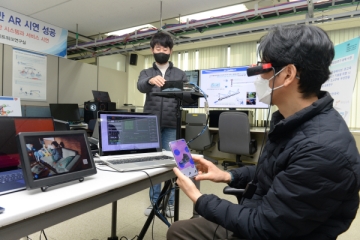
ETRI Demonstrates 5G AR Service at 1.9Gbps Speed in Subway
The Electronics and Telecommunications Research Institute (ETRI) announced that it successfully demonstrated 5G service using a millimeter-wave wireless backhaul system inside the Seoul Metro Line 8 section between Jamsil and Songpa stations. The demonstration achieved a speed of 1.9Gbps, which is 30 times faster than existing systems. This level of performance enables 190 concurrent users to access AR immersive multimedia services.
2021.03.10by 이수민 기자
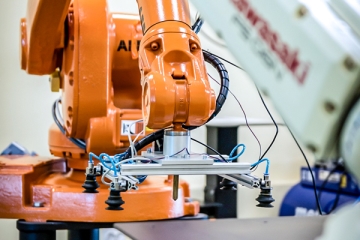
5G B2B business model development begins with understanding the communication requirements of the automation industry.
Telecom operators worldwide have made efforts to expand their business models from B2C to B2B sectors, and 5G technology possesses URLLC characteristics that make it suitable for industrial applications. Smart factories, energy, and medical sectors are cited as the key industries where 5G technology will be applied. Automation systems across all industries are based on periodicity and determinism, each with unique operational and communication patterns. 5G products, services, and systems must be prepared to accommodate all of these requirements.
2021.03.15by 이수민 기자
.jpg)
First Step Toward Commercialization of 5G-Based Smart Distribution Diagnosis at Half the Price of Wired Services
LG Uplus and LS Electric have jointly developed a 5G-based smart distribution panel diagnosis solution. The solution installs various sensors in high-voltage and low-voltage distribution panels within factory and building electrical rooms, acquires and analyzes data through a data collection device, and transmits the analyzed data to a control center via wireless network to perform real-time inspections of each distribution panel. The two companies have decided to jointly pursue business utilizing this solution.
2021.03.15by 이수민 기자
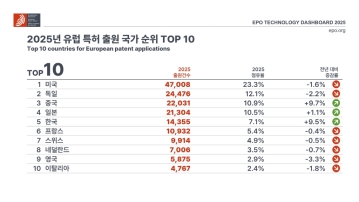
European Patent Applications Surpass 200,000 for the First Time… South Korea Maintains 5th Place, Led by Batteries and Telecommunications
According to the European Patent Office (EPO)'s 'Technology Dashboard 2025', European patent applications last year reached 201,974, surpassing 200,000 for the first time. Korean companies and inventors filed 14,355 applications, representing a 9.5% increase from the previous year and maintaining 5th place by country. Battery, digital communication, and semiconductor technologies led the growth, with Samsung ranking as the top EPO applicant for the second consecutive year and LG reaching 3rd place. The presence of major domestic cities such as Seoul, Suwon, and Yongin was also confirmed. It was also revealed that Korea's European patent strategy is expanding beyond individual technologies to span the entire industry.
2026.03.24by 명세환 기자
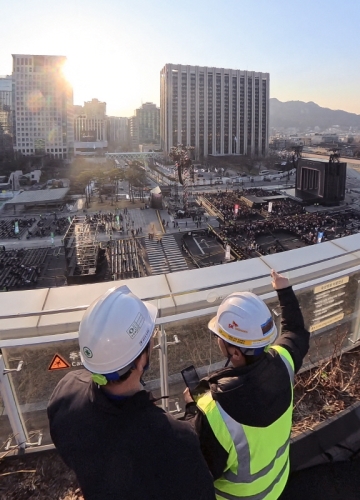
SK Telecom First Applies AI-Based Network Operations at Gwanghwamun K-Pop Concert
SK Telecom announced that it applied an AI-based network operation system for the first time at a large-scale K-pop concert held in the Gwanghwamun area of Seoul on March 21st, managing communication quality throughout the event. Mobile data usage during the three hours before and after the concert reached 12.15TB, approximately doubling compared to the same time slot the previous weekend. SK Telecom monitored traffic using the AI system 'A-One' in five-minute and 50-meter units to respond to potential overload situations, while also operating temporary communication facilities and on-site personnel in parallel. This case is interpreted as confirmation of the practical applicability of AI-based autonomous network operation in an environment where demand from dense events and foreign users increases simultaneously.
2026.03.23by 명세환 기자











