


Samsung Electronics Supports 46.4 Billion Won for 27 Future Technology Development Projects in the First Half
 Published2021.04.05 08:33
.jpg)
▲ Professors selected for projects supported by the 'Samsung Future Technology Development Program' in the first half of 2021 (from left: Professor Ryu Kyung-seok of Seoul National University, Professor Hwang Seung-jun of POSTECH, Professor Cho Kyu-bong of Sogang University, Professor Cho Chang-ui of DGIST, Professor Kim Gun-hee of Seoul National University, Professor Kim Ki-woong of Chungbuk National University)
A total of 864.4 billion won has been supported for 667 projects since 2013.
Samsung Electronics selected 27 projects for its future technology development program in the first half of 2021 and will provide 46.4 billion won in support.
On the 5th, Samsung Electronics announced the research projects it will support starting in the first half of 2021 through the 'Samsung Future Technology Development Project'.
A total of 27 projects were selected this time, including 13 in basic science, 7 in materials science, and 7 in ICT, with 46.4 billion won in research funding provided.
It includes many projects that can help solve social problems such as AI ethics and infertility, and improve the quality of life, such as non-contact bioelectric measurement.
Samsung Electronics has supported a total of 667 research projects with 864.4 billion won in research funding to date, including the research projects announced this time, comprising 229 in basic science, 215 in materials, and 223 in ICT.
In the ICT sector, strong competitiveness in future industries such as artificial intelligence and non-contact bioelectrical signal measurementSeven projects were selected in the field of core technology research for fire.
Professor Kim Gun-hee of the Department of Computer Science at Seoul National University is stepping forward to address issues that may arise from the advancement of AI technology, such as privacy violations, gender bias, and factual errors. Through this research, it is expected that trustworthy AI that adheres to social norms will be developed.
Professor Kim Ki-woong of the Department of Computer Science at Chungbuk National University plans to develop a technology capable of measuring electrical signals generated in living organisms, such as electrocardiograms and electroencephalograms, using a non-contact method. This technology is expected to be usefully applied in medical fields, such as monitoring patient conditions and drivers.
In the field of basic science, a total of 13 projects were selected, including those with original ideas that are expected to be the world's first or have a significant ripple effect upon success.
Professor Kyung-Seok Ryu of the Department of Mathematical Sciences at Seoul National University is undertaking a research project to mathematically identify the commonalities of various learning models used in machine learning for the first time in the world. Utilizing this could dramatically improve the ability of artificial intelligence to acquire diverse learning models.
Professor Seung-Jun Hwang of the Department of Chemistry at POSTECH plans to dramatically improve material conversion efficiency by using a molecule called crown ether, which is shaped like a crown, as a chemical catalyst.
It is expected that utilizing the local electric field generated by crown ether molecules will contribute to solving difficult problems, such as the decomposition of carbon dioxide, which is the cause of global warming.
In the materials field, seven projects are supported across a wide range of research areas, including DNA sequencing and quantum light sources.
Professor Kyu-Bong Cho of the Department of Chemistry at Sogang University is conducting research to completely decipher the Y-chromosome DNA sequence, which remains unknown even through the Human Genome Project. This project is expected to contribute to research on Y-chromosome-related infertility diseases, such as male infertility, and to the field of personalized genetic medicine.
Professor Chang-Hee Cho of the Department of New Materials Science at DGIST develops light source technology for quantum communication.
This project aims to realize a light source for quantum communication, which typically operates only at cryogenic temperatures, at room temperature by controlling the crystal structure of perovskite materials. By overcoming the challenges of maintaining cryogenic conditions, this research is expected to accelerate the commercialization of room-temperature quantum cryptography.
The 'Samsung Future Technology Development Project' is a public interest research support project implemented by Samsung Electronics since 2013 with a contribution of 1.5 trillion won, aiming to foster and support science and technology that will be responsible for the future of our country.

Comments
Related news
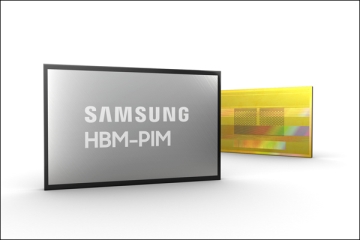
"Accelerating AI with Memory" Samsung Electronics Develops HBM-PIM
Samsung Electronics has developed 'HBM-PIM,' which combines memory semiconductor and AI processor for the first time in the industry. PIM (Processing-in-Memory) is a technology that adds processor functions necessary for computational tasks within memory. Samsung Electronics developed this product by integrating an AI engine into HBM2 Aquabolt, a second-generation High Bandwidth Memory semiconductor that has been in mass production since January 2018.
2021.02.18by 강정규 기자

Samsung Electronics Joins Hands with Kakao to Expand AI Smart Home Ecosystem
Samsung Electronics and Kakao Enterprise have established a strategic partnership to strengthen their smart home business. Under this collaboration, Samsung Electronics' major smart appliances will be integrated with Kakao Enterprise's AI platform, Kakao i. Consumers will be able to control Samsung appliances connected to Samsung SmartThings through the Hey Kakao and Kakao Home apps equipped with Kakao i, as well as through Kakao Mini, Mini Hexs, and Mini Link smart speakers.
2021.03.04by 강정규 기자

Samsung Electronics Develops 512GB DDR5 Module, "Expected to Launch in Second Half"
The next-generation DRAM specification, DDR5, delivers twice the performance of DDR4. With data transfer speeds reaching approximately 7200Mbps, it can process two 30GB capacity UHD movies in a single second. Samsung Electronics has developed a 512GB DDR5 memory module with the industry's largest capacity by applying HKMG process technology and 8-level TSV technology to DRAM for the first time.
2021.03.29by 이수민 기자
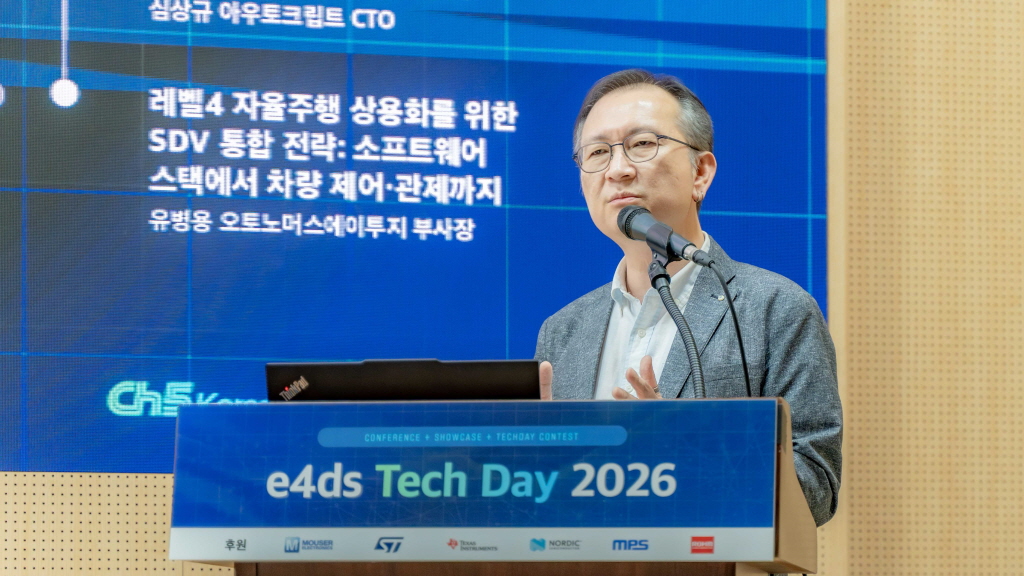
[e4ds Tech Day 2026 ⑨] Sim Sang-gyu, Autocrypt CTO: "In the Physical AI Era, Automotive Security Must Extend Beyond the Vehicle"
At e4ds Tech Day 2026, Sim Sang-gyu, CTO of Autocrypt, explained automotive cybersecurity strategies in the era of Physical AI and SDV (Software-Defined Vehicle). Automobiles are evolving as part of an ecosystem connected to AI, cloud, chargers, IoT, and robots, and he emphasized that the scope of security must expand beyond the vehicle interior to the entire connected environment. In particular, AI model tampering, adversarial attacks, OTA updates, and EV charger hacking were identified as major threats. He explained that response measures require zero trust, AI model integrity protection, intrusion detection, Security by Design and Default, and full lifecycle security management, and that proactive security system establishment beyond regulatory compliance is critical for securing future mobility competitiveness.
2026.10.12by 배종인 기자

NVIDIA to Invest $1 Billion in U.S. Science Over Next Five Years
NVIDIA has announced plans to invest $1 billion over the next five years to strengthen U.S. scientific and technological competitiveness. The company will enhance cutting-edge artificial intelligence research and development capabilities in key areas including quantum computing, healthcare, and energy security, while expanding support for higher education research institutions and cloud service providers. NVIDIA is participating as a major industry partner in the White House Office of Science and Technology Policy's Genesis Mission, and is promoting supercomputer construction in collaboration with national laboratories including Argonne and Los Alamos.
2026.10.12by 배종인 기자











