


LG Electronics Withdraws from Mobile Business, Who Will Fill the Void?
 Published2021.04.12 17:15
LG Electronics Deploys Mobile Capabilities to Home Appliances and Automotive Sectors
Samsung, Apple, and China Begin Battle for LG Phone Vacant Spot
LG Electronics, which dominated the mobile market for nearly 26 years, has finally left the market. Who will fill the void left by LG Electronics, and what path will the company take?
On the 5th, LG Electronics held a board meeting and resolved to terminate production and sales of its MC (Mobile Communications) business unit starting July 31, officially announcing its withdrawal from the mobile business. LG Electronics, which started its feature phone business in 1995 with the 'Hwatong' brand, distinguished itself in the market by releasing the Chocolate Phone in 2005 and the Prada Phone in 2007.
However, it struggled after entering the smartphone market later than competitors and recorded operating losses for 23 consecutive quarters from the second quarter of 2015 to the fourth quarter of 2020. In 2019, the company took self-rescue measures such as improving its business structure and reducing costs, including ceasing domestic production, relocating factories to Vietnam, and increasing the ratio of Original Design Manufacturing (ODM); however, it performed poorly due to competition from Apple and Samsung Electronics in the high-end market, as well as Huawei and Xiaomi in the mid-to-low-end market.
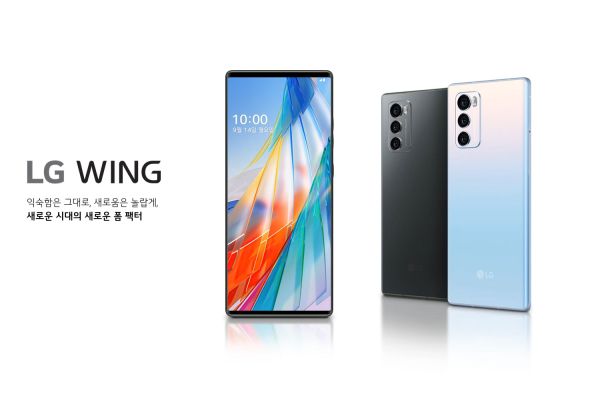
The market reaction to the 'LG Velvet,' which attempted to create a 'mass premium' category in the first half of 2020, and the 'LG Wing,' which aimed for form factor innovation in the second half, was lukewarm. On January 11, 2021, the long-awaited 'LG Rollable' was unveiled at the International Consumer Electronics Show (CES) 2021, but just ten days later, on the 20th, the company announced that it was considering withdrawing from and selling its Mobile Communications (MC) business unit. Some criticized the LG Rollable as a product intended to inflate the value of the MC business unit.
LG Electronics held negotiations with Vietnam's VinGroup, Germany's Volkswagen, and the U.S.'s Google for the sale. The companies involved in the negotiations showed more interest in the patents held by LG Electronics than in the mobile business itself. On the other hand, LG Electronics decided to terminate the business rather than sell it, judging that it was in its best interest to continue holding mobile patents to prepare for future industries such as AI and autonomous driving. LG Electronics ranks third in the world for the number of 5G patents it holds.
LG Electronics plans to produce mobile phones by the end of May to supply the products promised to business partners, and will continue to provide sufficient after-sales service and support software updates to ensure that purchasing customers and existing users do not experience inconvenience even after the business ends. The company also plans to continue discussions to devise a compensation plan for losses incurred by partner companies due to the business termination.
LG Velvet, the sore spot, will receive OS upgrades until 2023
◇ Mobile workforce expected to disperse into home appliance and automotive sectors
LG Electronics plans to strengthen its competitiveness by applying the assets accumulated from its mobile business to existing businesses and to focus on core businesses that can secure a competitive advantage. Key mobile technologies such as 6G, cameras, and software are capabilities required for TVs, home appliances, automotive electronics, and robots. Accordingly, the company plans to strengthen R&D by transferring personnel from the MC (Mobile Communications) Business Division to the H&A (Home Appliance & Air Solution) Business Division, LG Innotek, and LG Energy Solution.
Overseas smartphone factories in Vietnam, India, Brazil, and other locations are expected to repurpose their operations to produce home appliances or recycle factory materials in response to demand.
LG Electronics possesses specialized capabilities and assets in various areas, including the 'LG webOS' operating system (OS) and 'LG ThinQ' AI-based apps and platforms. The company plans to combine these with its mobile competitiveness to develop smart TVs and smart home solutions, respectively. High-performance display technology for smartphones is expected to be used in the development of laptop and PC panel products.
In addition, personnel with experience in smartphone hardware, software, and communication technologies will be deployed to the VS (Vehicle Component Solutions) business unit to develop electric vehicle components and autonomous driving-related technologies, which is expected to accelerate the advancement of autonomous driving technology.
LG Electronics has already taken steps such as acquiring ZKW, an Austrian automotive headlamp company (2018), starting development of a 5G connected car platform with Qualcomm (January 2021), acquiring Alfonso, a US data analytics startup (January 2021), and launching 'Aluto,' a joint venture (JV) specializing in in-vehicle infotainment (IVI), with Luxoft of Switzerland (March 15).
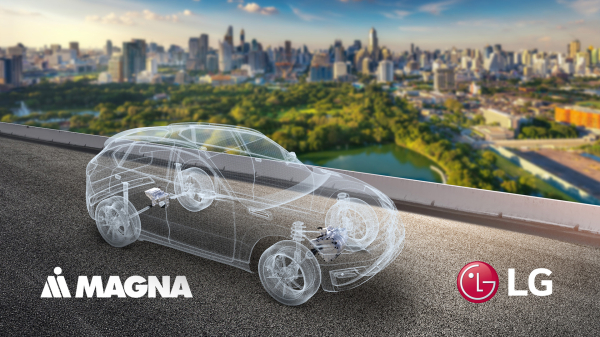
LG is accelerating its efforts to secure business capabilities in software, batteries, and parts related to future vehicles, including the launch of 'LG Magna e-Powertrain,' a joint venture specializing in electric vehicle powertrains, with Magna International of Canada, the world's third-largest automotive parts supplier, this coming July.
Meanwhile, the industry predicts that once the accumulated deficit of the MC business division since 2015 is resolved and investment capacity becomes available, the company will engage in large-scale M&A in the strategic sectors mentioned above.
◇ Will Samsung Electronics Become the Biggest Beneficiary of LG Electronics' Withdrawal?
LG Electronics is completely withdrawing from the mobile business and the domestic and international smartphone marketsCompetition is expected to unfold to absorb LG Electronics' existing market share.
Samsung Electronics and Xiaomi are the most active in the domestic market. According to Counterpoint Research, Samsung Electronics held a 58% share of the domestic smartphone market in the fourth quarter of 2020, followed by Apple (31%) and LG Electronics (10%).
LG Electronics smartphone users are highly likely to prefer the familiar Android OS over the iPhone (iOS). If these users switch to Samsung Electronics, the company can secure a monopolistic position with a market share approaching 80%. It is predicted that there will be more consumers seeking Samsung Electronics' mid-range and low-end products than the relatively expensive iPhone.
Samsung Electronics, which has been suffering from sluggish sales due to weakened price competitiveness in emerging markets such as China and India, is targeting the mid-to-low-end budget market by recently strengthening its 'Galaxy A' lineup. This move is expected to play a positive role in attracting LG Electronics smartphone users. Furthermore, by including the 'LG V50' for the first time in a trade-in program previously exclusive to its own and Apple products, the company has brought its strategy to the surface to absorb LG Electronics users.
Xiaomi is the Chinese company most interested in entering the domestic market. Accordingly, on the 9th, it launched the 'Redmi Note 10 and 10 Pro' in the Korean market and is engaging in aggressive marketing targeting LG Electronics' mid-to-low-end consumer base. However, given the low preference and trust Korean consumers have for Chinese products, it is not expected to be highly likely to attract LG Electronics smartphone consumers.
The North American market is a region where LG Electronics has shown strength by consistently recording a market share in the 10% range and securing solid brand recognition. According to Strategy Analytics, LG Electronics ranked third in the North American smartphone market in the third quarter of 2020 with a 14.7% share, following Samsung Electronics (33.7%) and Apple (30.2%).
Given that the gap in market share between Samsung Electronics and Apple is not significant, the direction of LG Electronics' market share is expected to act as a variable that strengthens its market dominance. Similar to the domestic market, Samsung Electronics is predicted to secure LG Electronics' smartphone market share thanks to its diverse range of budget series based on the Android OS. Of course, since there are numerous smaller Android alternative products from brands such as Motorola and HMD, their strategies and marketing are also expected to have an impact.
◇ LG Electronics pioneers new markets, Samsung Electronics seeks to expand its influence
Finland's Nokia and Canada's BlackBerry enjoyed their heyday during the feature phone era and the early days of smartphones, respectively. However, they failed to maintain their dominance and eventually ended up selling off their businesses.
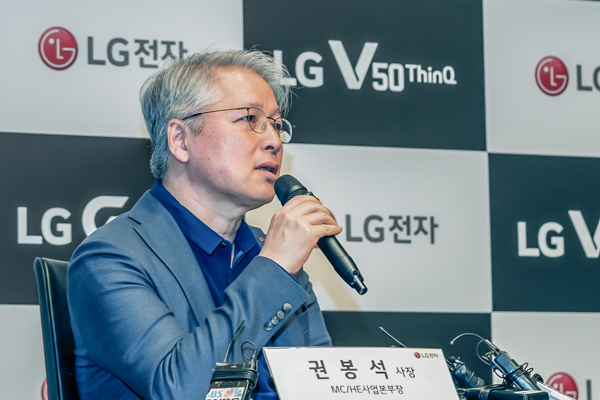
He sent an email under his own name expressing regret over the termination of the MC business.
The photo was taken at the LG smartphone strategy press conference in February 2019. [Photo by Reporter Lee Su-min]
Nevertheless, Nokia and BlackBerry have successfully transitioned into network and software service companies, respectively, and are generating results. Similarly, while LG Electronics has fallen behind in the smartphone market, it has secured global-level capabilities in the home appliance and automotive electronics sectors. The industry believes that with this withdrawal, LG Electronics will clear away uncertainty and find new growth engines.
Samsung Electronics is struggling to absorb LG Electronics' existing smartphone market share. While this appears feasible in the domestic market, where distrust of Chinese products is high, difficulties are anticipated in other markets. The low-price offensive by Chinese companies continues unabated, and Apple is also threatening Samsung Electronics by launching cost-effective budget products such as the 'iPhone SE 2'.
As high-end smartphone customers desire new experiences and mid-range customers want features that stay true to the basics, it appears that Samsung Electronics will need to put in significant effort to become the biggest beneficiary of this withdrawal.
Comments
Related news
LG Electronics Seeks Automotive Sales Channels by Establishing Joint Venture with Magna
LG Electronics has decided to establish a joint venture with Magna International, a Canadian automotive parts supplier ranked third globally by revenue, in the electric vehicle (EV) powertrain sector. Considering the rapid advancement of vehicle electrification trends worldwide, both companies are pursuing this partnership to build mass production systems early and enhance business competitiveness and growth potential.
2020.12.25by 명세환 기자
.jpg)
World's first 5G commercialization 2nd anniversary "Absolute quality assurance begins"
On April 3, 2021, the world's first 5G commercialization marked its second anniversary. In the early 5G market, South Korea is leading in all aspects including frequency, services, and subscribers. However, due to limited coverage, user dissatisfaction with 5G has become significant enough to trigger class action lawsuits. There is also a complete absence of 5G services from providers other than MNOs. The 5G+ Strategy policy coordination body for seven major sectors announced that it aims to build a nationwide 5G network by 2022, and this year will push forward 5G deployment in 85 major administrative districts, transportation networks, and multi-use facilities within the daily radius of the general public.
2021.04.05by 이수민 기자
LG Electronics confirms withdrawal from mobile phone business
LG Electronics has confirmed its withdrawal from the mobile phone business. While the business, which had a scale of 5.2171 trillion won, will result in significant short-term losses, long-term improvements in business structure and financial health are expected.
2021.04.05by 배종인 기자
European Patent Applications Surpass 200,000 for the First Time… South Korea Maintains 5th Place, Led by Batteries and Telecommunications
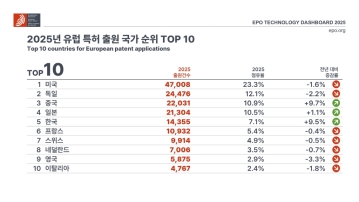
According to the European Patent Office (EPO)'s 'Technology Dashboard 2025', European patent applications last year reached 201,974, surpassing 200,000 for the first time. Korean companies and inventors filed 14,355 applications, representing a 9.5% increase from the previous year and maintaining 5th place by country. Battery, digital communication, and semiconductor technologies led the growth, with Samsung ranking as the top EPO applicant for the second consecutive year and LG reaching 3rd place. The presence of major domestic cities such as Seoul, Suwon, and Yongin was also confirmed. It was also revealed that Korea's European patent strategy is expanding beyond individual technologies to span the entire industry.
2026.03.24by 명세환 기자

SK Telecom First Applies AI-Based Network Operations at Gwanghwamun K-Pop Concert
SK Telecom announced that it applied an AI-based network operation system for the first time at a large-scale K-pop concert held in the Gwanghwamun area of Seoul on March 21st, managing communication quality throughout the event. Mobile data usage during the three hours before and after the concert reached 12.15TB, approximately doubling compared to the same time slot the previous weekend. SK Telecom monitored traffic using the AI system 'A-One' in five-minute and 50-meter units to respond to potential overload situations, while also operating temporary communication facilities and on-site personnel in parallel. This case is interpreted as confirmation of the practical applicability of AI-based autonomous network operation in an environment where demand from dense events and foreign users increases simultaneously.
2026.03.23by 명세환 기자











