


5G will be available nationwide by 2024 at the earliest.
 Published2021.04.16 12:23
Development of a joint network management system in the first half of this year
Plans are in place to complete commercialization by the first half of 2024.
As discontent grows over the fact that the proportion of 5G connections among domestic 5G smartphone users remains in the 15% range, it appears that the construction of a nationwide 5G network will have to wait until 2024 at the earliest.
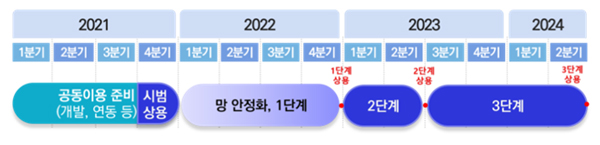
On the 15th, the Ministry of Science and ICT and the three major mobile carriers (SK Telecom, KT, and LG Uplus) announced the 'Rural 5G Joint Use Plan' to provide 5G services to rural areas such as towns and counties. The three mobile carriers signed a business agreement for cooperation in joint use of rural networks.
The plan was first raised at a meeting of the CEOs of the three major mobile carriers in July of last year, and was prepared after discussions on the technology method, target area, and service provision period for over six months and consultations with the ruling and opposition parties at the 'Rural 5G Joint Use Task Force' operated by the Ministry of Science and ICT since September of last year.
.jpg)
[Image = Ministry of the Interior and Safety]
The target area is comprised of townships and townships in 131 cities and counties. With a population density of approximately 92 people per square kilometer and home to approximately 15% of the country's total population, these areas have a lower population density than the areas where the three major mobile carriers have established base stations (approximately 85% of the total population, with a population density of approximately 3,490 people per square kilometer). The shared use service is also available to overseas arrivals and subscribers to mobile virtual network operators (MVNOs).
Distribution of regional network construction will take into account the number of regional facilities constructed, traffic, etc. △SKT will be in charge of part of Gyeonggi-do, part of Gyeongsangnam-do, Sejong Special Self-Governing City, Incheon Metropolitan City, South Chungcheong Province, and part of North Chungcheong Province; △KT will be in charge of part of Gangwon-do, part of Gyeonggi-do, part of South Gyeongsang Province, North Gyeongsang Province, and part of North Chungcheong Province; △LGU+ will be in charge of part of Gangwon-do, South Jeolla Province, North Jeolla Province, and Jeju Special Self-Governing Province.
[Image = Ministry of Science and ICT]
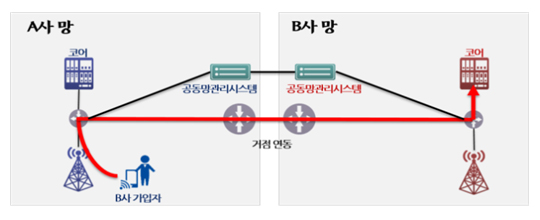
The three mobile carriers have adopted a Multi-Operator Core Network (MOCN) approach, sharing only base stations. During the network design process, they plan to apply common quality standards within shared areas and design customized 5G equipment based on terrain characteristics, such as tunnels.
The Ministry of Science and ICT and the three mobile carriers will develop a joint network management system in the first half of this year and begin resetting network equipment IP addresses to prevent communication failures. Based on the pilot results, they will then begin network stabilization efforts, aiming for commercialization by the first half of 2024.
Comments
Related news
5G B2B business model development begins with understanding the communication requirements of the automation industry.
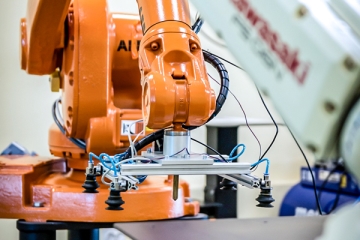
Telecom operators worldwide have made efforts to expand their business models from B2C to B2B sectors, and 5G technology possesses URLLC characteristics that make it suitable for industrial applications. Smart factories, energy, and medical sectors are cited as the key industries where 5G technology will be applied. Automation systems across all industries are based on periodicity and determinism, each with unique operational and communication patterns. 5G products, services, and systems must be prepared to accommodate all of these requirements.
2021.03.15by 이수민 기자
Launching Mid-to-Long-Term Policy Council with Goal of Building 5G Industrial Ecosystem
The Ministry of Science and ICT held a launching meeting for the 5G+ Industrial Ecosystem Policy Council to foster a 5G+ convergence ecosystem. The policy council was organized in accordance with the 2021 5G+ Promotion Plan to lead the 5G+ industrial ecosystem globally. In addition to the industrial ecosystem policy council launched today, the policy council to strengthen public-private collaboration related to 5G comprises a total of seven entities, including five 5G services (smart factory, immersive content, digital healthcare, autonomous vehicles, and smart city) and 5G networks.
2021.03.25by 강정규 기자
.jpg)
World's first 5G commercialization 2nd anniversary "Absolute quality assurance begins"
On April 3, 2021, the world's first 5G commercialization marked its second anniversary. In the early 5G market, South Korea is leading in all aspects including frequency, services, and subscribers. However, due to limited coverage, user dissatisfaction with 5G has become significant enough to trigger class action lawsuits. There is also a complete absence of 5G services from providers other than MNOs. The 5G+ Strategy policy coordination body for seven major sectors announced that it aims to build a nationwide 5G network by 2022, and this year will push forward 5G deployment in 85 major administrative districts, transportation networks, and multi-use facilities within the daily radius of the general public.
2021.04.05by 이수민 기자
European Patent Applications Surpass 200,000 for the First Time… South Korea Maintains 5th Place, Led by Batteries and Telecommunications
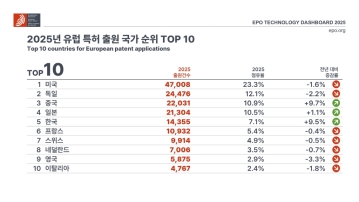
According to the European Patent Office (EPO)'s 'Technology Dashboard 2025', European patent applications last year reached 201,974, surpassing 200,000 for the first time. Korean companies and inventors filed 14,355 applications, representing a 9.5% increase from the previous year and maintaining 5th place by country. Battery, digital communication, and semiconductor technologies led the growth, with Samsung ranking as the top EPO applicant for the second consecutive year and LG reaching 3rd place. The presence of major domestic cities such as Seoul, Suwon, and Yongin was also confirmed. It was also revealed that Korea's European patent strategy is expanding beyond individual technologies to span the entire industry.
2026.03.24by 명세환 기자

SK Telecom First Applies AI-Based Network Operations at Gwanghwamun K-Pop Concert
SK Telecom announced that it applied an AI-based network operation system for the first time at a large-scale K-pop concert held in the Gwanghwamun area of Seoul on March 21st, managing communication quality throughout the event. Mobile data usage during the three hours before and after the concert reached 12.15TB, approximately doubling compared to the same time slot the previous weekend. SK Telecom monitored traffic using the AI system 'A-One' in five-minute and 50-meter units to respond to potential overload situations, while also operating temporary communication facilities and on-site personnel in parallel. This case is interpreted as confirmation of the practical applicability of AI-based autonomous network operation in an environment where demand from dense events and foreign users increases simultaneously.
2026.03.23by 명세환 기자











