



Wind River and Vector Provide SOA Supporting Automotive SW Development
 Published2021.04.22 09:21
Wind River and Vector Provide SOA Supporting ADAS and
Autonomous Driving Function Development Based on AUTOSAR Standard
On the 21st, Wind River announced that it is providing a Service Oriented Architecture (SOA) supporting ADAS and autonomous driving function development based on the 'AUTOSAR Adaptive' standard in collaboration with Vector, an automotive software company.

The joint solution from both companies comprises Vector's AUTOSAR Adaptive technology and Wind River's real-time operating system (RTOS), the new product 'Wind River Studio' which includes 'VxWorks®'. Wind River Studio is a cloud-native platform for development, deployment, operation and servicing of mission-critical intelligent systems.
The platform supports safety-critical applications requiring strict deterministic performance, and enables automotive manufacturers to address environments with mixed levels of criticality through SOA components.
◇ SOA Supports ECU Utilization in Intelligent Service Model
As the innovation cycle of consumer electronics accelerates, expectations for automobiles are also rising. Demand is emerging that transcends traditional electrical/electronic architecture, and this trend is expected to accelerate with the increase of electrified vehicles (xEVs) and ADAS.
Boston Consulting Group forecasts that electric vehicles will account for 51% of the automotive market by 2030. Accordingly, fixed-function devices and physical electronic control units (ECUs) are evolving toward an intelligent service model.
ECUs in the intelligent service model integrate previously distributed domain functions, enabling automotive manufacturers to reduce ECU complexity and extend vehicle value and lifespan through cloud services. They provide Software as a Service (SaaS), expand operational automation, and enable data-driven decision-making through machine-generated data. The significant transformation of ECUs occurs through SOA, which aims to define how software components can be reused through service interfaces using common communication standards.
Automotive software developers can extend activities across the entire lifecycle of intelligent service model ECUs with SOA. The lifecycle includes design, development, verification, software deployment, continuous feature upgrades, and software updates. In future enterprise operational environments, developers can also use SOA as an enabling technology for digital feedback loops, maintaining communication with vehicles, monitoring ECU telemetry information for real-time action, while proactively providing new services to customers.
Comments
Related news
Wind River Labs, a developer support site, accelerates edge innovation.
Wind River has launched 'Wind River Labs,' a developer-centric software development project support site. Through this site, Wind River provides the RTOS VxWorks SDK free of charge to the developer community. The site offers essential resources not only for cutting-edge projects such as the Robot Operating System ROS2, but also for major projects including OpenCV and TensorFlow.
2020.02.26by 이수민 기자
"Strengthening the security of battlefield equipment starts with selecting a vehicle MCU"
As technologies such as ADAS, IVI, ECU, V2X, and autonomous driving continue to advance, the proportion of electrical and electronic components in automotive parts is steadily increasing. Electrical and electronic components must guarantee security functions in accordance with international functional safety standards for automobiles to ensure passenger safety. In order for engineers to implement security functions in electrical and electronic components, they must first select an appropriate MCU.
2020.06.04by 이수민 기자
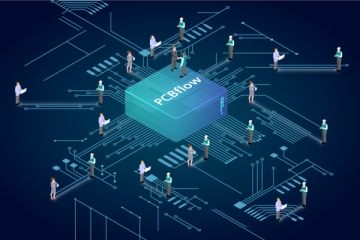
Siemens Launches Integrated PCB Design-to-Manufacturing Cloud Solution
Siemens has announced 'PCBflow,' a cloud-based software solution for safe and efficient integration throughout the PCB design and manufacturing process. As part of Siemens' 'Accelerator' portfolio, PCBflow accelerates the production transfer process from PCB design to manufacturing by enabling rapid design for manufacturability (DFM) analysis on an online basis.
2021.04.21by 이수민 기자
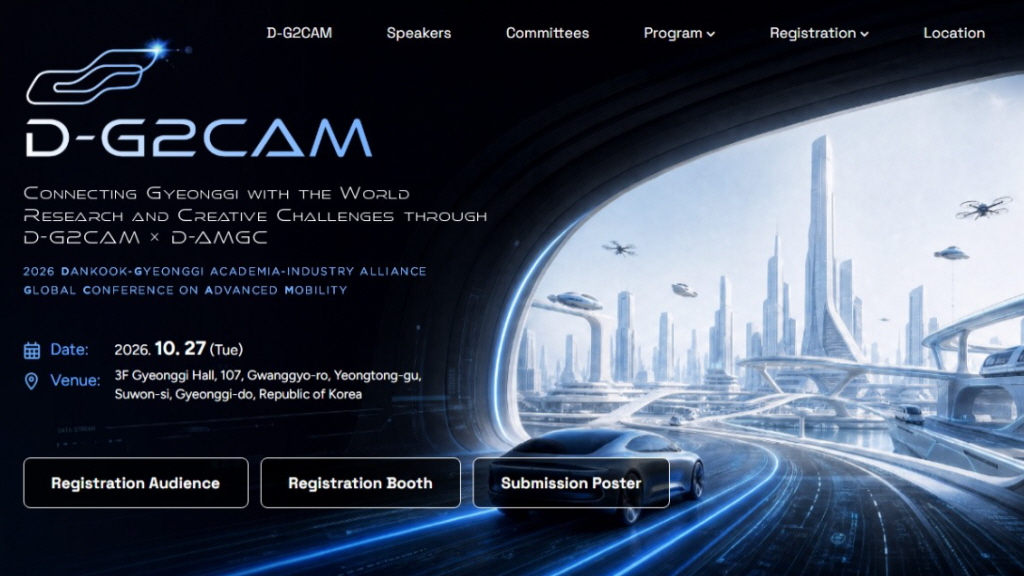
GAIA-Festa 2026, Autonomous Driving, AI, and Aerospace Experts Gather…Discussing Global Cooperation in the 'Silicon Intelligence Era'
GAIA-Festa 2026, which will be held in Suwon on October 27, is an industry-academia-research exchange event that explores the present and future of future mobility and AI technology through the global conference D-G2CAM 2026 and the international contest D-AMGC 2026. Domestic and international experts will share the latest research in autonomous driving, 5G/6G mobility, space technology, and data protection fields, while university students will showcase robots and physical AI prototypes that they have independently developed. Additionally, through poster presentations, corporate exhibitions, international cooperation meetings, and signing ceremonies, a platform will be established to connect the research capabilities and industrial needs of the Gyeonggi region with a global cooperation network.
2026.10.13by 배종인 기자
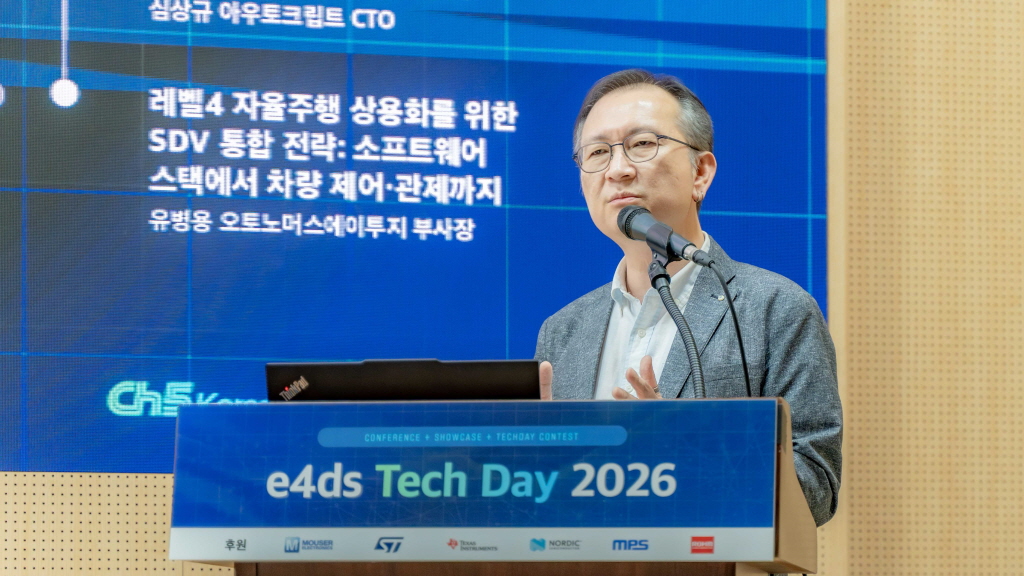
[e4ds Tech Day 2026 ⑨] Sim Sang-gyu, Autocrypt CTO: "In the Physical AI Era, Automotive Security Must Extend Beyond the Vehicle"
At e4ds Tech Day 2026, Sim Sang-gyu, CTO of Autocrypt, explained automotive cybersecurity strategies in the era of Physical AI and SDV (Software-Defined Vehicle). Automobiles are evolving as part of an ecosystem connected to AI, cloud, chargers, IoT, and robots, and he emphasized that the scope of security must expand beyond the vehicle interior to the entire connected environment. In particular, AI model tampering, adversarial attacks, OTA updates, and EV charger hacking were identified as major threats. He explained that response measures require zero trust, AI model integrity protection, intrusion detection, Security by Design and Default, and full lifecycle security management, and that proactive security system establishment beyond regulatory compliance is critical for securing future mobility competitiveness.
2026.10.12by 배종인 기자











