



ETRI: The Era of Tactile Remote Communication Is Just Around the Corner
 Published2021.04.23 08:32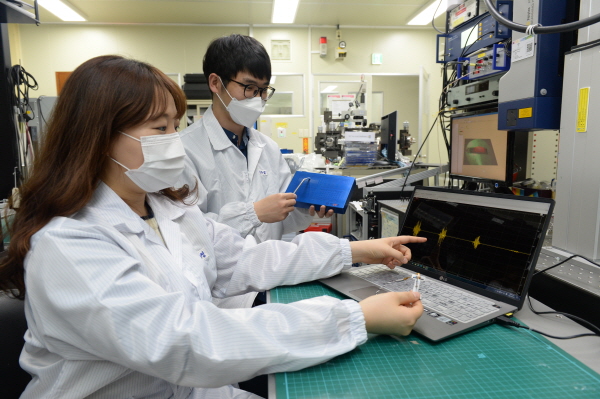
▲(Left) Researchers Kim Yun-jeong and Jin Han-bit are conducting a tactile sensation detection experiment using sensors.
ETRI's contribution to the localization of world-class piezoelectric materials
A domestic research team has developed tactile technology that allows people to touch and feel objects remotely. It is evaluated that the company has succeeded in developing core materials that were previously dependent on foreign technology, has demonstrated world-class performance, and has taken a step closer to leading the next-generation haptic field.
The Electronics and Telecommunications Research Institute (ETRI) announced that it has developed a piezoelectric material that maximizes the immersion of virtual and augmented reality and enables tactile communication even from a distance, and has presented next-generation tele-haptic technology through sensors and actuators.
Using telehaptic technology, the research team succeeded in developing a technology that allows users to feel the tactile sensation of metal, plastic, and rubber from up to 15 meters away.
The research team said that in the future, they will challenge themselves to develop technology that will allow people in the United States to feel the softness of their pet dog's fur while petting it.
To feel the texture of objects remotely like this, sensors, actuators, communication, and driving drivers are required.
The researchers used Bluetooth communication at the laboratory level and explained that the acquired and reproduced signals were approximately 97% identical.
In particular, there is almost no delay in the transmission process of data signals, so you can feel the sensation in real time.
The piezoelectric sensor developed by the research team is expected to be of great help in overcoming the small and medium-sized enterprises.
The research team explained that they have secured world-class piezoelectric performance while ensuring flexibility compared to currently used ceramic and polymer piezoelectric materials.
ETRI explained that this achievement was possible thanks to the core sensor and actuator technologies that the research team has been developing for over 10 years.
In particular, the piezoelectric actuator uses a multi-morph structure that can secure high output and displacement characteristics that surpass the existing simple laminated ceramic structure, achieving a displacement difference of up to 11 times.
The fast response, high output, and displacement characteristics of piezoelectric actuators allow for a maximum reproduction of the sense of touch. It is an element.
In addition, the research team created a piezoelectric sensor with a pattern of up to 13 channels (segments) by printing a piezoelectric composite sensor with a thickness of approximately 30㎛ on a flexible substrate, and produced an array of various piezoelectric actuators with a size of at least 1mm to reproduce the tactile data collected from the sensor.
This is also easy to scale up to large areas so that it can be applied to laptops or tablets in the future.
Patterned piezoelectric sensors/actuators can accurately convey not only the tapping or pressing location, but also texture information such as surface roughness and friction.
The vibration of the piezoelectric actuator is so strong that it can be felt by placing your hand on it and can cause a nut placed on top to bounce off.
In particular, this technology can remotely transmit not only touch but also texture and sound.
The research team also successfully demonstrated remote transmission of a message by transmitting the letters 'ETR I' in Morse code.
Due to the nature of piezoelectric materials, they react quickly enough for humans to perceive even with low power consumption, and when bent or pressed, they generate electric charges, allowing them to produce instantaneous voltages of more than 100 volts even without power.
The research team stated that the core technologies of this technology are: △high-pressure flexible composite sensor, △high-power multi-morph piezoelectric actuator, △piezoelectric sensor/actuator signal processing and drive, △composite tactile texture data control and wireless communication linkage technology.
ETRI Intelligent Sensor Research Lab Director Kim Hye-jin said, “Telehaptic technology for virtual and augmented reality allows you to feel the texture of a product without having to visit a store. He said, “We will strive to advance the technology so that it can be used in the future for automobiles, rehabilitation of the disabled, and the metaverse.”
This research was conducted as a project of the Ministry of Science and ICT under the title of ‘Development of High-Pressure Composite Materials and Ultra-Low-Power Laminated Piezoelectric Sensor/Actuator Composite Module Technology’, and was conducted as a joint research project by Professor Taeheon Yang of Korea National University of Transportation and Professor Jinyong Kim of Texas State University, under the supervision of ETRI.
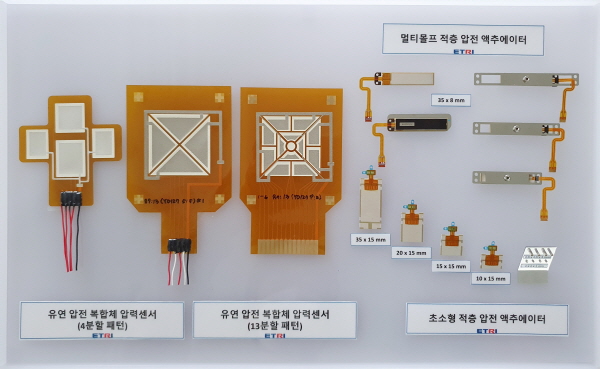
▲Piezoelectric sensors and actuators developed by ETRI researchers

Comments
Related news
Korea Instrument, KOLAS Accredited Calibration Agency First to Simultaneously Acquire ISO/IEC 27,001·27,701
Korea Instrument has become the first among KOLAS accredited calibration agencies to simultaneously acquire ISO/IEC 27,001 and ISO/IEC 27,701 certifications. Through its proprietary platforms CWIZ Enterprise and CWIZ Partners, the company has embedded information security and personal data protection requirements across all business processes including customer information, equipment data, and calibration reports, with plans to continuously advance its management system through regular audits and security inspections.
2026.10.12by 배종인 기자

TeamViewer One, IT Incident Automation Workflow and Resolution Center Enhanced
TeamViewer has added IT incident automation capabilities and an advanced Resolution Center to its integrated digital workplace management platform 'TeamViewer ONE'. Recurrent service disruptions, configuration errors, and capacity shortages are automatically handled according to preset policies, and device status verification through script deployment can be managed in a unified interface, significantly reducing repetitive tasks for IT teams.
2026.10.12by 배종인 기자
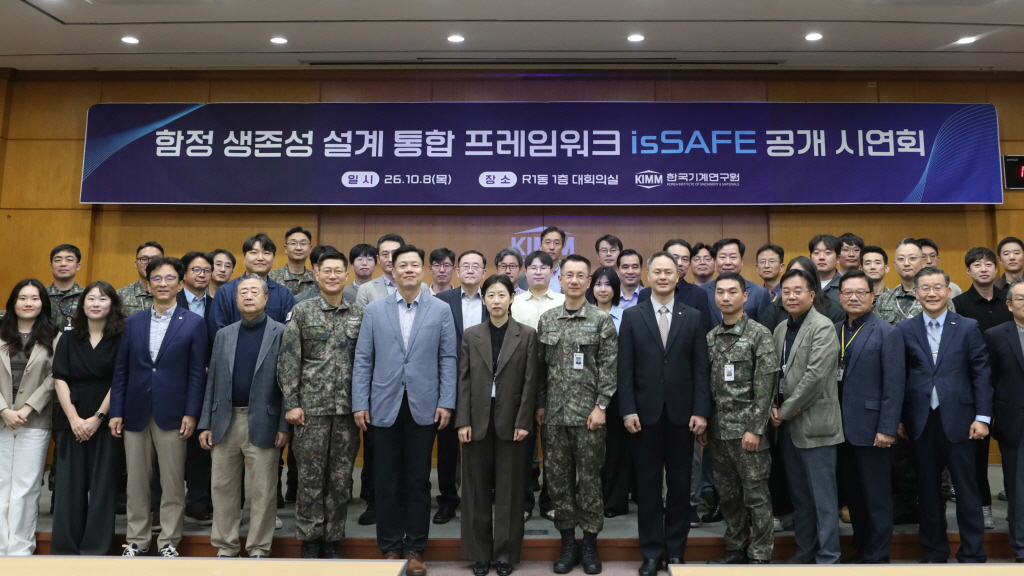
KAERI Develops Domestically-Produced SW 'isSAFE' for Integrated Warship Survivability Analysis
The Korea Institute of Machinery and Materials has developed domestically-produced software 'isSAFE' that comprehensively analyzes warship survivability. This design framework integrates the entire process—from warship modeling to hit scenario generation, vulnerability analysis, and results analysis—into a single platform, establishing an independent technology foundation in the defense technology sector that had previously relied on foreign software.
2026.10.08by 배종인 기자
ioCrops Shares AI Smart Farm Operations Case Study
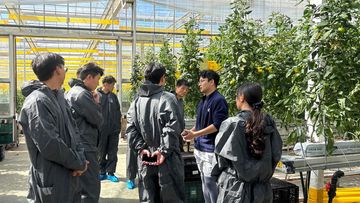
About 20 cultivators from the Agricultural Cooperative's Smart Agriculture Support Centers visited ioCrops' smart farm in Jincheon, North Chungcheong Province. They directly confirmed how data collected through substrate weight sensors, drainage weight sensors, and soil moisture sensors is applied to tomato cultivation, as well as the greenhouse pest control process using the AI-based autonomous spraying robot 'HERMAI'. By sharing on-site operational case studies combining data and automation technology, the adoption of smart farms in agricultural fields is being promoted.
2026.10.07by 배종인 기자
Rockwell, "90% Digital Transformation Essential in Life Sciences Manufacturing"
According to the digital transformation report for the life sciences manufacturing sector released by Rockwell Automation, 90% of responding companies recognized digital transformation as a business-critical element. Primary investment technologies include AI and machine learning (46%), process automation (44%), and cybersecurity (39%), with 64% of companies planning to expand AI utilization within the next year. However, only 32% of companies actually utilize more than half of the collected data, indicating an urgent need to strengthen data utilization capabilities.
2026.10.07by 배종인 기자











