


KETI, 'Self-supervised learning' language processing AI model 'KE-T5' released
 Published2021.04.29 08:38
Available in both Korean and English
AI supports minority learning to increase efficiency
On the 28th, the Korea Electronics Technology Institute (KETI) unveiled the cutting-edge language processing model, 'KE-T5'. KE-T5 is a dual language processing model that can be used for both Korean and English processing, using self-supervised learning, built based on Google's language model algorithm, T5 (Text-to-Text-Transformer).
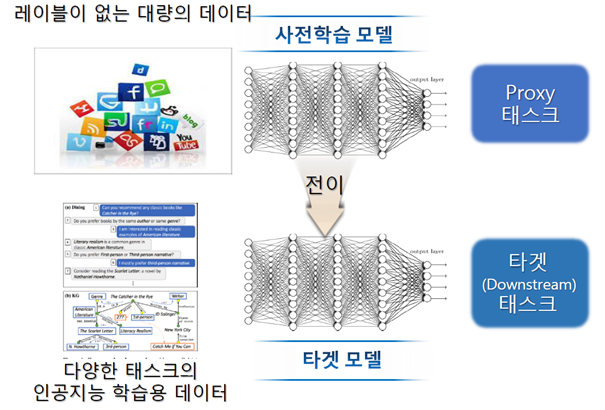
KE-T5 is the first Korean data-centric T5 series model and a general-purpose language model that includes both semantic recognition and expression characteristics of language. It supports AI few-shot learning, which builds learning models with a small amount of learning data, and shows high performance in various language processing, so it has high usability compared to the construction cost.
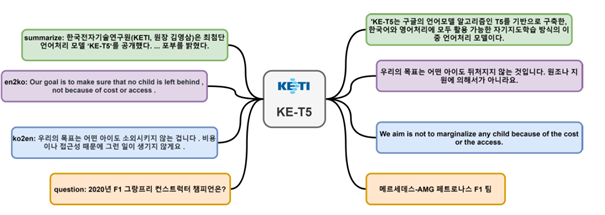
It is capable of processing Korean and English simultaneously, and is suitable for not only language comprehension such as document summarization, English-Korean and Korean-English translation, and conversation, but also high-level language processing that requires linked learning of expressions.
KETI has distributed 16 models on GitHub free of charge according to the type of text and the scale of learning, so that developers can select and use them according to their development environment and engine characteristics. In addition, 24 Korean-English summary and translation models that can be used immediately have been released. They can be used and distributed freely according to the Apache 2.0 license.
This technology was developed through the projects 'Technology to restore invisible parts in images using visual common sense through self-supervised learning' (2021-0-00537), 'Development of AI-based empathy service technology for emotional stability' (S0316-21-1002), and 'AI source technology that can infer facts and logical basis for each issue by learning non-standard text' (2021-0-00354) supported by the Ministry of Science and ICT, the Institute of IT Planning and Evaluation (IITP), and the National IT Industry Promotion Agency (NIPA).
Comments
Related news
Development of an AI system that analyzes even human spoken expressions
IBM has unveiled new AI technology that can identify and analyze human idiomatic expressions and colloquial language. Through technology provided via Watson API, enterprises can now analyze language data containing colloquial expressions, and additionally gain insights into how to leverage the knowledge embedded in that data.
2020.03.12by 최인영 기자
.jpg)
SKT-National Institute of the Korean Language Cooperate to Develop ‘Human-Level’ AI Korean Language Model
SK Telecom has concluded a business agreement with the National Institute of the Korean Language and decided to develop a next-generation AI language model optimized for Korean by utilizing the National Institute of the Korean Language's linguistic information. The next-generation AI Korean language model is a Korean-language general language model (GLM) with performance comparable to the English-based GPT-3 language model developed by OpenAI Research Lab. It can implement human-level GPT-3 capabilities in Korean, including solving language-related problems, writing essays, translation, and performing simple coding based on given sentences.
2021.04.08by 이수민 기자
Hyundai Motor and NIA Partner to Use AI Training Data
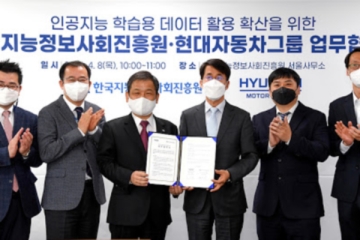
Hyundai Motor Group is partnering with the National Information Society Agency (NIA) to share artificial intelligence (AI) training data in the automotive field, accelerating the development of domestic automotive software and strengthening competitiveness.
2021.04.09by 배종인 기자
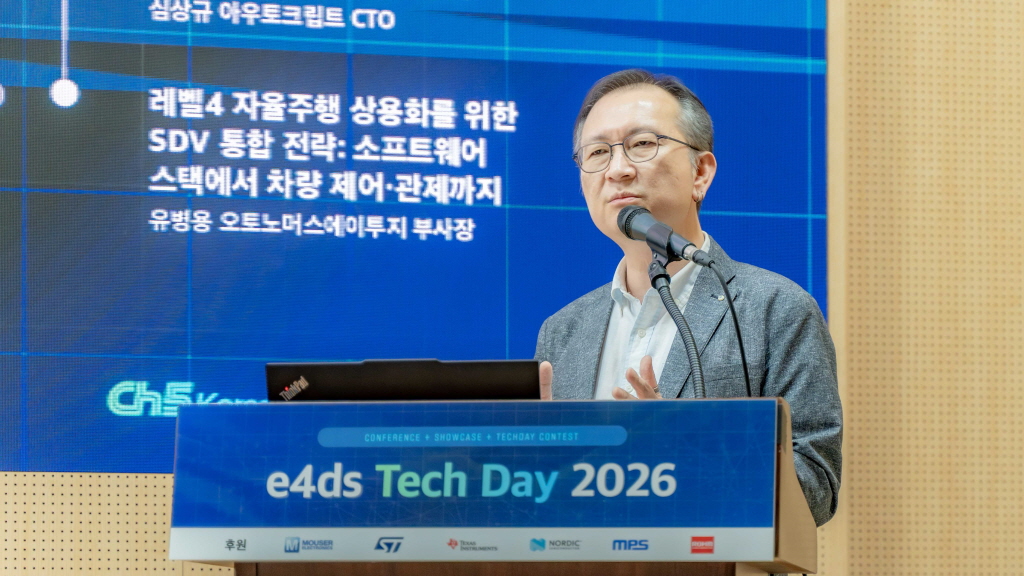
[e4ds Tech Day 2026 ⑨] Sim Sang-gyu, Autocrypt CTO: "In the Physical AI Era, Automotive Security Must Extend Beyond the Vehicle"
At e4ds Tech Day 2026, Sim Sang-gyu, CTO of Autocrypt, explained automotive cybersecurity strategies in the era of Physical AI and SDV (Software-Defined Vehicle). Automobiles are evolving as part of an ecosystem connected to AI, cloud, chargers, IoT, and robots, and he emphasized that the scope of security must expand beyond the vehicle interior to the entire connected environment. In particular, AI model tampering, adversarial attacks, OTA updates, and EV charger hacking were identified as major threats. He explained that response measures require zero trust, AI model integrity protection, intrusion detection, Security by Design and Default, and full lifecycle security management, and that proactive security system establishment beyond regulatory compliance is critical for securing future mobility competitiveness.
2026.10.12by 배종인 기자
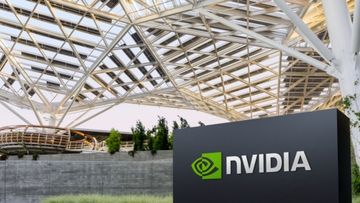
NVIDIA to Invest $1 Billion in U.S. Science Over Next Five Years
NVIDIA has announced plans to invest $1 billion over the next five years to strengthen U.S. scientific and technological competitiveness. The company will enhance cutting-edge artificial intelligence research and development capabilities in key areas including quantum computing, healthcare, and energy security, while expanding support for higher education research institutions and cloud service providers. NVIDIA is participating as a major industry partner in the White House Office of Science and Technology Policy's Genesis Mission, and is promoting supercomputer construction in collaboration with national laboratories including Argonne and Los Alamos.
2026.10.12by 배종인 기자











