



Hanwha Systems Begins Full-Scale Development of Night Vision
 Published2021.04.29 09:36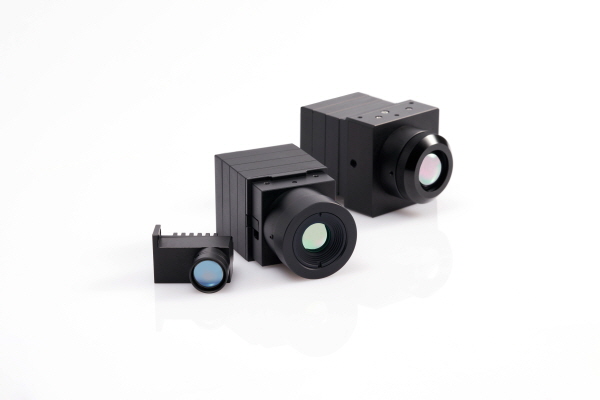
Hanwha Systems (CEO Kim Yeon-cheol) is embarking on the development of 'night vision (thermal imaging camera),' a key technology that will accelerate the era of autonomous driving.
Hanwha Systems announced on the 28th that it had been selected as the preferred bidder for the project of ‘Development of thermal imaging fusion 3D camera technology capable of responding day and night’ by participating in a consortium led by AMS, a leading automotive electronics company.
This project is one of the autonomous driving technology innovation projects and is the only domestic project to develop 'night vision,' an essential sensor for autonomous vehicles.
The selected consortium will develop a "thermal imaging fusion 3D camera" for vehicles by January 2025, combining daytime and thermal imaging cameras. The goal is to develop a high-performance fusion camera capable of accurately recognizing objects at distances of 250 meters or more, utilizing AI-based deep learning technology to recognize information about various obstacles in Level 4 autonomous driving environments.
In this project, Hanwha Systems plans to develop an XGA-level (1024x768 pixels) night vision by applying the intelligent thermal engine module 'Quantum Red' technology released last year. This is the highest image quality among domestic thermal imaging cameras.
In particular, QuantumRed uses a system-on-chip (SoC) certified to the world's first automotive component reliability standard, AEC-Q100, which is expected to enable the supply of night vision optimized for autonomous vehicles in the future. AEC-Q100 is a mandatory certification required to enter the challenging automotive electronics sector.
The core of autonomous driving technology is optimal decision-making and operation through accurate perception. Night vision utilizes long-range infrared sensors to detect and identify people and animals through video in driving conditions where visual recognition is difficult, such as at night or in fog. It can detect people and animals from a distance of more than 100 meters, the minimum distance required for emergency braking, helping prevent accidents.
The global automobile market is already seeing an increase in vehicles equipped with night vision, and the technology is evolving beyond simply securing forward visibility to intelligent night vision.
For 40 years, Hanwha Systems has developed and supplied electro-optical equipment for surveillance and reconnaissance, night vision systems for tanks and armored vehicles, and day/night sights and observation scopes. It holds over 90% of the domestic defense thermal imaging camera market share. Recently, the company successfully localized the Electro-Optical Target Tracking System (EOTGP) and Infrared Search and Track (IRST) for the KF-21 Boramae, the first domestically produced fighter jet, once again demonstrating its leading technological competitiveness. In addition, with the launch of Quantum Red last year, the company announced its full-scale entry into the night vision market through an OEM production agreement with automotive electronics specialist Truwin.
Kim Yeon-cheol, CEO of Hanwha Systems, said, “Based on our world-class technological prowess, which enabled us to develop the first thermal imaging camera in Korea, we will strive to fully develop the domestic night vision industry,” adding, “We will continue to secure growth opportunities by expanding our business areas beyond the commercialization of vehicle night vision to the aviation mobility field.”

Comments
Related news
Hanwha Systems Achieves Record-Breaking Performance, "Accelerates PAV Development"
Hanwha Systems announced through preliminary earnings disclosure that it achieved record-high performance last year with sales of 1.546 trillion won and operating profit of 85.8 billion won. Hanwha Systems plans to intensively foster AI, unmanned systems, cyber, and avionics. PAV development will also be accelerated. The company plans to enter the global civil market together with Overair, targeting approval of type certification from the Federal Aviation Administration.
2020.02.11by 이수민 기자

Launching Mid-to-Long-Term Policy Council with Goal of Building 5G Industrial Ecosystem
The Ministry of Science and ICT held a launching meeting for the 5G+ Industrial Ecosystem Policy Council to foster a 5G+ convergence ecosystem. The policy council was organized in accordance with the 2021 5G+ Promotion Plan to lead the 5G+ industrial ecosystem globally. In addition to the industrial ecosystem policy council launched today, the policy council to strengthen public-private collaboration related to 5G comprises a total of seven entities, including five 5G services (smart factory, immersive content, digital healthcare, autonomous vehicles, and smart city) and 5G networks.
2021.03.25by 강정규 기자
Samsung Electronics' Intelligent Car Headlamp LED Line Incorporates Light Source Technology
Samsung Electronics has launched an intelligent headlamp LED that achieves a 300:1 contrast ratio while reducing the area to approximately 1/16 that of conventional intelligent headlamp LED modules, marking its entry into the adaptive driving beam (ADB) market for electric vehicles and autonomous vehicles.
2021.04.16by 배종인 기자
NVIDIA Unveils 8th Generation Platform to Verified Autonomous Driving Capabilities
To develop autonomous vehicles, it is necessary to comprehensively test and validate hardware and software not only for real-time processing for autonomous driving but also to withstand the demanding conditions of everyday driving. In response, NVIDIA has unveiled its eighth-generation Drive Hyperion platform to support automakers in developing autonomous vehicles. It comes with all the hardware necessary to validate autonomous driving systems at the highest performance levels.
2021.04.26by 이수민 기자

[e4ds Tech Day 2026 ⑨] Sim Sang-gyu, Autocrypt CTO: "In the Physical AI Era, Automotive Security Must Extend Beyond the Vehicle"
At e4ds Tech Day 2026, Sim Sang-gyu, CTO of Autocrypt, explained automotive cybersecurity strategies in the era of Physical AI and SDV (Software-Defined Vehicle). Automobiles are evolving as part of an ecosystem connected to AI, cloud, chargers, IoT, and robots, and he emphasized that the scope of security must expand beyond the vehicle interior to the entire connected environment. In particular, AI model tampering, adversarial attacks, OTA updates, and EV charger hacking were identified as major threats. He explained that response measures require zero trust, AI model integrity protection, intrusion detection, Security by Design and Default, and full lifecycle security management, and that proactive security system establishment beyond regulatory compliance is critical for securing future mobility competitiveness.
2026.10.12by 배종인 기자











