



Kia and SK Innovation Announce Establishment of a Circular Ecosystem for EV Battery Recycling
 Published2021.04.29 11:09
After use, the battery can be recycled as ESS or
Recover and recycle lithium, nickel, cobalt, etc.
As electric vehicles (EVs) become more widespread, concerns are growing about how to dispose of waste batteries. Kia and SK Innovation announced on the 29th that they have secured the technological foundation for recovering lithium and other metals from waste batteries, enabling the environmentally friendly disposal of EV batteries.
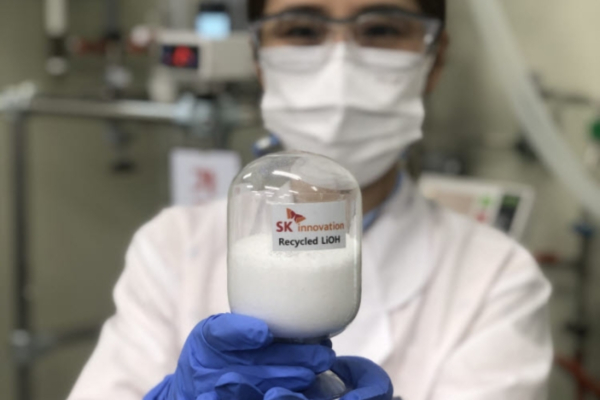
In March of last year, as part of their efforts to strengthen ESG management, the two companies signed a business agreement to build an EV battery industry ecosystem. Following this, they conducted a one-year pilot project to recycle used batteries, evaluating the feasibility, effectiveness, and efficiency of metal recovery within batteries.
Kia evaluates batteries after use using its battery performance evaluation system. Those with excellent residual performance are reused as energy storage systems (ESS) at the Hyundai Motor Group level, divided into modules or packs. Those with low residual performance are disassembled into individual cells.
SK Innovation uses its own technology to recover cathode metal resources such as lithium, nickel, and cobalt from batteries disassembled by Kia into individual cells, and uses them to recycle EV batteries.
The two companies plan to build an EV battery circulation ecosystem that encompasses ▲battery disassembly ▲metal resource recovery ▲cation material use ▲battery manufacturing ▲vehicle installation after use. We also plan to create various management models for eco-friendly disposal of batteries after use.
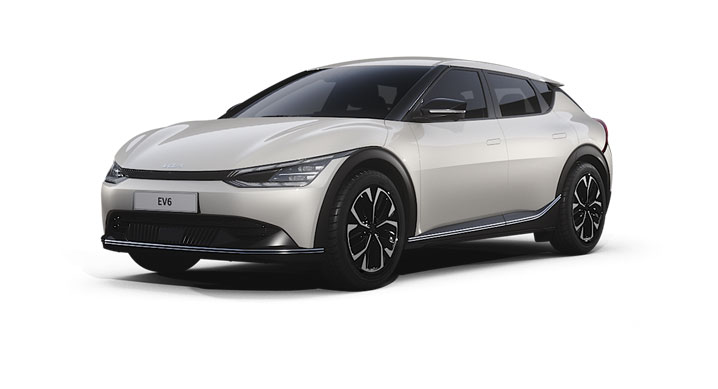
“We will apply this process to Kia’s first dedicated electric vehicle, the EV6, which will be released in the second half of the year, and enhance our position as an eco-friendly mobility brand,” said Kwon Hyuk-ho, head of Kia’s domestic business division.
Kim Chul-joong, head of SK Innovation's Strategy Division, explained, "Recycling used batteries is one way to address the growing demand for metal resources due to the global spread of electric vehicles, and it can also alleviate greenhouse gas emissions and the environmental burden on the country due to production."
Comments
Related news

5 Winds of Change to Blow Through the Automotive Industry in 2021
This year's automotive industry is expected to continuously embrace new technologies and approaches to establish a foundation for autonomous driving business. Willard Tu, Senior Director of Xilinx's Automotive Business Division, predicts five changes that will sweep through the automotive industry this year: the expansion of AI technology to areas beyond ADAS, autonomous commercial vehicles laying the groundwork for autonomous passenger vehicles, suburban areas growing alongside electric vehicle infrastructure, the emerging battery recycling business, and the beginning of adaptive platformization of personally-owned vehicles.
2021.02.19by 명세환 기자
Aqueous battery material that outperforms lithium-ion even in water has been developed
A research team led by Professor Kang Jeong-goo of the Department of Materials Science and Engineering at KAIST has developed a hybrid battery that operates in water and enables rapid charging. The research team achieved high capacity and high power performance by utilizing polyvalent metal sulfides with conductivity 100 times higher than metal oxides as electrodes for the positive and negative terminals of an aqueous battery. With superior safety and economic advantages compared to currently used lithium-ion batteries, it is expected to be suitable for portable devices requiring rapid charging and battery applications in situations where safety is critical.
2021.02.26by 이수민 기자
.jpg)
LG SK Battery Lawsuit, '2 Trillion' Settlement
LG Energy Solution and SK Innovation have reached a dramatic settlement in their lawsuit, and expectations are gathering that the resolution of litigation risk will lead to increased utilization rates at both companies' U.S. factories and accelerated additional investments.
2021.04.12by 배종인 기자

[e4ds Tech Day 2026 ⑨] Sim Sang-gyu, Autocrypt CTO: "In the Physical AI Era, Automotive Security Must Extend Beyond the Vehicle"
At e4ds Tech Day 2026, Sim Sang-gyu, CTO of Autocrypt, explained automotive cybersecurity strategies in the era of Physical AI and SDV (Software-Defined Vehicle). Automobiles are evolving as part of an ecosystem connected to AI, cloud, chargers, IoT, and robots, and he emphasized that the scope of security must expand beyond the vehicle interior to the entire connected environment. In particular, AI model tampering, adversarial attacks, OTA updates, and EV charger hacking were identified as major threats. He explained that response measures require zero trust, AI model integrity protection, intrusion detection, Security by Design and Default, and full lifecycle security management, and that proactive security system establishment beyond regulatory compliance is critical for securing future mobility competitiveness.
2026.10.12by 배종인 기자

Practical HIL Construction Strategy for Automotive and Off-Highway Controller Validation
As vehicle E/E architecture transitions to zonal structures and shifts to software-defined vehicles (SDV), the number of controllers (ECUs) requiring validation and software complexity are surging dramatically. Meanwhile, real vehicle testing cannot provide repeated verification under identical conditions and entails lead time and safety concerns. This white paper explains the principles of HIL (Hardware-in-the-Loop) validation and the structure of the NI platform composed of PXI, SLSC, and VeriStand, and through two actual implementation cases—Camera Record & Replay HIL for In-Cabin Monitoring Controller (ICMU) and Forklift Controller (VCU) HILS—describes how controller-level regression testing becomes possible. Additionally, it explicitly states application boundaries and limitations, such as lack of A2B support.
2026.10.12by 편집부











