



Automotive semiconductor shortages will likely persist for the foreseeable future.
 Published2021.04.30 12:11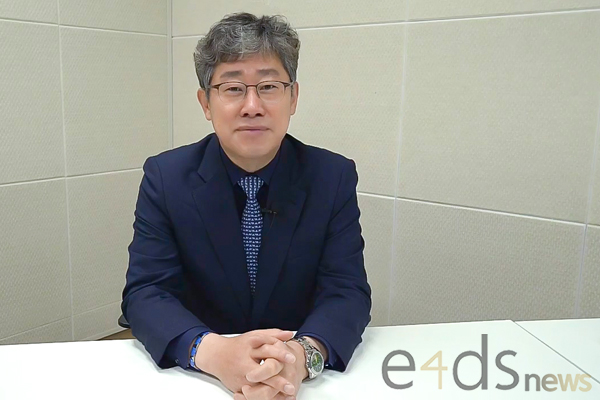
Automotive semiconductors grew by an average of 10% annually, while foundries grew by only 4%.
The overall semiconductor market is growing at an average annual rate of 5%, driven by growth in IoT and data centers.
It is predicted that the supply and demand imbalance in automotive semiconductors will continue for the time being due to insufficient production capacity compared to the average annual increase in demand for automotive semiconductors.
e4ds news held the 'e4ds Semiconductor Technology Conference 2021 Spring' through an online webinar on the 28th.
Ki-Hyeon Ahn, Executive Director of the Korea Semiconductor Industry Association, who participated in the conference that day, presented an introduction to the semiconductor industry as a whole and future market outlook through the topic of 'Recent Issues and Responses in the Semiconductor Industry.'
Regarding automotive semiconductors, which have been an issue recently, Executive Director Ahn Ki-hyun said, “Semiconductor production takes at least three months, but this year, due to conservative semiconductor orders from automobile companies, the production of automotive semiconductors could not meet the suddenly increased demand, resulting in a supply shortage.” He added, “Given the nature of foundries, which schedule semiconductor production in advance, it will not be easy to increase supply even if orders are placed now.”
Also, “It is expected that the automotive semiconductor market will grow by more than 10% on average per year due to this incident, but the scale of foundry expansion will only increase by 4.1% on average per year, so the imbalance between supply and demand will continue, and the shortage of automotive semiconductors will continue for the time being.”rdquo; was predicted.
In addition, the semiconductor market is expected to grow at an average annual rate of 5.1% from 2019 to 2024, and this is because the market is expected to continue to rise in the future due to the full-fledged implementation of the 4th Industrial Revolution, including AI and big data. In the past, PCs and mobile devices led the market, but in the future, IoT, robots, and data centers are expected to lead the semiconductor market.
Regarding the current state of the semiconductor market, the United States currently dominates the global semiconductor market with a 50% share, while Korea has consistently maintained the second-largest market share since 2013, recording 18% in 2019.
Regarding dual-system semiconductors, he mentioned that American companies occupy approximately 70% of the global market, and their dominance is further strengthened through market dominance in CPUs, GPUs, APs, and NPUs.
In particular, in the case of fabless, the United States dominates the market with 55%, while Korea has a market share of only 1.6%.
In the case of CPUs, the market is divided into two by Intel and AMD in the US, making it impossible for new businesses to enter the market. However, in the case of mobile APs, it is analyzed that entry into the new market is possible if only the technological prowess is present.
Regarding the position of the semiconductor industry in Korea, semiconductors have maintained a double-digit export share from 2013 to the present, and are the top export item, accounting for more than 20% of total exports in 2018.
In particular, Korea is a leading country in memory semiconductors, with DRAM accounting for 72.4% of the global market and NAND accounting for 49.5%. With SK Hynix's acquisition of Intel's NAND business, its market share is expected to increase further in the future.
Executive Director Ahn Ki-hyun said, “The semiconductor market is dominated by the U.S., China, Taiwan, Korea, and Japan.He said, “We are in the midst of a fierce competition for cheap products,” and “We must establish the number one position in memory by strengthening the industrial ecosystem and widening the technology gap, and we must strive to strengthen the capabilities of system semiconductor companies, enhance the competitiveness of materials, parts, and equipment companies, develop next-generation semiconductor technology, and train excellent professionals to lead technology.”

Comments
Related news

Will the ongoing semiconductor supply and demand instability change the foundry landscape?
The shortage of automotive semiconductors stems from major automotive semiconductor manufacturers' failed demand forecasts, who anticipated reduced automobile sales due to the COVID-19 pandemic, as well as the rapidly advancing electrification of vehicles and enhanced autonomous driving capabilities. The automotive semiconductor shortage shows signs of extending to broader semiconductor shortages across the entire manufacturing sector. In response, the EU, the United States, and other regions are accelerating efforts to reclaim semiconductor manufacturing capabilities that have become dependent on Taiwan and South Korea.
2021.03.27by 이수민 기자

The Korea Automotive Research Institute (KARI) says, "Exploring the automotive semiconductor AP market is essential."
The Korea Automotive Research Institute has stated that rather than entering the MCU-focused automotive semiconductor market, where established global leaders are firmly positioned amid current supply shortages in the electric vehicle semiconductor market, it is necessary to seek opportunities in the AP (application processor for data computation and processing functions) market that is being newly formed amid technological changes.
2021.04.13by 배종인 기자
TSMC's power outage adds insult to injury for automotive semiconductors
TSMC is experiencing a power outage that has halted some automotive semiconductor production processes, which is expected to intensify the semiconductor supply shortage for vehicles that has been facing recent difficulties. According to Taiwan media reports, on the 14th, TSMC's Fab-14A P7 in Taiwan's Southern Science and Technology Park (STSP) experienced a production stoppage accident due to a power outage.
2021.04.16by 배종인 기자

Intel Unveils Next-Generation 'Core Ultra Series 3' and vPro Platform for Enterprise PCs
Intel has officially unveiled the "Intel Core Ultra Series 3" for next-generation enterprise PCs and the latest vPro platform, addressing a wide range of demands from enterprise notebooks to high-performance workstations.
2026.03.26by 배종인 기자

ROHM Launches ESD Protection Diode Compatible with High-Speed Interfaces of 10Gbps or Higher
Semiconductor specialist ROHM has developed the 'RESDxVx series' of ESD (electrostatic discharge) protection diodes capable of responding to next-generation high-speed data communication environments exceeding 10Gbps, simultaneously enhancing both signal quality maintenance required in high-speed interfaces and IC protection performance.
2026.03.26by 배종인 기자











