



Memory: Technology Gap Reduction, Second Half Growth
 Published2021.04.30 14:52
.jpg)
▲NAND operating profit margin trends by company (Source: DRAMeXchange, NH Investment & Securities Research Center)
The chicken game is impossible to narrow the technology gap; the DRAM profit margin gap is less than 10 percentage points.
As the technological gap between memory semiconductor companies narrows, the difference in profit margins also decreases, and large-scale investment increases, which are often referred to as a chicken game, are expected to become more difficult. Accordingly, it is predicted that the increase in memory prices will expand in the second half of the year due to the favorable business conditions.
e4ds news held the 'e4ds Semiconductor Technology Conference 2021 Spring' through an online webinar on the 28th.
Do Hyun-woo, a research fellow at NH Investment & Securities who participated in the conference that day, looked into recent semiconductor industry issues under the topic of "Micron's technological prowess that surpassed Samsung Electronics" and forecasted the semiconductor market in the second half of the year.
At this event, Commissioner Do Hyeon-woo said that the technological gap between the three companies, Samsung Electronics, SK Hynix, and Micron, has narrowed significantly, which is positive for the supply and demand of memory, and predicted that the price increase of other memory products will expand as the business environment continues to be favorable in the second half of the year.
The reason for this was attributed to Micron's increased technological capabilities.
Micron announced a 176-layer 3DFollowing the announcement of NAND development, the company developed the world's first 1αnm DRAM in January of this year. In particular, it was announced at the time of actual mass production rather than at the previous research institute level, and it showed a clear difference from the past as the number of chips produced per wafer increased by 40% compared to 1znm.
In particular, Micron, unaware of its competitors, judged that multi-patterning using existing ArF exposure equipment up to 1βnm without using EUV equipment was a more efficient method, eliminating the need for large-scale investment in EUV equipment and increasing the utilization of existing equipment, which was advantageous for rapid new product development.
While competitors have not yet completed the development of 1αnm DRAM, Micron's 1αnm DRAM is expected to be sampled to customers in the first half of the year and shipped in earnest in the second half of the year.
This rise in Micron's technological prowess has narrowed the technological gap between it and companies like Samsung Electronics and SK Hynix. This narrowing of the technological gap has created an environment where it is difficult for leading companies to employ aggressive investment strategies, such as the "chicken game" strategy of the past. This has narrowed the gap in profit rates between companies, and it is expected that the investment scale for NAND capacity, as well as DRAM, will fall short of expectations.
In particular, the profit margin gap in DRAM is already less than 10 percentage points, and in the case of NAND, the profit margin gap is likely to narrow if latecomers mass-produce next-generation products with 170 layers or more first.
Accordingly, a turnaround in the NAND market is expected following DRAM, and the increase in memory prices is also expected to expand as demand increases in the second half of the year.
Regarding China's semiconductor boom, Commissioner Do Hyeon-woo stated that the Chinese government is filtering out insolvent companies and focusing on promising ones, so we must continue to pay attention to the Chinese market.
In addition, compound semiconductors manufactured using wide bandgap materials such as GaN and SiC can withstand voltages more than 10 times higher than existing silicon semiconductor-based semiconductors, making them suitable for IT device chargers, 5G, industrial equipment, and electric vehicles., solar energy, etc., and is expected to grow at an average annual rate of 22% to reach $5.1 billion by 2029.
Commissioner Do Hyeon-woo predicted that the market growth will increase in the future, saying that smartphone manufacturers such as Xiaomi, Oppo, and Vivo have started to install GaN transistors in their chargers, and that large IT and automobile companies have started to use compound semiconductors, such as Hyundai Motors applying SiC semiconductors to E-GMP.

Comments
Related news
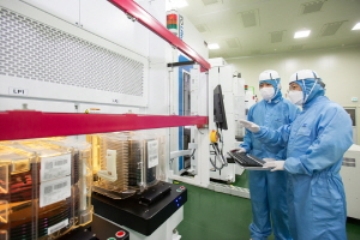
2020 Semiconductor 184 Companies Sales 268 Trillion... 9% Increase YoY
Based on disclosure data analyzed by e4ds, 184 domestic semiconductor-related companies recorded 2020 sales of 26.7999 trillion won on a separate financial statement basis, up 9% year-over-year. Operating profit increased 50% year-over-year to 3.0053 trillion won, and net income for the period reached 2.32114 trillion won, a 24% increase year-over-year. Despite COVID-19 and declining memory semiconductor prices, both domestic consumption and exports increased, with operating profit surging 50%.
2021.04.20by 배종인 기자
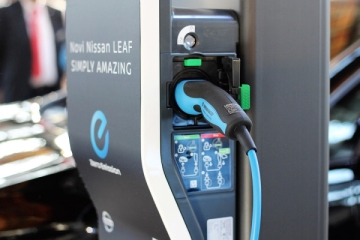
Support for next-generation compound-based power semiconductor R&D is needed.
With the acceleration of global digitalization and environmentally-friendly policies, the power semiconductor market based on compound materials such as SiC and GaN, which offer higher power efficiency and durability compared to Si, is emerging as a new growth area. SiC semiconductors are suitable for electric vehicles and solar inverters due to their 10 times higher voltage durability and 30% lower power loss characteristics compared to Si semiconductors, while GaN semiconductors are expected to be utilized in fast wireless charging and wireless communications applications due to their faster switching speeds, which facilitate miniaturization.
2021.04.26by 이수민 기자
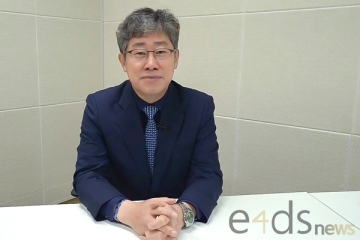
Automotive semiconductor shortages will likely persist for the foreseeable future.
An Ki-hyun, Executive Director of the Korea Semiconductor Industry Association, delivered a keynote presentation titled "Recent Issues and Responses in the Semiconductor Industry" at the 'e4ds Semiconductor Technology Conference 2021 Spring'. Executive Director An Ki-hyun projected that automotive semiconductor supply and demand imbalances will persist in the near term, as production capacity falls short relative to the year-over-year demand growth for automotive semiconductors.
2021.04.30by 배종인 기자

Intel Unveils Next-Generation 'Core Ultra Series 3' and vPro Platform for Enterprise PCs
Intel has officially unveiled the "Intel Core Ultra Series 3" for next-generation enterprise PCs and the latest vPro platform, addressing a wide range of demands from enterprise notebooks to high-performance workstations.
2026.03.26by 배종인 기자

ROHM Launches ESD Protection Diode Compatible with High-Speed Interfaces of 10Gbps or Higher
Semiconductor specialist ROHM has developed the 'RESDxVx series' of ESD (electrostatic discharge) protection diodes capable of responding to next-generation high-speed data communication environments exceeding 10Gbps, simultaneously enhancing both signal quality maintenance required in high-speed interfaces and IC protection performance.
2026.03.26by 배종인 기자











