


"Automotive Semiconductors Shift Toward Centralized Architecture"
 Published2021.05.04 16:37
.jpg)
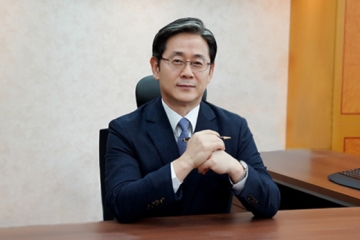
▲Yeon Gyu-bong, Center Director at Korea Automotive Research Institute, is presenting on "Automotive Semiconductor Technology Trends."
Joint Cooperation Between Module and OEM Industries Critical for Reliability Assurance
Automotive semiconductor systems are projected to transition toward a centralized architecture where a main artificial intelligence processor in the cockpit controls the entire vehicle.
On the 28th, e4ds news conducted the 'e4ds Semiconductor Technology Conference 2021 Spring' through an online webinar.
Yeon Gyu-bong, Center Director at Korea Automotive Research Institute, who participated in the conference, presented on "Automotive Semiconductor Technology Trends."
Director Yeon noted that automotive semiconductors are composed of semiconductor sensors, semiconductor processors, and power semiconductors, and while some function independently, networks are also configured within vehicles enabling mutual communication and organic operation.
He further emphasized that semiconductors have become increasingly important for autonomous driving, and predicted that as the semiconductor share in automobiles increases, the importance of reliability will also grow.
Currently, the Automotive Parts Research Institute has completed a core component development project for Level 3 autonomous vehicles, which includes nine components: △digital maps △RADAR △LiDAR △cameras △integrated positioning △V2X communication △ADR △integrated DCU △HVI, as well as △dedicated roads △urban demonstration.
The institute also mentioned that it has launched subsequent projects targeting Level 4 and Level 5.
Notably, automotive semiconductors are highly import-dependent and require localization, with the importance of reliability assurance through joint cooperation between module and finished vehicle manufacturers emphasized.
As automotive companies are increasingly entering semiconductor design directly, the importance of automotive semiconductors is expected to grow further in the future.
Particularly for autonomous driving, the environment is projected to shift toward a system where the main artificial intelligence processor in the cockpit controls the entire vehicle, with automotive semiconductor architecture transitioning toward centralization.
In parallel, as connectivity between existing non-safety systems and safety systems increases, the importance of functional safety for autonomous vehicle system semiconductors is also growing. It was emphasized that securing in-vehicle system semiconductor reliability technology for application to vehicle safety systems is critical.

Comments
Related news
Key Foundry Begins Full-Scale Mass Production of Automotive Semiconductors
As the semiconductor shortage for automotive applications has been intensifying recently, K-Foundry (CEO Lee Tae-jong), the nation's only pure-play foundry semiconductor company, is ramping up mass production of automotive semiconductors.
2021.04.08by 배종인 기자
Automotive semiconductor shortages will likely persist for the foreseeable future.
An Ki-hyun, Executive Director of the Korea Semiconductor Industry Association, delivered a keynote presentation titled "Recent Issues and Responses in the Semiconductor Industry" at the 'e4ds Semiconductor Technology Conference 2021 Spring'. Executive Director An Ki-hyun projected that automotive semiconductor supply and demand imbalances will persist in the near term, as production capacity falls short relative to the year-over-year demand growth for automotive semiconductors.
2021.04.30by 배종인 기자
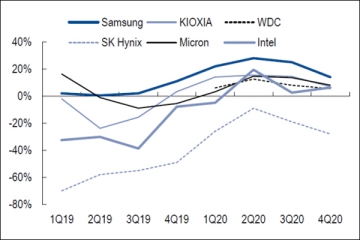
Memory: Technology Gap Reduction, Second Half Growth
Do Hyun-woo, research director at NH Investment & Securities, predicted at the 'e4ds Semiconductor Technology Conference 2021 spring' that the profit margin differences among memory semiconductor companies will decrease as the technology gap narrows, and that the upward price movement of memory in the second half of the year will expand due to favorable market conditions.
2021.04.30by 배종인 기자

Intel Unveils Next-Generation 'Core Ultra Series 3' and vPro Platform for Enterprise PCs
Intel has officially unveiled the "Intel Core Ultra Series 3" for next-generation enterprise PCs and the latest vPro platform, addressing a wide range of demands from enterprise notebooks to high-performance workstations.
2026.03.26by 배종인 기자
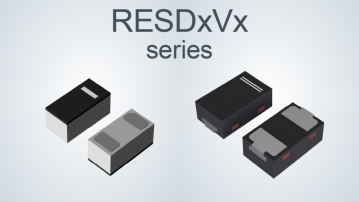
ROHM Launches ESD Protection Diode Compatible with High-Speed Interfaces of 10Gbps or Higher
Semiconductor specialist ROHM has developed the 'RESDxVx series' of ESD (electrostatic discharge) protection diodes capable of responding to next-generation high-speed data communication environments exceeding 10Gbps, simultaneously enhancing both signal quality maintenance required in high-speed interfaces and IC protection performance.
2026.03.26by 배종인 기자











