



SKT and Geninus to Create AI Genome Analysis Specialized for Koreans
 Published2021.05.06 17:06
Development of AI algorithms for genome analysis with Geninus
Deriving new drug candidates through discovery of new drug targets
On the 6th, SK Telecom announced that it would develop an "AI-powered human genome analysis algorithm" with genome analysis company Geninus and utilize it to identify new drug targets. A new drug target is a gene or protein that will be affected by a new drug, and it represents the first step in drug development.
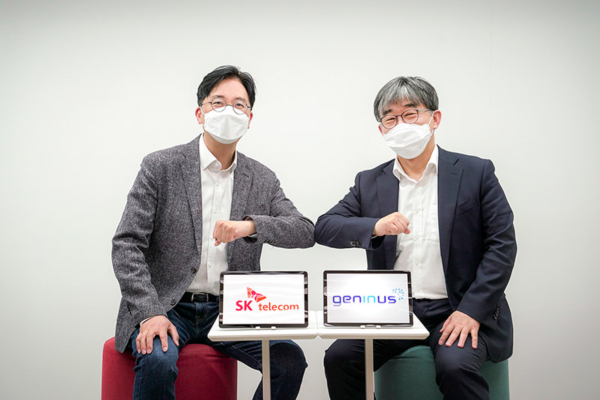
SKT will develop a genome analysis AI algorithm by analyzing genome and clinical big data provided by Geninus based on Meta Learner, an AI automation platform that can develop field-specific optimized AI solutions across various fields.
Geninus, which possesses genome analysis technology based on next-generation sequencing (NGS), selects targets obtained from the analysis results of AI algorithms and derives candidate substances for new drug development. Currently, Geninus is providing a genetic diagnosis service specialized in personalized treatment by utilizing various bioinformatics techniques based on its own genome big data.
Precision human genome analysis is a necessary field for personalized treatment of various diseases such as cancer diagnosis and treatment, myocardial infarction, and dementia. The data produced for precise genetic analysis of a single person amounts to approximately 100 GB, requiring big data analysis using AI.
The two companies plan to initially conduct a precise analysis of the human genome using the single-cell genome analysis AI algorithm developed through this collaboration. This will enable the interpretation of pathological characteristics in various patient organs and peripheral blood samples, and is expected to further facilitate research on various diseases, the development of treatments, and personalized precision medicine.
For example, personalized targeted cancer treatment becomes possible. Recent medical research reveals that even within the same cancer, pathological findings and clinical manifestations vary widely. This means that the genes that undergo mutations often differ, and the effects of these genes often differ. As genome analysis AI algorithms become more sophisticated, the effectiveness of cancer treatment can increase, potentially enabling earlier treatment.
According to the Korea Biotechnology Industry Organization's 'Global Clinical Genomics Analysis Market Trends,' the global clinical genome market size is expected to grow at an average annual rate of 19.8%, from USD 5.5 billion (approximately KRW 6.2 trillion) in 2019 to USD 13.55 billion (approximately KRW 15.3 trillion) in 2024.
Genius CEO Park Woong-yang said, “This collaboration will allow SK Telecom’s AI technology and Genius’s genome big data and NGS-based analysis technology to create synergy,” and added, “We expect that by implementing precision medicine from diagnosis to treatment, we will be able to get one step closer to overcoming incurable diseases, including cancer.”
Comments
Related news
NVIDIA and the Ministry of SMEs and Startups Recruit for AI Startup Support Program
Nvidia and the Ministry of SMEs and Startups are recruiting companies to participate in the Enup program by the 30th of this month. The Enup program is part of the 2021 Global Enterprise Collaboration Program that supports the growth of startups and their entry into overseas markets. Through this program, Nvidia provides support to startups in AI-related fields including healthcare, autonomous driving, 5G, and internet platform services.
2021.04.28by 강정규 기자
KETI, 'Self-supervised learning' language processing AI model 'KE-T5' released
Korea Electronics Technology Institute (KETI) has unveiled an advanced language processing model, KE-T5. KE-T5 is a bilingual processing model based on Google's language model algorithm T5, capable of being utilized for both Korean and English language processing using self-supervised learning methodology.
2021.04.29by 이수민 기자
Adaptive Computing: Solving the Practical Challenges of AI Productization
AI innovation and transformation are progressing rapidly. While the software industry has successfully achieved AI commercialization, the hardware industry remains in its early stages. This is because obstacles still exist that prevent proof-of-concept for AI algorithms from translating into actual hardware implementation. Software developers and AI scientists can overcome this through adaptive hardware.
2021.05.03by 이수민 기자
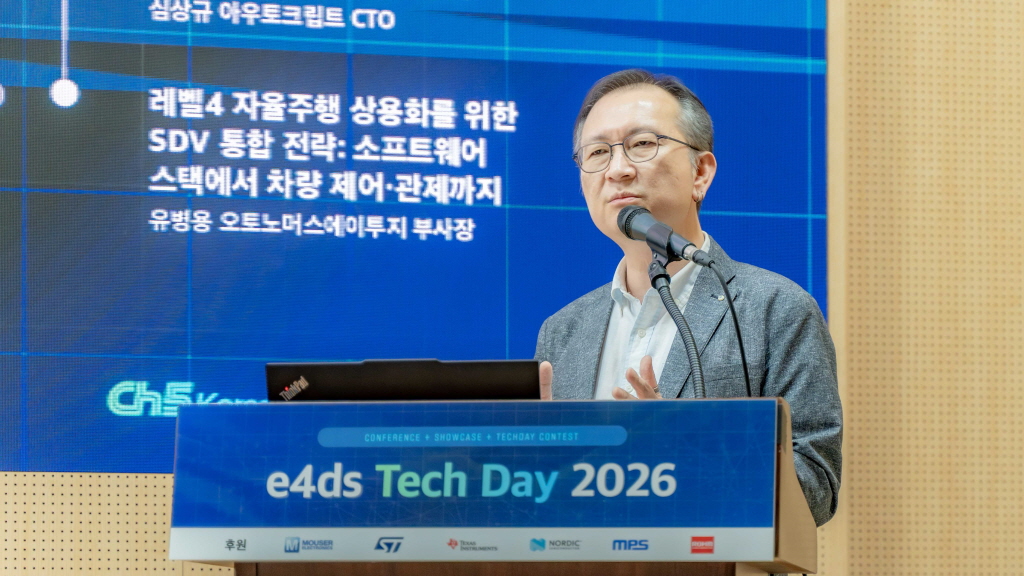
[e4ds Tech Day 2026 ⑨] Sim Sang-gyu, Autocrypt CTO: "In the Physical AI Era, Automotive Security Must Extend Beyond the Vehicle"
At e4ds Tech Day 2026, Sim Sang-gyu, CTO of Autocrypt, explained automotive cybersecurity strategies in the era of Physical AI and SDV (Software-Defined Vehicle). Automobiles are evolving as part of an ecosystem connected to AI, cloud, chargers, IoT, and robots, and he emphasized that the scope of security must expand beyond the vehicle interior to the entire connected environment. In particular, AI model tampering, adversarial attacks, OTA updates, and EV charger hacking were identified as major threats. He explained that response measures require zero trust, AI model integrity protection, intrusion detection, Security by Design and Default, and full lifecycle security management, and that proactive security system establishment beyond regulatory compliance is critical for securing future mobility competitiveness.
2026.10.12by 배종인 기자
NVIDIA to Invest $1 Billion in U.S. Science Over Next Five Years
NVIDIA has announced plans to invest $1 billion over the next five years to strengthen U.S. scientific and technological competitiveness. The company will enhance cutting-edge artificial intelligence research and development capabilities in key areas including quantum computing, healthcare, and energy security, while expanding support for higher education research institutions and cloud service providers. NVIDIA is participating as a major industry partner in the White House Office of Science and Technology Policy's Genesis Mission, and is promoting supercomputer construction in collaboration with national laboratories including Argonne and Los Alamos.
2026.10.12by 배종인 기자











