



Materials Research Institute Commercialization of Anion Exchange Membrane Water Electrolysis in Sight
 Published2021.05.17 15:38
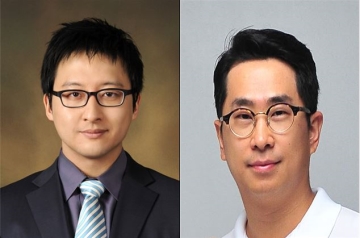
▲Research team members (from left) Dr. Choi Seung-mok, Dr. Yang Ju-chan, and Researcher Jung Jae-hoon from Korea Institute of Materials Science
Domestic research team has successfully developed domestic first water electrolysis stack demonstration technology that advances anion exchange membrane water electrolysis technology, which produces green hydrogen without using expensive precious metals, to a commercializable level.
The research team led by Dr. Choi Seung-mok at the Energy & Electronic Materials Research Division of Korea Institute of Materials Science (KIMS, Director Lee Jung-hwan), a government-funded research institute under the Ministry of Science and ICT, announced on the 17th that it has developed full-cycle integrated technology spanning from non-precious metal catalyst development to large-area electrodes and demonstration water electrolysis stack technology.
Hydrogen is drawing attention as a representative clean energy source replacing fossil fuels for achieving '2050 Carbon Neutrality,' and water electrolysis technology for producing hydrogen without emitting greenhouse gases is being actively developed worldwide. Among water electrolysis technologies suitable for green hydrogen production, anion exchange membrane water electrolysis is a next-generation water electrolysis technology capable of safely producing high-purity hydrogen at low cost using non-precious metal catalysts.
To complete a high-efficiency water electrolysis system, development of stack-customized high-activity catalysts is essential. To date, many catalysts with excellent performance have been developed, but verification of actual commercializable stack performance beyond catalyst-level performance verification is absolutely required. Until now, there have been limitations in mass production of catalysts, complex electrode fabrication processes, and system research.
The research team proposed a method to secure both hydrogen generation activity and durability by partially varying the oxidation state of inexpensive nickel and cobalt catalyst nanoparticles. The team successfully demonstrated this by confirming it in a hydrogen generation system.
By partially controlling the oxidation state, the research team concentrated the adsorption reaction of hydroxide ions (OH-) that reduces hydrogen generation activity on the oxide. Through this approach, the team improved the performance of the active metal catalyst and simultaneously suppressed metal ion dissolution, thereby securing both activity and durability. This goes beyond simply developing a hydrogen generation catalyst with secured performance and durability, confirming for the first time domestically that it can be applied and implemented in a commercializable large-area stack, thereby enhancing practical applicability.
Senior Researcher Yang Ju-chan of the research team stated, "Through water electrolysis stack demonstration, it is expected that the commercialization timeline for anion exchange membrane water electrolysis can be advanced," and added, "Based on these results, we were selected for the 2021 Rural Development Administration Agricultural Science and Technology Research and Development Project (Project title: Research on Water Electrolysis Hydrogen Production Technology Using Waste Nutrient Solution Linked with Renewable Energy)."
Director Lee Jung-hwan of Korea Institute of Materials Science stated, "The Institute has recently established the 'Carbon Neutrality Materials Technology Research Planning Division' as an organization to plan, discover, and conduct research projects on full-cycle materials technology related to hydrogen energy, leading the way in realizing carbon neutrality in materials technology," and added, "This research result is significant in that it can greatly contribute to the government's early establishment of a hydrogen ecosystem."
This research was conducted with support from the Ministry of Science and ICT's Hydrogen Energy Innovation Technology Development Project and major projects of Korea Institute of Materials Science. The research results were published in Applied Catalysis B: Environmental, an ELSEVIER international journal in the top 1% of environmental fields, on March 26.
The research team is currently conducting commercialization research based on this research result to apply anion exchange membrane water electrolysis stacks to systems.
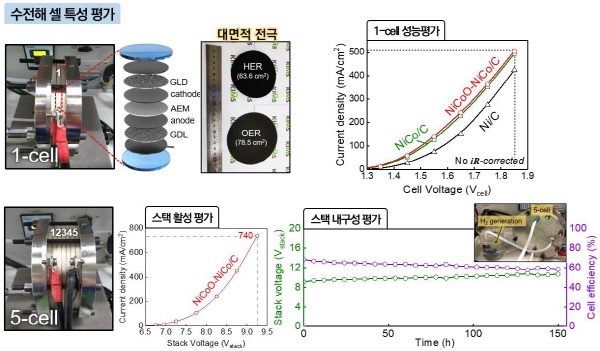
▲Performance evaluation of anion exchange membrane water electrolysis stack with oxidation state-controlled catalyst applied

Comments
Related news
Materials Science Takes the Lead in Overcoming COVID-19 Through Educational Donations
The Korea Institute of Materials Science (KIMS, President Lee Jeong-hwan), a government-funded research institute under the Ministry of Science and ICT, is actively contributing to overcoming COVID-19 through its educational donation program.
2021.04.29by 배종인 기자
Korea Institute of Materials Science Takes the Lead in Realizing Carbon Neutrality
The Korea Institute of Materials Science (KIMS, Director Lee Jung-hwan), a government-funded research institute under the Ministry of Science and ICT, has established the 'Carbon-Neutral Materials Technology Research Planning Group' and will actively engage in research in the materials technology sector for realizing carbon neutrality, as well as planning and discovering related projects.
2021.05.06by 배종인 기자
Materials Research Institute Develops Corona Antiviral Verification Mask
The Korea Institute of Materials Science (KIMS, Director Lee Jeong-hwan) has completed the development of a mask with verified anti-viral performance against COVID-19, raising expectations that it will contribute to preventing COVID-19 infection.
2021.05.11by 배종인 기자
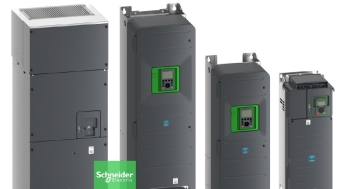
Schneider Aims for Building Energy Savings and Operational Stability with Next-Generation HVAC Drives
Schneider Electric has unveiled its next-generation HVAC drive product line 'Altivar HVAC'. The new product line's key features center on enhanced energy savings, system operational stability, and building management system integration. The products are divided into 'ATH200' for OEM and small equipment applications, and 'ATH600' for environments requiring continuous operation and advanced control. The company plans to expand the application scope from commercial buildings to facilities where HVAC system stability is critical, such as hospitals, airports, and data centers. The announcement includes over 30% energy savings, operation from -10°C to +60°C, Modbus and BACnet support, and compatibility with low global warming potential refrigerants.
2026.03.26by 명세환 기자
Ecolab Expands AI Data Center Cooling Business Through Acquisition of CoolIT
Ecolab has agreed to acquire CoolIT Systems, a liquid cooling company for AI data centers, for approximately $4.75 billion. The transaction is expected to close by Q3 2026, subject to regulatory approvals. CoolIT has been supplying direct-to-chip cooling-based coolant distribution units, cold plates, and manifolds, serving hyperscale data centers and colocation operators as customers. This acquisition is a measure to address the high-heat and high-density server environments created by AI proliferation. Ecolab plans to combine its water management and digital monitoring capabilities with CoolIT's hardware technology to expand its data center cooling business.
2026.03.26by 명세환 기자











