


LCDs Remain Competitive: When Will Next-Gen Panels Become Popular?
 Published2021.06.08 14:14
While the DP market size remains stable, the OLED market share is increasing.
Micro LED urgently needs to secure price competitiveness
BOE, China's largest display panel manufacturer, emerged as the star of the display industry in the first quarter of this year. According to the latest report by Display Supply Chain Consultants (DSCC), BOE recorded sales of $7.7 billion (approximately 8.6 trillion won) and an operating profit of $1.4 billion (approximately 1.5 trillion won) in the first quarter, ranking first in the panel industry for both revenue and operating profit.
With the increase in demand for remote work and remote education due to the COVID-19 pandemic, sales of TVs, monitors, laptops, and tablet PCs rose, and the demand for LCD panels also increased significantly. Due to the rapid surge in demand, the price of LCD panels of all sizes more than doubled compared to the previous year. As the increase in demand and the rise in prices coincided, BOE, whose main business is LCD panels, benefited.
Samsung Display (SDC) and LG Display (LGD), which once produced about half of the world's LCD panels, decided to shut down their LCD lines and focus on OLED panels as panel prices continued to fall due to China's rapid rise starting in 2016. However, as demand for LCD panels surged due to the unexpected situation, a full-scale withdrawal has been put on hold.
Although next-generation display panels such as OLED and Mini LED are being produced, the adoption rate of LCD panels remains high as they satisfy both affordability and technological maturity.
According to the Korea Display Industry Association (KDIA), the share of LCDs in global display panel sales is expected to remain at around 75% this year and 60% in 2027 in terms of revenue. In the long term, the global display panel market is predicted to remain at approximately 170 trillion won, a level not significantly different from this year or 2027, suggesting a downturn in the LCD market.
The recent surge in LCD panel prices is also expected to stabilize. Kim Hyun-soo, a senior researcher at Hana Financial Investment, stated, “Price fluctuations for LCD panels 43 inches or smaller, which began last year, have stabilized, while the rate of increase for 55 inches or larger has narrowed.” He added, “Price declines are expected due to rising vaccination rates and increased production of 10th-generation or higher LCD panels in China.”
At the same time, they analyzed, “There has been no expansion of LCD panel production lines over the past year, and no new LCD production lines were built in 2022,” adding, “Given the steep demand for large LCD panels such as 60-inch ones, the drop in LCD panel prices will not be significant.”
◇ OLED, Mini LED, and Micro LED Gradually Replacing LCD
It is unlikely that the strength in LCD panel prices will persist in the long term. Ultimately, the display panel market is expected to revolve around OLED or Micro LED. The display industry is characterized by significant learning effects and the influence of economies of scale. This means that the more you produce, the higher the yield becomes, and you can produce at a lower price.
With the remarkable progress of Chinese companies, it is time for SDC and LGD to rapidly transition to OLED, Mini LED, and Micro LED, or to implement a super-gap strategy.
OLED (Organic Light-Emitting Diode) is a thin-film LED composed of an organic compound film in which a light-emitting layer emits light in response to an electric current, and is classified into PMOLED and AMOLED depending on the control method. Since the pixels themselves emit light and do not require a backlight source, it has fewer components than LCD and is superior in terms of color reproduction and response speed.
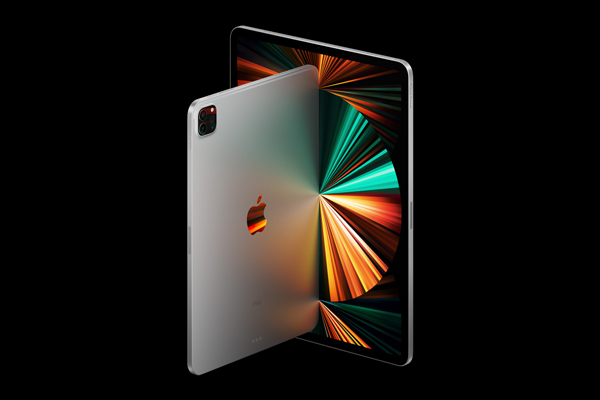
Apple's recently released 5th generation 12.9-inch 'iPad Pro' model is drawing attention for adopting a Mini LED panel. The Mini LED panel replaces the backlight source with multiple small LEDs, and through local dimming technology that allows specific light sources to be turned on and off, it offers a contrast ratio (1,000,000:1) that is much higher than that of an LCD (1,000:1).
However, it does not reach the contrast ratio (∞:1) of OLEDs, which can turn off pixels entirely, and since the size of the pixel and the light source do not correspond 1:1, there is a disadvantage that a halo effect appears in certain parts. Nevertheless, the reason Apple adopted Mini LED to enhance tablet productivity is due to the characteristics of OLED, where pixel degradation frequently occurs due to the use of organic materials.
Micro LED is considered a panel that can overcome the limitations of OLED and Mini LED. It uses small LEDs ranging from 10 to 100 micrometers as pixel light sources, and because it utilizes inorganic materials, there is no significant need to worry about burn-in unlike OLED. The problem is that manufacturing is difficult. Unlike OLED, where pixels are deposited, Micro LED requires pixels to be embedded.
While nanometer-level fine processes have become commonplace in semiconductors, Micro LEDs still face numerous challenges in mass production because they utilize sapphire, which has very high hardness, instead of silicon. The 110-inch Micro LED TV released by Samsung Electronics is priced at 170 million won, a price that has not yet been accepted by the market. Omdia projected that shipments of the TV this year will not exceed 1,000 units.
Currently, the leadership of the LCD panel market has completely shifted to China. LG Display maintains the top global market share for large OLED panels, while SDC holds the number one spot for small and medium-sized panels. However, BOE is also recently expanding its business into the OLED sector, having been selected as a supplier of replacement displays for the Apple iPhone. Although it was never released, LG Electronics' rollable smartphone was also planned to use BOE's OLED panels.
LG Electronics, an affiliate of LG Display, has acknowledged BOE's display technology to some extent. The full-scale entry of Chinese companies into the OLED market is imminent. It is a critical time to maintain the OLED lead and secure price competitiveness for Mini LED and Micro LED panels.
Comments
Related news
MediaTek Wi-Fi 6E Chips to be Powered by Samsung Electronics' 8K TVs
Samsung Electronics' new TV featuring a high-definition 8K QLED display and Taiwan's MediaTek's Wi-Fi 6E-enabled processor has been launched, drawing expectations that it will reliably deliver 8K high-definition video, VR content, and high-performance gaming to global consumers.
2021.04.08by 배종인 기자
.jpg)
Microchip Announces Controller Supporting Touchscreens Up to 45 Inches
Microchip has launched the maXTouch MXT2912TD-UW touchscreen controller, which simplifies the development of vehicle screen systems up to 45 inches to align with the trend of larger in-vehicle displays such as clusters and center stacks. It is a single-chip solution certified to ISO 26262 that supports LCD and OLED display technologies.
2021.04.21by 강정규 기자
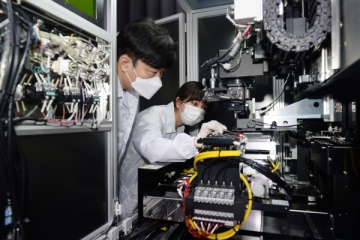
ETRI develops processes and materials that address challenges in micro LED production.
The Micro LED market is projected to grow at a compound annual growth rate of 65% through 2027, reaching a market size of 71 billion dollars. However, high manufacturing difficulty has been a bottleneck to widespread adoption. In response, ETRI announced that it has resolved key challenges in Micro LED display technology by independently developing novel manufacturing processes and new materials.
2021.05.25by 이수민 기자
ESP32 Development Environment Selection and GPS Application Implementation
The ESP32 is a microcontroller that integrates Wi-Fi, Bluetooth, 12-bit ADC, capacitive touch, PWM, DAC, and UART in a single SoC. However, the abundance of features does not by itself solve the designer's problems. The real challenges lie in selecting the appropriate development environment, determining which pins can be used and which must be avoided, and converting raw data from modules into usable information. This document addresses ESP32 peripheral constraints (ADC2 and Wi-Fi coexistence limitation, UART1 occupancy, ADC non-linear regions), the trade-offs between Arduino IDE and ESP-IDF, and the process from connecting NEO-6M/NEO-M8N GPS modules to UART2, parsing NMEA sentences, and visualizing routes in Google Earth, all organized based on documented references.
2026.10.12by 편집부
MIPI CSI-2, DSI-2, C-PHY, D-PHY Test Solution Technical White Paper
The MIPI interface adopts a burst mode that transitions between low-power (LP) and high-speed (HS) states for low-power consumption, and in return, strict timing rules are imposed on state transitions. Additionally, the high-speed section operates as a packet-based protocol with headers, ECC, and CRC, so verification engineers must handle waveforms and protocols simultaneously. Traditional configurations combining general-purpose oscilloscopes and AWGs reveal limitations in setup complexity, measurement uncertainty, and lack of reproducibility when faced with these requirements. This white paper, based on webinar materials, organizes the structure of this problem and describes how the SV5C-DPTXCPTX generator for receiver testing and SV5C-DPRXCPRX analyzer for transmitter testing integrate state transition testing, stressed eye testing, and protocol analysis into a single bench, along with their application boundaries.
2026.10.12by 편집부











