



Korea Institute of Machinery and Materials (KIMM) improves medical equipment accuracy with machine learning.
 Published2021.06.09 11:42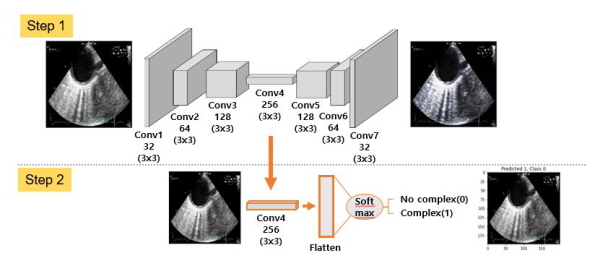
▲Autoencoder model application examples
The Korea Institute of Machinery and Materials (President Park Sang-jin), under the Ministry of Science and ICT, has developed a technology that improves both the speed and accuracy of disease diagnosis by applying machine learning technology to medical imaging diagnostic equipment.
The research team led by Director Jong-Won Park of the Reliability Assessment Laboratory at the Korea Institute of Machinery and Materials announced on the 9th that they developed an “image diagnosis technology utilizing machine learning” by applying big data deep learning technology, which has been used to diagnose the reliability of machinery parts and equipment, to ultrasound imaging diagnostic equipment, and succeeded in diagnosing with an accuracy level of 80% using a GPU (graphics processing unit).
The research team has been seeking collaborations with medical researchers, who possess a wealth of image data, to develop machine learning techniques for testing the reliability of mechanical components and equipment. Recently, the medical field has also been actively applying machine learning techniques based on diagnostic imaging, such as ultrasound, computed tomography, and magnetic resonance imaging, to facilitate the early diagnosis of heart and brain diseases.
The research team, together with researchers from the Department of Cardiology at Daejeon St. Mary's Hospital, who are interested in the development of medical imaging diagnostic technology, began image analysis to diagnose aortic atherosclerosis in patients with cerebral infarction. While there have been various attempts to apply machine learning to the medical field, the development of a deep learning model that can be applied to classify aortic plaque status and measure plaque thickness is a novel endeavor.
The research team applied various machine learning techniques, including the autoencoder and U-net models, to the identification of ultrasound images of the aortic wall. Identifying the aortic wall using ultrasound images can help identify the condition of atherosclerotic plaques in the aorta, a known cause of stroke.
Park Jong-won, head of the Reliability Assessment Lab at the Korea Institute of Machinery and Materials, said, “Until now, users had to have complex data interpretation skills to determine the failure and lifespan of machinery parts and equipment, but now they can easily access it by utilizing various open sources.” He added, “Image diagnosis technology utilizing machine learning is expected to be utilized in various fields in the future, such as diagnosing various diseases and developing models to predict the lifespan of parts and equipment.”
The research team plans to improve the deep learning model to improve the accuracy of aortic plaque analysis. Furthermore, beyond the medical field, the team plans to expand the technology to include the construction of a virtual engineering platform for manufacturing future transportation equipment components and the Materials and Components Convergence Alliance (machinery and automotive) project, utilizing image data on component failures for fault diagnosis.
This research was conducted with the support of the Materials and Components Technology Innovation Project of the Ministry of Trade, Industry and Energy.

Comments
Related news

KIMM Accelerates Commercialization of Nano-Micro DNA Needle Patches
The Korea Institute of Machinery and Materials (Director Park Sang-jin), under the Ministry of Science and ICT, is attracting attention by successfully driving technology commercialization from the establishment of a research institute venture company to commercialization based on advanced nanotechnology research achievements.
2021.05.31by 배종인 기자
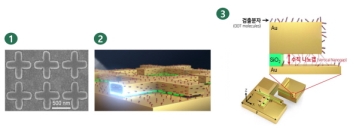
Korea Institute of Machinery and Materials (KIMM) develops metamaterials, increasing infrared spectroscopy detection signal by 100 times.
Researchers from the Korea Institute of Machinery and Materials (KIMM, Director Park Sang-jin) under the Ministry of Science and ICT and UNIST (President Lee Yong-hoon) have developed a metamaterial that can dramatically improve processes for detecting hazardous substances and biomolecules.
2021.06.01by 배종인 기자
.jpg)
KIMM Localizes Large-Area Display Defect Inspection
The Korea Institute of Machinery and Materials (KIMM) under the Ministry of Science and ICT (Director Park Sang-jin) has successfully achieved localization of auto-focus equipment for laser processing machines, which had previously relied entirely on imports from abroad.
2021.06.03by 배종인 기자

[e4ds Tech Day 2026 ⑨] Sim Sang-gyu, Autocrypt CTO: "In the Physical AI Era, Automotive Security Must Extend Beyond the Vehicle"
At e4ds Tech Day 2026, Sim Sang-gyu, CTO of Autocrypt, explained automotive cybersecurity strategies in the era of Physical AI and SDV (Software-Defined Vehicle). Automobiles are evolving as part of an ecosystem connected to AI, cloud, chargers, IoT, and robots, and he emphasized that the scope of security must expand beyond the vehicle interior to the entire connected environment. In particular, AI model tampering, adversarial attacks, OTA updates, and EV charger hacking were identified as major threats. He explained that response measures require zero trust, AI model integrity protection, intrusion detection, Security by Design and Default, and full lifecycle security management, and that proactive security system establishment beyond regulatory compliance is critical for securing future mobility competitiveness.
2026.10.12by 배종인 기자

NVIDIA to Invest $1 Billion in U.S. Science Over Next Five Years
NVIDIA has announced plans to invest $1 billion over the next five years to strengthen U.S. scientific and technological competitiveness. The company will enhance cutting-edge artificial intelligence research and development capabilities in key areas including quantum computing, healthcare, and energy security, while expanding support for higher education research institutions and cloud service providers. NVIDIA is participating as a major industry partner in the White House Office of Science and Technology Policy's Genesis Mission, and is promoting supercomputer construction in collaboration with national laboratories including Argonne and Los Alamos.
2026.10.12by 배종인 기자











