



Saenggiwon, Smart Farm Robot Commercialization Success "At 1/3 the Price"
 Published2021.06.14 10:35
Successful commercialization of a magnetically guided robot with integrated functions
Netherlands, Belgium lead the way with 1/3 the price of robots
According to Statistics Korea, as of 2019, 46.6% of the rural population is over 65 years old. As ‘smart farms’ are emerging as an alternative to the aging rural population and lack of young workers, the government plans to complete the creation of ‘Smart Farm Innovation Valleys’ in four locations, including Goheung, Jeollanam-do, within this year.
The Korea Institute of Industrial Technology (KITECH) announced on the 10th that it had successfully developed and commercialized a robot that integrates transportation, pest control, and lifting functions necessary for building smart farms.
.jpg)
(From left: lifting, lifting, pest control, and transport robots)
[Photo = Saenggiwon]
The 'Smart Farm Multifunctional Farming Robot' from Saenggiwon is designed as an 'integrated system' that allows easy use by replacing the worktable for the desired purpose on a single autonomous platform that moves along a set track. The transport work platform can be used for unmanned transport, the pesticide work platform can be used for automatic pesticide spraying, and the lifting work platform can be used for fruit harvesting and greenhouse facility management.
This is suitable for building and popularizing smart farms more easily and cheaply than robots from leading companies in the Netherlands and Belgium that sell transportation, pest control, and lifting robots separately.
This robot, developed by Dr. Lim Dae-young's research team in the Smart Mobility Materials and Components Research Group at Saenggiwon, adopted a self-driving platform using a 'magnetic induction method' that detects the magnetic force of magnetic tracks installed on the farm floor at a height of up to 20 cm and moves along them.
Leading products are 'electromagnetic' type that detects electromagnetic waves generated from wires and operates, so they require wire burial work and separate electronic devices, are expensive to operate, and have the disadvantage that the power supply must not be cut off. On the other hand, the magnetic field method uses only the magnetic force of the magnet itself without a power supply, so you only need to lay the line with cheap magnetic wire.
The track is easy to install and recover, has low operating costs, and is easy to maintain because the magnetic force is maintained even if the track breaks in the middle. It can be used in general open fields as well as in glass greenhouses.
After five years of research and development, the research team verified the robot’s performance at six smart farms growing citrus fruits, tomatoes, and paprika in Goheung and Gangjin, Jeollanam-do, from late 2019 to early this year. Citrus fruits such as Redhyang and Hallabong have high added value, but they are about 1.5 times heavier than other crops, and the greenhouse environment is hot and humid, so there is always a shortage of manpower.
The Saenggiwon robot ran continuously for 5 hours without deviating more than 2.5 cm from the designated path in a demonstration farm of Man-gam-ryu, transported up to 200 kg of crops, and climbed steep slopes of over 36°. It operates normally even when left in a greenhouse with a temperature of 50℃ and humidity of 80% for an extended period of time. It is expected that one robot will be able to do the work of two people.
The research team transferred the technology to 'Hwain Special Vehicle Co., Ltd. (CEO Choi Jong-seok),' a special vehicle company that has participated in joint research since 2017, and commercialized it in November 2020. Hwain Special Vehicle has completed commercialization and catalog production and started sales in May. The robot's sales price is around 10 million won, which is more than a third cheaper than overseas products.
Dr. Im Dae-young of Saenggiwon said, “We will focus on developing third-generation smart farm technology that will enable more than 85% of farming work to be unmanned using intelligent robots in the future.”
Comments
Related news
Smart Farm R&D Division Launches: "Recruiting Research Teams Begins in February"
The Smart Farm Research and Development Consortium, jointly established by the Ministry of Science and ICT, the Ministry of Agriculture, Food and Rural Affairs, and the Rural Development Administration, has launched. The consortium, established as a non-profit public interest foundation, operates and manages the smart farm multi-ministry package innovation technology development project, into which a total of 386.7 billion won will be invested from 2021 to 2027. Professor Cho Sung-in from the Department of Biosystems Engineering at Seoul National University was appointed as the head of the consortium.
2021.01.13by 명세환 기자
Industrial Robot Design: 'Human-Centered' is Most Important
In industrial robot design, the concept of human-centered design is emphasized as the most important, and opinions were presented that safety is the top priority since collaboration with humans is considered critical.
2021.04.13by 배종인 기자
Universal Robots Unveils '12.5kg' UR10e with Increased Payload
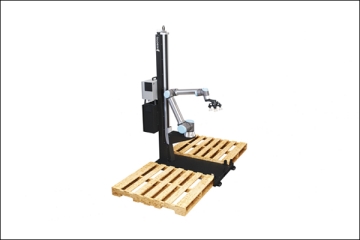
Universal Robots has announced the launch of the UR10e with an improved payload capacity increased by 25% from 10kg to 12.5kg at the same price as before. It can be operated even in space-constrained environments and can be utilized for palletizing, machine tending, and packaging applications. The enhanced payload capacity reduces strain on workers' hands and shoulders, improving the working environment.
2021.05.21by 이수민 기자
Korea Instrument, KOLAS Accredited Calibration Agency First to Simultaneously Acquire ISO/IEC 27,001·27,701
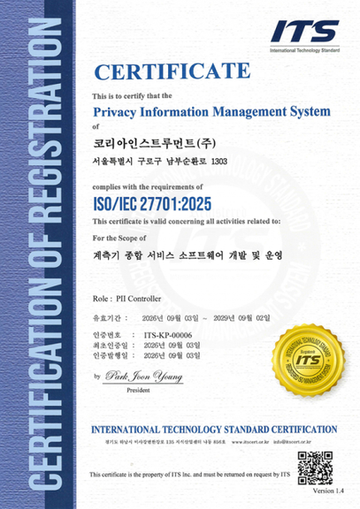
Korea Instrument has become the first among KOLAS accredited calibration agencies to simultaneously acquire ISO/IEC 27,001 and ISO/IEC 27,701 certifications. Through its proprietary platforms CWIZ Enterprise and CWIZ Partners, the company has embedded information security and personal data protection requirements across all business processes including customer information, equipment data, and calibration reports, with plans to continuously advance its management system through regular audits and security inspections.
2026.10.12by 배종인 기자
TeamViewer One, IT Incident Automation Workflow and Resolution Center Enhanced
TeamViewer has added IT incident automation capabilities and an advanced Resolution Center to its integrated digital workplace management platform 'TeamViewer ONE'. Recurrent service disruptions, configuration errors, and capacity shortages are automatically handled according to preset policies, and device status verification through script deployment can be managed in a unified interface, significantly reducing repetitive tasks for IT teams.
2026.10.12by 배종인 기자











