


SE Supports Energy Efficiency Improvement in Semiconductor Manufacturing
 Published2021.06.23 10:10
More than 80% of carbon emissions are caused by energy production/consumption.
Energy savings and quality improvements are essential for the fabs of the future.
According to the 2020 Q4 Market Report released by the World Semiconductor Trade Statistics (WSTS) in December, the global semiconductor market is expected to reach approximately $488.3 billion (approximately KRW 551.779 trillion) in 2021, an 11.2% increase from the previous year. The semiconductor market is expected to continue growing steadily over the next decade, driven by global industry trends such as IoT and autonomous vehicles.
[Photo = Schneider Electric]
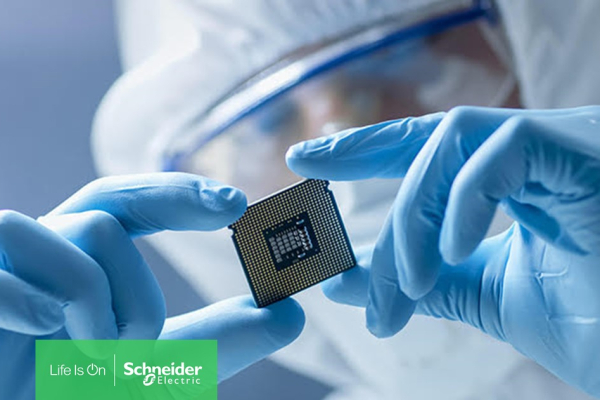
Schneider Electric announced on the 23rd that it will expand its "energy efficiency solutions" for semiconductor manufacturing sites. Schneider Electric emphasized the importance of "electricity" and "digital investment" for sustainable and resilient production processes. Digitalization, it argued, provides visibility into energy consumption patterns and eliminates the resulting energy waste.
To address climate change, reducing carbon emissions and improving operational efficiency in manufacturing processes have emerged as new challenges. Electricity usage within wafer fabrication plants, a semiconductor production facility, accounts for up to 30% of operating costs. Additionally, given the nature of the process, temporary operational interruptions can result in cost losses reaching millions of dollars per hour, requiring a flexible and reliable production site infrastructure to ensure business continuity.
◇ Remote solutions to improve semiconductor production efficiency
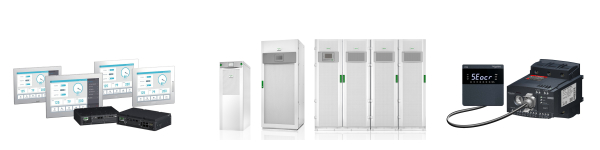
Schneider Electric is providing remote solutions for semiconductor production lines, including the 'EcoStruxure Augmented Operator Advisor' that utilizes AR technology, the 'Pro-face Remote HMI' that enables real-time remote monitoring, the 'Remote File Link Solution' system architecture that helps with application and data management and quick access, and the 'Pro-face PS6000 Series' series industrial PC.
By connecting all devices within a factory through solutions that span both IT and OT, ensuring visibility and high efficiency, we can meet the demands of future growth.
In particular, the PS6000 is an industrial PC that controls and monitors automated work-based systems and machines. It offers four CPU types—Intel Core i3 8145UE, i5 8385UE, i7 8665UE, and Celeron 4305UE—and seven display options, allowing you to select components that best suit your work environment. You can also freely choose HDD, SSD, and RAM capacity.
It supports UHD (4K) resolution, allowing field workers to work intuitively, and provides the convenience of being able to use it without removing gloves in a clean room.
◇ Power efficiency solutions that support sustainable business
Designed for stable power supply, the Galaxy V Series 3-phase uninterruptible power supplies (Galaxy VS, VM, VX 3-phase UPS) are easy-to-install, high-efficiency, modular, and scalable products designed to meet critical power requirements. Operating in patented ECOnversion mode, they deliver up to 99% efficiency.
Additionally, Schneider Electric's 'APC Rack PDU' is an intelligent power monitoring and management solution that provides visibility into power consumption and remote power control, providing power consumption prediction through consistent power distribution and high space efficiency.
High-density processes in fabs require a stable temperature. A wide temperature control range, from -80°C to +150°C, must be maintained. A cooling system is essential to maintain this temperature range. Water cooling is ideal for preventing airborne dust ingress. Schneider Electric offers a variety of water cooling systems in capacities to suit the scale of your business. These solutions are designed to be sustainable.
◇ A 'smart power' solution that enhances facility power quality reliability.
In large manufacturing facilities such as fabs, even a 30-minute power outage can result in losses of up to $40 million, making power quality stability paramount.
Schneider Electric's power quality management solution, AccuSine PCSn, is designed to mitigate harmonics and reduce voltage fluctuations. Harmonic distortion can cause problems such as overcurrents and control device errors, leading to system malfunctions and equipment downtime. Therefore, harmonic filters are essential for proactive prevention.
In addition, the 'EOCR-PFZ' smart motor protection relay (Electronic Over Current Relay; EOCR) product can detect overcurrent, phase loss, and ground fault issues, thereby preventing semiconductor equipment downtime due to ground fault accidents, thereby minimizing factory losses.
There is also a 'Smart MCC (Smart Motor Control Center)' solution that provides all power device devices and management SW inside the panel, including high/low voltage distribution panels, distribution panels, and MCC panels, and provides technical support. This is an IoT-based intelligent panel that optimizes motor status and supports response to electrical accidents through monitoring using reliable, advanced data.
EcoStruxure Power Monitoring Expert is an integrated power monitoring solution that provides a single, unified view of power distribution, facility energy control, and monitoring information for semiconductor facilities through a power monitoring dashboard.
“To ensure business efficiency, we must minimize the risk of unplanned downtime,” said Kim Kyung-rok, CEO of Schneider Electric Korea. “Schneider Electric has solutions and products that can achieve energy efficiency and carbon emissions reduction to ensure business sustainability in semiconductor manufacturing sites.”
Comments
Related news
.jpg)
Merck Begins Full-Scale Training of Semiconductor and Display Talent, Leading the Way in ESG
Merck Korea (CEO Dr. Kim Woo-kyou), the Korean subsidiary of leading science and technology company Merck, is taking the lead in ESG initiatives by providing comprehensive semiconductor knowledge focused on semiconductors, CMP, and thin-film processes to technical high schools and universities in Gyeonggi Province, offering OLED lectures, introducing advanced corporate culture, and providing capacity-building guidance for employment at foreign-invested enterprises.
2021.06.17by 배종인 기자
Key Foundry and Above Semiconductor Join Forces for Automotive Semiconductor
Keyfoundry provides Above Semiconductor with a second-generation flash memory embedded 0.13 micron BCD (Bipolar-CMOS-DMOS) process suitable for automotive power semiconductors.
2021.06.17by 배종인 기자

UNIST Integrates Adaptive Optics Technology with Scanning-Enhanced Nanoscopy
Professor Park Kyung-deok's team in the Department of Physics at UNIST has developed a new optical analysis technique that integrates adaptive optics technology into tip-enhanced nano-microscopy. Like a chameleon that can freely adapt its observation method depending on the target being observed, it is garnering expectations that it will enable analysis of characteristics of various types of ultra-fine particles—such as biological viruses, chemical single molecules, and semiconductor particles—using a single microscope.
2021.06.17by 배종인 기자
Intel Unveils Next-Generation 'Core Ultra Series 3' and vPro Platform for Enterprise PCs
Intel has officially unveiled the "Intel Core Ultra Series 3" for next-generation enterprise PCs and the latest vPro platform, addressing a wide range of demands from enterprise notebooks to high-performance workstations.
2026.03.26by 배종인 기자
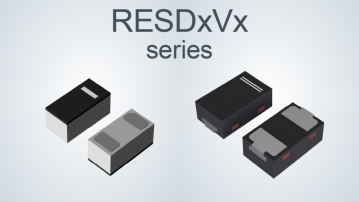
ROHM Launches ESD Protection Diode Compatible with High-Speed Interfaces of 10Gbps or Higher
Semiconductor specialist ROHM has developed the 'RESDxVx series' of ESD (electrostatic discharge) protection diodes capable of responding to next-generation high-speed data communication environments exceeding 10Gbps, simultaneously enhancing both signal quality maintenance required in high-speed interfaces and IC protection performance.
2026.03.26by 배종인 기자











