



Ministry of Science and ICT Eases Conformity Assessment Conditions for Some Broadcasting and Telecommunications Equipment
 Published2021.06.28 09:09
Industrial electric welding machines, excluded from conformity assessment
Evaluation of domestic aircraft radio equipment replaced by international certification
The Ministry of Science and ICT is amending the 'Notice on Conformity Assessment of Broadcasting and Telecommunications Equipment, etc.' to resolve difficulties related to conformity assessment in the industry, and it will take effect on the 28th.
Conformity assessment is a system under which manufacturers, sellers, or importers of broadcasting and telecommunications equipment verify compliance with technical standards in accordance with Article 58-2 of the Radio Waves Act before distributing them in the market, thereby obtaining radio certification or registration. The key contents of this amendment include: ▲ improvements to the conformity assessment testing and registration procedures for large and fixed-type equipment; ▲ deregulation of industrial electric welding machines used in restricted areas; and ▲ the realistic implementation of the submission of test reports for wireless devices installed in domestically produced aircraft.
First, for separable modular 'large, fixed-type devices,' testing was made possible by assembling only the components separately instead of the finished product. In 2019, the Ministry of Science and ICT granted a sandbox demonstration exemption to allow virtual reality (VR) motion simulators to demonstrate related services without undergoing conformity assessment, provided that concerns regarding radio interference are minimized.
With the special demonstration period set to end on July 17, a conformity assessment must be conducted for the official product to be released. However, under existing regulations, testing was required only for finished products, which presented a limitation in testing large-scale VR motion simulators that undergo frequent structural changes. Therefore, it is expected that this revision will resolve these obstacles.
Next, industrial high-capacity (over 10kVA) electric welding machines, which are primarily used in factories or construction sites rather than for household use, were excluded from the conformity assessment list, considering that they are used by skilled professionals in limited locations. An official from the Ministry of Science and ICT explained that the deregulation of industrial high-capacity electric welding machines was based on foreign precedents and international standards.
Finally, until now, wireless devices installed in domestically produced aircraft have inevitably been processed through provisional certification because domestic testing institutions were unable to conduct tests. Going forward, devices that have obtained aviation certifications compliant with international standards, such as the U.S. FAA TSO certification, will be able to proceed with the certification process in Korea without separate testing, provided they possess the test reports submitted during the certification process in the respective country. As a result, the required time is expected to be shortened from 90 days to 5 days.
Detailed information on the revision of the notice can be found at the National Radio Research Institute's Legal Information Archive .
Comments
Related news

Ministry of Science and ICT and Ministry of Trade, Industry and Energy Seek Joint Response Strategy for AI International Standardization
The National Radio Research and Ordinary Laboratory of the Ministry of Science and ICT and the National Institute of Standards and Technology of the Ministry of Trade, Industry and Energy jointly held the 2nd Artificial Intelligence Industry Standardization Workshop with simultaneous online and offline attendance by domestic AI sector experts from academia, industry, research institutes and government. Experts who participated in the workshop emphasized the importance of standards for advancing domestic AI technology and securing industrial competitiveness.
2020.11.19by 이수민 기자
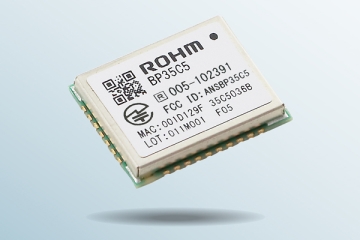
ROHM to Supply Wi-SUN FAN Module Solutions for Smart Cities
Rohm announced that it provides Wi-SUN FAN-compliant module solutions suitable for constructing large-scale mesh networks necessary for realizing smart cities and grids. Wi-SUN FAN is the latest standard of Wi-SUN, an international wireless communication specification, and unlike other LPWA technologies, it incurs no communication costs and features reliability that enables automatic monitoring of radio propagation conditions and switching of connection points through multi-hop communication.
2021.01.27by 이수민 기자
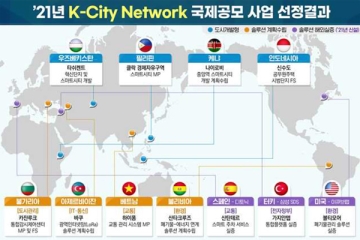
Korean-style Smart Cities Expand into 11 Global Countries, "Building Networks"
The Ministry of Land, Infrastructure and Transport, the Korea Overseas Infrastructure and Urban Development Corporation, and the Korea Institute of Land and Infrastructure Technology have selected a total of 11 projects through the public call for the 'K-City Network Global Cooperation Program,' which aims to spread domestic smart city experience overseas. The selected projects consist of ▲four urban development-type projects ▲four solution-type planning projects ▲three solution-type overseas demonstration projects. By region, three projects each were selected in New Southern and Northern regions, two in Europe, and one each in North America, South America, and Africa.
2021.06.24by 이수민 기자
Nvidia invests $5 billion in Intel
NVIDIA and Intel, leaders in global AI computing technology, are now forging ahead in providing cutting-edge solutions through NVLink-based architecture integration. NVIDIA and Intel have officially announced a strategic partnership and stated that they will jointly develop customized data center and personal computing products to accelerate diverse applications and workloads ranging from hyperscale to enterprise and consumer markets, thereby laying the foundation for the next generation computing era.
2025.09.22by 배종인 기자
.jpg)
Applied Materials Launches Environmental Protection Campaign to Mark World Cleanup Day
Applied Materials Korea (CEO Park Kwang-seon) is carrying out environmental cleanup activities with employees and their families around the Dongtan Sinricheon area on the occasion of World Cleanup Day, evolving into a company that engages with the local community beyond technological innovation.
2025.09.22by 명세환 기자











