


Hydrogen fluoride imports from Japan account for 1/6th of total imports... Small and medium-sized businesses' reliance on Japan drops to 0.9%.
 Published2021.07.01 16:27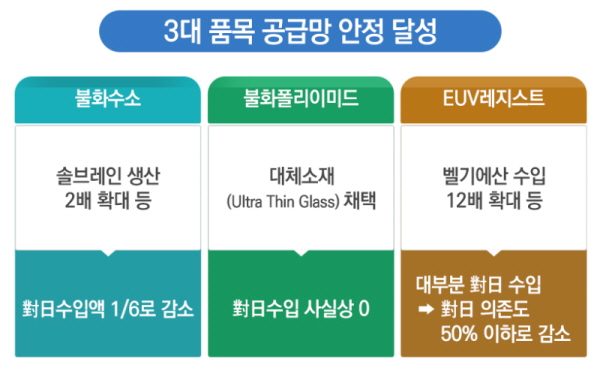
▲Achieving supply chain stability for three major export-regulated items
Achieved KRW 330.6 billion in sales and KRW 445.1 billion in investment through small business R&D commercialization.
Since July 2019, when Japan's export restrictions were implemented, the decline in dependence on Japan for 10 key items has accelerated threefold, with the import value of hydrogen fluoride, which was subject to Japanese export restrictions, falling to one-sixth of its original value. Furthermore, growth is becoming visible, with sales of our small and medium-sized enterprises increasing by approximately 20.1%.
The Ministry of Trade, Industry and Energy (Minister Moon Seung-wook) announced on the 1st the “2-year Results of Strengthening Competitiveness in Materials, Parts and Equipment” on the second anniversary of Japan’s export restrictions, and stated that based on these results, it will continue to pursue policies to strengthen competitiveness without wavering in the future in order to leap forward as a global small, part and equipment powerhouse.
He also emphasized that the achievements in strengthening the competitiveness of small and medium-sized enterprises (SMEs) over the past two years were achieved jointly by the public and our companies, and that he expects to see further achievements in securing and commercializing more core SME technologies in the future.
Since the export restrictions in 2019, public-private efforts have been made to stabilize the small business supply chain. Just over a month after the announcement of the export restrictions, an immediate response system was established, including a supply and demand response support center, a supplementary budget, and measures to strengthen the competitiveness of small and medium-sized enterprises.
In addition, approximately 3 trillion won was invested in R&D of small and medium-sized businesses centered on 100 core technologies, and the supply chain was strengthened through various means, such as import diversification (94 cases), domestic supply replacement (129 cases), new facilities/expansion (96 cases), foreign investment attraction (7 cases), and M&A (16 cases) for 100 major items imported from Japan, including the three major items subject to export restrictions.
As a result, the amount of hydrogen fluoride imported from Japan was reduced to 1/6, and the amount of fluorinated polyimide imported from Japan was virtually reduced to 0 through the adoption of alternative materials (UTG), thereby escaping dependence on specific countries.
In a short period of two years, the dependence on Japan for 100 key items (based on HS code) decreased by approximately 6.5 percentage points, from 31.4% to 24.9%.
The dependence on Japan for 100 key products has been steadily decreasing, but the decline accelerated by approximately three times starting in 2019.
For the entire small business industry, the dependence on Japan fell by 0.9 percentage points from 16.8% to 15.9%, and the proportion of imports from China also decreased by 3.1 percentage points, indicating progress in supply chain diversification.
The 'solidarity and cooperation ecosystem' born from the small business demand-supply cooperation model has rapidly spread based on the consensus of all small business owners.
Large companies have shown a forward-looking shift in their perception by opening their previously closed production lines to small and medium-sized enterprises (SMEs) to allow them to verify new technologies and boldly apply technologies that pass the tests to final products.
Through this, at least 239 direct and indirect sales were generated and 119 demand company certifications were made for technologies developed by domestic small and medium-sized enterprises since July 2019.
Also, the demand-supply periodThrough government R&D projects in which the company participated, the company achieved sales of KRW 330.6 billion, investment of KRW 445.1 billion, employment of 3,291 people, and 1,280 patent applications.
Not only companies, but also public research institutes and universities with technology, human resources, and equipment are actively participating in improving the technological competitiveness of small and medium-sized enterprises. A total of 26,000 pieces of equipment and 11,000 personnel from 37 public research institutes are being utilized to support small and medium-sized enterprises (SMEs) in addressing their technological challenges. Twelve universities possessing key manufacturing technologies, such as welding and heat treatment, have formed a "University SME Advisory Group" to provide focused support for improving corporate productivity.
In addition, the amount of funds raised for the Small Business Policy Fund, which focuses on investing in small and medium-sized enterprises, has exceeded 1 trillion won as of June 2021.
The total sales of small and medium-sized listed companies increased by 20.1% in the first quarter of 2021 compared to the same period in 2019, significantly exceeding the average sales growth rate of all listed companies (12.7%).
Furthermore, as exports by small and medium-sized enterprises (SMEs) are showing a positive trend, free from Japan's export restrictions and the impact of the coronavirus, the SMEs' trade surplus is 2.69 times that of the entire industry (2.01 times in 2020), leading the economic recovery.
Minister of Trade, Industry and Energy Moon Seung-wook emphasized, “The process of overcoming the materials, parts and equipment crisis over the past two years has three major meanings: the people, businesses, and the government worked together as one to perfectly respond to Japan’s unjust economic attacks targeting our core industries and established a stable supply chain; innovative changes took hold in our materials, parts and equipment ecosystem; it served as an opportunity for small and medium-sized companies in the materials, parts and equipment industry to grow significantly; and it became the foundation for our materials, parts and equipment industry to advance beyond the domestic market and into the global market.” He added, “Based on our experience overcoming the crisis over the past two years, we will continue to make efforts so that our country can take the lead in the global supply chain and leap forward as a world-leading advanced industrial powerhouse.”

Comments
Related news
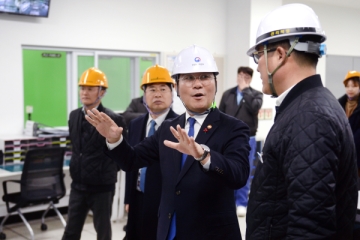
Successful domestic production of 'high-purity hydrogen fluoride', one of Japan's three major export-regulated items
Solbrain has secured mass production capacity for 12 Nine ultra-high purity hydrogen fluoride. 12 Nine (99.9999999999%) refers to a state where impurities remain at one part per trillion. This is a purity level that can be supplied to semiconductor companies that require relatively higher purity compared to display manufacturers. Prior to Japan's export restrictions, domestic semiconductor and display companies primarily used Japanese-made ultra-high purity hydrogen fluoride. Subsequently, Solbrain expanded production volume by newly constructing and expanding related facilities, and as it began supplying a significant portion of domestic ultra-high purity hydrogen fluoride demand, domestic supply stability was secured.
2020.01.03by 이수민 기자
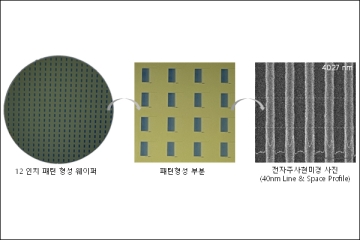
12-inch Semiconductor Small Business Testbed Officially Launches
Domestic semiconductor material, parts, and equipment (materials, parts, equipment) companies have faced significant challenges due to the absence of a 12-inch semiconductor testbed within the country that matches large enterprise production environments. In response, the Ministry of Science and ICT invested a total of 45 billion won in national funds beginning in August 2019 to establish a 12-inch semiconductor testbed at the Nano Convergence Technology Center and commenced official service operations.
2021.03.17by 이수민 기자
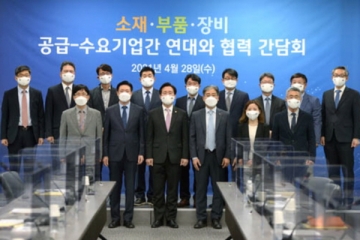
Small Business R&D: Sales of KRW 215.1 billion in just 18 months
Following the initiation of R&D in the 2019 supplementary budget for materials, parts, and equipment, within 18 months, we have achieved sales of 215.1 billion won, investment of 382.6 billion won, employment of 385 people, and patent applications of 271 cases, demonstrating that our country is rapidly developing into a global advanced industry hub for materials, parts, and equipment in the shortest timeframe.
2021.04.28by 배종인 기자
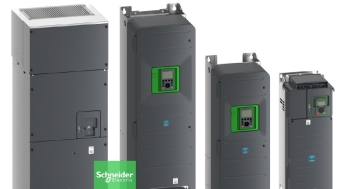
Schneider Aims for Building Energy Savings and Operational Stability with Next-Generation HVAC Drives
Schneider Electric has unveiled its next-generation HVAC drive product line 'Altivar HVAC'. The new product line's key features center on enhanced energy savings, system operational stability, and building management system integration. The products are divided into 'ATH200' for OEM and small equipment applications, and 'ATH600' for environments requiring continuous operation and advanced control. The company plans to expand the application scope from commercial buildings to facilities where HVAC system stability is critical, such as hospitals, airports, and data centers. The announcement includes over 30% energy savings, operation from -10°C to +60°C, Modbus and BACnet support, and compatibility with low global warming potential refrigerants.
2026.03.26by 명세환 기자
Ecolab Expands AI Data Center Cooling Business Through Acquisition of CoolIT
Ecolab has agreed to acquire CoolIT Systems, a liquid cooling company for AI data centers, for approximately $4.75 billion. The transaction is expected to close by Q3 2026, subject to regulatory approvals. CoolIT has been supplying direct-to-chip cooling-based coolant distribution units, cold plates, and manifolds, serving hyperscale data centers and colocation operators as customers. This acquisition is a measure to address the high-heat and high-density server environments created by AI proliferation. Ecolab plans to combine its water management and digital monitoring capabilities with CoolIT's hardware technology to expand its data center cooling business.
2026.03.26by 명세환 기자











