



Materials Research Institute to Release Window That Generates Electricity and Adjusts Brightness
 Published2021.07.07 07:58
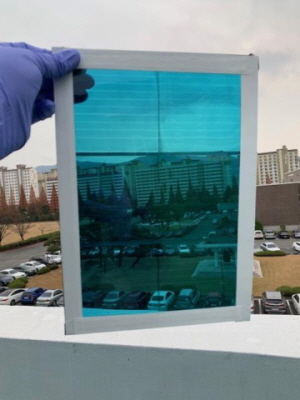 Domestic researchers have succeeded in developing a smart window-type organic functional film that generates electricity using sunlight and simultaneously controls light brightness.
A research team led by Dr. Soyeon Kim and Dr. Dongchan Lim of the Energy and Electronic Materials Research Laboratory at the Korea Institute of Materials Science (KIMS, President Lee Jeong-hwan), a government-funded research institute under the Ministry of Science and ICT, has developed the nation's first organic-based smart window film. The researchers confirmed that this technology improves the efficiency and transparency of organic solar cells and demonstrates excellent performance not only in large-area flexible modularization but also after integration with electrochromic films.
Smart windows can reduce energy loss in buildings by adjusting brightness through color changes depending on the situation. However, existing smart window technology is based on inorganic materials, requiring high-temperature processes or exhibiting issues in terms of flexibility. The research team solved this problem by fabricating high-performance solar cells and electrochromic devices based on organic materials.
The research team fabricated high-efficiency organic solar cells by introducing organic molecules between the electron transport layer and the photoactive layer. This enhanced flexibility by improving interfacial junction characteristics between the two layers and enabled good performance even in large-area devices. In particular, using this technology, we succeeded in fabricating an organic electrochromic-solar cell hybrid module that not only generates electricity but also self-regulates light brightness using the electrical energy from the solar cells.
The market size of smart windows is projected to reach approximately $82.3 billion (about 94 trillion won) as of 2023, and the market outlook is bright due to the government's carbon neutrality and Green New Deal policies. Smart windows equipped with this technology can be applied not only to existing buildings but also to areas with curvature, so it is expected that expansion into various markets such as automobiles and aircraft will be possible in the future.
"Senior Researcher Kim So-yeon, the principal investigator, stated, 'This research is highly significant in that it presents a new direction for the smart window market by integrating high-performance solar cells and electrochromic devices based on organic materials.'"
In addition, Principal Researcher Lim Dong-chan stated, “We expect to make a significant contribution to the construction of smart cities in the future through the convergence of organic solar cells and electrochromic devices with Internet of Things (IoT) sensors.”
This research achievement was carried out with the support of the Ministry of Science and ICT’s Materials Innovation Leading Project and the Ministry of Trade, Industry and Energy’s Energy Technology Development Project, and in 2021, through the Ministry of Trade, Industry and Energy’s Smart Specialization Infrastructure Establishment Project, it is planned to develop mass production technology and support related companies.
Meanwhile, the results of this study were published on March 3 in 'Communications Materials,' a sister journal of the world-renowned journal Nature, on May 7 in 'Advanced Science' and on May 30 in 'Chem Sus Chem,' and were simultaneously published online in the 'Chemical Engineering Journal' on April 7 and June 18, respectively.

Comments
Related news
.jpg)
KIMS Plays a Major Role in Resolving Difficulties in International Cooperation R&D
The Korea Institute of Materials Science (KIMS), a government-funded research institute under the Ministry of Science and ICT, has been playing a significant role in resolving critical technical challenges for local companies through the "Korea-Germany Materials Center," which opened in September 2017 in collaboration with Changwon City.
2021.06.09by 배종인 기자
Materials Science Institute, Contest for Popularization of Materials, Parts, and Equipment… Grand Prize 1 Million Won
The Korea Institute of Materials Science (KIMS, Director Lee Jeong-hwan) is hosting a "Democratization of Materials, Parts and Equipment Contest." The Grand Prize winner (or team) will receive a certificate and 1 million won in prize money; two Excellence Award winners (or teams) will each receive a certificate and 500,000 won; and five Encouragement Award winners (or teams) will each receive a certificate and 200,000 won.
2021.06.21by 배종인 기자
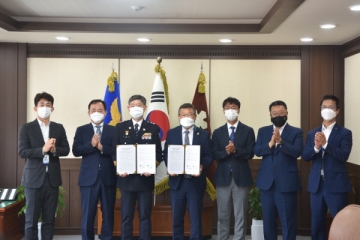
Materials Research Institute and Gyeongnam Provincial Police Agency Integrating Science and Technology into Security Fields
The Korea Institute of Materials Science (KIMS, Director Lee Jeong-hwan), a government-funded research institute under the Ministry of Science and ICT, and the Gyeongnam Provincial Police Agency (Commissioner Lee Mun-su) have joined hands to enhance investigative capabilities by integrating science and technology into law enforcement operations.
2021.06.30by 배종인 기자
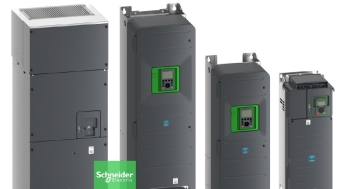
Schneider Aims for Building Energy Savings and Operational Stability with Next-Generation HVAC Drives
Schneider Electric has unveiled its next-generation HVAC drive product line 'Altivar HVAC'. The new product line's key features center on enhanced energy savings, system operational stability, and building management system integration. The products are divided into 'ATH200' for OEM and small equipment applications, and 'ATH600' for environments requiring continuous operation and advanced control. The company plans to expand the application scope from commercial buildings to facilities where HVAC system stability is critical, such as hospitals, airports, and data centers. The announcement includes over 30% energy savings, operation from -10°C to +60°C, Modbus and BACnet support, and compatibility with low global warming potential refrigerants.
2026.03.26by 명세환 기자
Ecolab Expands AI Data Center Cooling Business Through Acquisition of CoolIT
Ecolab has agreed to acquire CoolIT Systems, a liquid cooling company for AI data centers, for approximately $4.75 billion. The transaction is expected to close by Q3 2026, subject to regulatory approvals. CoolIT has been supplying direct-to-chip cooling-based coolant distribution units, cold plates, and manifolds, serving hyperscale data centers and colocation operators as customers. This acquisition is a measure to address the high-heat and high-density server environments created by AI proliferation. Ecolab plans to combine its water management and digital monitoring capabilities with CoolIT's hardware technology to expand its data center cooling business.
2026.03.26by 명세환 기자











