


Merck Begins Full-Scale Production of Mobile OLED Materials in Korea
 Published2021.07.22 09:05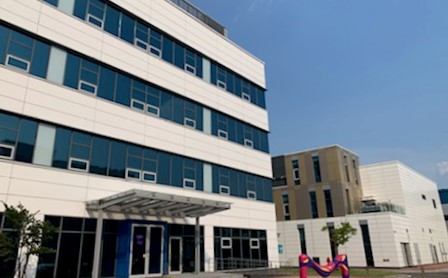
Pyeongtaek Poseung Production Facility Contributes to Cutting-Edge Material Development and Stable Supply
Expanding supply from large OLED materials to mobile applications
Merck Korea (CEO Dr. Woo-Kyu Kim), the Korean branch of leading science and technology company Merck, has begun full-scale operation of its new OLED material production facility in Poseung, Pyeongtaek, and is expanding its supply from large-scale OLED materials to premium mobile OLED materials.
Merck Korea announced on the 22nd that it has begun mass production and supply of hole transport materials used in common layers for mobile organic light-emitting diode (OLED) panels at its new production facility located in the Poseung Industrial Complex in Pyeongtaek, Gyeonggi Province.
Merck has been steadily supplying hole transport materials for large OLED panels, and with this mass production, it has expanded the application of high-quality materials to mobile panels.
The OLED panels are expected to be used in products targeting the premium OLED smartphone market.
Woo-Kyu Kim, CEO of Merck Korea, said, “Korea is a country that is truly leading the global OLED market, and Merck is investing in the relevant resources needed for Korean panel manufacturers to lead the OLED market. Since opening the OLED R&D Center in 2011, we have continuously strengthened our R&D facilities and personnel to provide close-range services to domestic panel manufacturers. We are currently building core OLED manufacturing facilities and are preparing to quickly respond to customer needs with the highest-quality materials produced in Korea. “We believe that this expanded application of materials has laid the foundation for closer cooperation with Korean OLED panel manufacturers in the future,” he said.
The hole transport layer is one of the common layers that smoothly transports holes generated between electrodes on a glass substrate or flexible film substrate with conductive electrodes in OLED, and the electron blocking layer is also a common layer that prevents holes from penetrating from the light-emitting layer to the electron transport layer.
Merck's OLED materials are applied to both of these layers, and help improve the efficiency and lifespan of the panel by maintaining optimal transport and blocking of holes and electrons.
Meanwhile, Merck, a display materials company, began its OLED and organic material-related business in 2005 to actively contribute to Korea's OLED infrastructure industry. In 2011, it opened a research institute for OLED synthesis and material development, and in 2014, it opened an OLED application research institute. In 2020, it decided to invest an additional 25 billion won to establish a next-generation OLED light-emitting diode manufacturing facility in its factory in the Poseung National Industrial Complex in Pyeongtaek, Gyeonggi Province.
This investment will be used to build a new modular production system that will expand OLED manufacturing capabilities, which is expected to contribute to the development of materials and stable supply for cutting-edge display panels pursued by Korean panel manufacturers.
Merck Electronics is a business division of the German company Merck with 353 years of history, and is responsible for research and manufacturing of semiconductor and display materials worldwide.
In Korea, we have a total of seven research and manufacturing facilities: six in Pyeongtaek, Anseong, Ansan, Sihwa, and Banwol in Gyeonggi Province, and one in Ulsan.
Since entering the Korean market in 1989, Merck Korea has achieved remarkable growth in the display and semiconductor fields over the past 32 years.In addition to Nix, it is a global company in the life sciences and healthcare fields, recording sales of KRW 1.8 trillion (EUR 1.35 billion) in Korea in 2020.

Comments
Related news
.jpg)
Merck Opens a New World of Liquid Crystal Antenna Communications
Antenna technology utilizing liquid crystal technology has emerged that can broadly connect remote areas such as rural regions, and is attracting expectations that it will overcome the limitations in expanding communication coverage areas and mounting communication devices. Leading science and technology company Merck announced on the 30th the commercialization of 'licriOn™', a liquid crystal-based solution for electronic beam steering smart antennas. This technology uses custom-designed molecules with millimeter-wave characteristics to enable a new type of antenna that improves the latest data communication.
2021.03.30by 배종인 기자
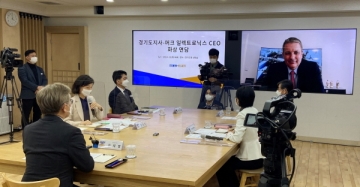
Kai Beckmann, CEO of Merck Electronics, announced plans to invest more than €200 million in Gyeonggi Province over the next five years.
Kai Beckmann, board member of leading science and technology company Merck and CEO of Electronics, and Gyeonggi Province Governor Lee Jae-myung agreed to promote mutual cooperation for expanding Merck Electronics' investment in the province and fostering continued talent development in semiconductors and displays.
2021.04.14by 배종인 기자
.jpg)
Merck Begins Full-Scale Training of Semiconductor and Display Talent, Leading the Way in ESG
Merck Korea (CEO Dr. Kim Woo-kyou), the Korean subsidiary of leading science and technology company Merck, is taking the lead in ESG initiatives by providing comprehensive semiconductor knowledge focused on semiconductors, CMP, and thin-film processes to technical high schools and universities in Gyeonggi Province, offering OLED lectures, introducing advanced corporate culture, and providing capacity-building guidance for employment at foreign-invested enterprises.
2021.06.17by 배종인 기자
Intel Unveils Next-Generation 'Core Ultra Series 3' and vPro Platform for Enterprise PCs
Intel has officially unveiled the "Intel Core Ultra Series 3" for next-generation enterprise PCs and the latest vPro platform, addressing a wide range of demands from enterprise notebooks to high-performance workstations.
2026.03.26by 배종인 기자
ROHM Launches ESD Protection Diode Compatible with High-Speed Interfaces of 10Gbps or Higher
Semiconductor specialist ROHM has developed the 'RESDxVx series' of ESD (electrostatic discharge) protection diodes capable of responding to next-generation high-speed data communication environments exceeding 10Gbps, simultaneously enhancing both signal quality maintenance required in high-speed interfaces and IC protection performance.
2026.03.26by 배종인 기자











