



Materials Research Institute takes a step toward domestic production of ultra-small beads, a raw material for MLCCs.
 Published2021.07.26 11:05
.jpg)
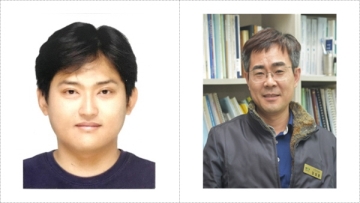
▲The principal investigators of this study, Dr. Min Yu-ho (left) and Dr. Choi Jong-jin (right) of the Korea Institute of Materials Science.
A domestic research team has successfully developed a technology to manufacture high-hardness, high-density ceramic microparticles for manufacturing ultra-small beads.
The Korea Institute of Materials Science (KIMS, President Lee Jung-hwan), a government-funded research institute under the Ministry of Science and ICT, has successfully developed a nanoscale zirconia superparticle assembly control technology through joint research with Cenotech Co., Ltd., led by Dr. Min Yu-ho and Dr. Choi Jong-jin of the Functional Ceramics Laboratory of the Ceramic Materials Research Division. The research team also developed a technology to convert this into ultra-small ceramic microparticles with high hardness, high density, and high elastic modulus.
The newly developed superparticle assembly control technology simultaneously controls the dispersion stability and assembly speed of nanoparticle colloidal suspensions, enabling the production of ultra-small ceramic spherical assemblies with extremely high sphericity and density. By controlling the sintering process, it maintains sphericity while improving the hardness, density, and elastic modulus of the ceramic material.
The ultra-small ceramic microparticles developed using this technology exhibited the highest hardness compared to yttria-stabilized zirconia ceramic bulk and film materials manufactured by various processes to date. The sphericity and theoretical relative density are over 99% and 98%, respectively. If commercialization technology for manufacturing ultra-small ceramic beads is developed in the future, it is expected that the technology for manufacturing ultra-small, high-hardness ceramic beads measuring 30 micrometers (㎛) or less, currently monopolized by Japanese companies, will be domestically produced.
Recently, demand for ultra-small (30 micrometers or less) beads, smaller than conventional ceramic beads, is rapidly increasing in various cutting-edge industries, including electrical and electronics, energy, and environmental industries, due to the nano-refining of key raw material powders and the integration of components. In particular, for multilayer ceramic capacitors (MLCCs) for automotive applications, nano-refining and high-purity raw material powders are essential for high performance. Consequently, the required bead size is gradually decreasing, while at the same time, higher hardness is required to withstand strong impacts.
Conventional ceramic bead manufacturing processes have technical limitations in producing ultra-small ceramic beads measuring 30 micrometers (㎛) or less. Beyond simply reducing the size, the ceramic beads themselves must possess high hardness and high density to ensure high purity and refinement of the pulverized material. Furthermore, precise size control and high sphericity are crucial.
The research team utilized a spray-drying method, which facilitates mass production, to fabricate ultra-small ceramic assemblies with high sphericity and density. Furthermore, by controlling the sintering process, they successfully transformed the microparticles into ceramic microparticles with enhanced hardness and elastic modulus. The hardness of the developed microparticles was approximately 27 gigapascals (GPa), demonstrating the highest value compared to materials developed using other processes with the same composition. The elastic modulus also showed an excellent value of 210 gigapascals (GPa).
The global market for ceramic beads, a core technology in nanoceramic powder manufacturing and processing, is rapidly growing at an average annual rate of 8.0% from 380 ($USD Million) in 2016, and is expected to reach approximately 636.3 ($USD Million) by 2023. While the ceramic bead market itself is not large, a disruption in bead supply, as seen in Japan's recent export restrictions on Korea, would have a significant economic impact, as it would make it impossible to produce multilayer ceramic capacitors (MLCCs) and secondary battery-related components that require them.
Min Yu-ho, a senior researcher at the Korea Institute of Materials Science and Engineering who led the research and development, said, “The results of this study secure a manufacturing technology for ceramic microparticles with high density, hardness, and sphericity, and can be seen as one step closer to commercializing the manufacturing of ultra-small ceramic beads, which is currently monopolized by Japanese companies.” He added, “It is expected to have even greater value in the future as it can be used in various industrial fields as well as breaking away from our dependence on Japan.”
This research was supported by the Ministry of Trade, Industry and Energy's Materials and Components Technology Development Project (led by Cenotec Co., Ltd.) and was promoted as a project of the Materials and Components Manager Department under the Ceramic PD Planning Department of the Korea Evaluation Institute of Industrial Technology (KEIT). Furthermore, the research results were published online on May 26th in the world-renowned academic journal ACS Nano (first author: Dr. Taewon Lee, researcher Youngrok Kim). The research team plans to further develop the core technology for manufacturing high-density, high-hardness ceramic microparticles through ongoing joint research with Cenotec Co., Ltd. and to develop commercialization technology for the domestic production of ultra-small ceramic beads.

Comments
Related news

Materials Research Institute to Release Window That Generates Electricity and Adjusts Brightness
Domestic researchers have successfully developed a smart window-type organic functional film that generates electricity using sunlight while simultaneously controlling light brightness.
2021.07.07by 배종인 기자
Materials Research Institute Expands Investment in Future Mobility Technology
The Korea Institute of Materials Science (KIMS, Director Lee Jung-hwan), a government-funded research institute under the Ministry of Science and ICT, has announced the recruitment and selection of demand companies in the 'future mobility new industry sector' and committed to investment support for resolving core technical challenges and commercialization.
2021.07.07by 배종인 기자
Materials Research Institute Uses AI to Identify Ultra-Fine Defects
The research team led by Dr. Kang Sung-hun at the Materials Artificial Intelligence and Big Data Research Center of the Korea Institute of Materials Science (KIMS, Director Lee Jung-hwan), a government-funded research institute under the Ministry of Science and ICT, has developed a technology that can accurately detect ultra-fine defects on product surfaces that are difficult for humans to distinguish using artificial intelligence (AI) technology.
2021.07.19by 배종인 기자
Schneider Aims for Building Energy Savings and Operational Stability with Next-Generation HVAC Drives
Schneider Electric has unveiled its next-generation HVAC drive product line 'Altivar HVAC'. The new product line's key features center on enhanced energy savings, system operational stability, and building management system integration. The products are divided into 'ATH200' for OEM and small equipment applications, and 'ATH600' for environments requiring continuous operation and advanced control. The company plans to expand the application scope from commercial buildings to facilities where HVAC system stability is critical, such as hospitals, airports, and data centers. The announcement includes over 30% energy savings, operation from -10°C to +60°C, Modbus and BACnet support, and compatibility with low global warming potential refrigerants.
2026.03.26by 명세환 기자

Ecolab Expands AI Data Center Cooling Business Through Acquisition of CoolIT
Ecolab has agreed to acquire CoolIT Systems, a liquid cooling company for AI data centers, for approximately $4.75 billion. The transaction is expected to close by Q3 2026, subject to regulatory approvals. CoolIT has been supplying direct-to-chip cooling-based coolant distribution units, cold plates, and manifolds, serving hyperscale data centers and colocation operators as customers. This acquisition is a measure to address the high-heat and high-density server environments created by AI proliferation. Ecolab plans to combine its water management and digital monitoring capabilities with CoolIT's hardware technology to expand its data center cooling business.
2026.03.26by 명세환 기자











