



KETI Accelerates Commercialization of All-Solid-State Batteries with Zeolite
 Published2021.08.10 09:34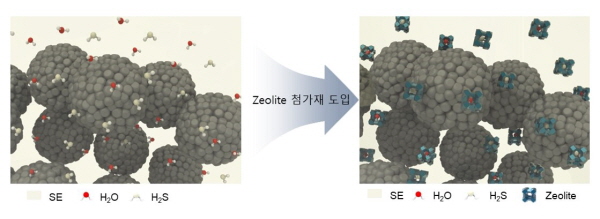
▲Moisture and hydrogen sulfide adsorbed around the cathode material after adding zeolite ((1) SE: solid electrolyte / (2) H2O: water / (3) H2S: hydrogen sulfide)
Sulfide-based solid electrolyte harmful gas generation suppression effect
The Korea Electronics Technology Institute (KETI, President Kim Young-sam) has led the improvement of the manufacturing process for commercializing all-solid-state batteries using zeolite.
The Electronics and Telecommunications Research Institute (ETRI) announced on the 10th that it has developed a material technology that reduces the amount of hydrogen sulfide gas generated from sulfide-based solid electrolytes, a key material for all-solid-state batteries.
All-solid-state batteries are batteries that replace the liquid electrolyte that fills the space between the positive and negative electrodes of existing lithium-ion batteries with a solid electrolyte. They are safe because there is no risk of explosion, and they have a higher energy density than existing batteries, so they are attracting attention as next-generation batteries.
The core materials that make up solid electrolytes include polymers, sulfides, and oxides, but among them, sulfide-based solid electrolytes with high ductility and ionic conductivity are considered suitable for manufacturing high-capacity, large-scale batteries.
The core of the material technology developed by KETI's Next-Generation Battery Research Center (Director Ji-Sang Yoo) is to reduce hydrogen sulfide generation by adding and synthesizing small amounts of zeolite nanoparticles to a solid electrolyte, utilizing the characteristic of zeolite that simultaneously adsorbs moisture and hydrogen sulfide gas in the atmosphere.
Sulfide-based solid electrolytes have the disadvantage of generating hydrogen sulfide, a harmful gas, due to their high reactivity to moisture, which ultimately leads to battery failure. It has been a stumbling block that hinders performance and makes handling difficult in the battery manufacturing process.
By applying this technology, the amount of hydrogen sulfide generated is reduced to 1/3 even when exposed to the air (relative humidity 50%), preventing deterioration of electrolyte materials and stably securing battery life. In addition, it is effective in ensuring battery safety because it reduces the generation of hydrogen sulfide even if the battery itself is destroyed.
“Because we utilized existing materials as additives, we were able to secure efficient technology in a shorter period of time compared to developing new materials,” said Jo Woo-seok, a senior researcher who led the technology development. “We will also accelerate the development of new solid electrolyte materials in the future, using these core next-generation battery technologies as a stepping stone.”
KETI Next-Generation Battery Research Center Director Yoo Ji-sang said, “KETI is conducting a wide range of research not only on all-solid-state battery materials and electrode element technologies, but also on battery manufacturing technologies,” and “As a key domestic research institute in the all-solid-state battery field, we will focus on research to commercialize all-solid-state batteries.”
Meanwhile, the excellence of this research result was recognized and published in the latest issue (July 22) of the Journal of Materials Chemistry A, an international academic journal in the field of materials chemistry.

Comments
Related news
KETI-Chemtronics to Develop V2X and Wireless Charging Technologies
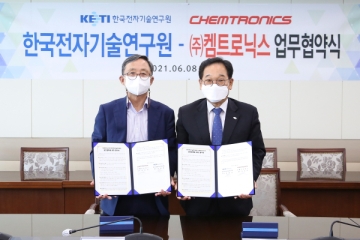
KETI and Kemtronics have concluded a memorandum of understanding for the development of core material technologies in V2X technology and wireless charging fields. Based on their respective proprietary technologies and infrastructure, both parties plan to establish a demonstration environment for autonomous driving and develop autonomous cooperative driving technology. Additionally, they intend to explore new business models in the mobile wireless charging material technology sector.
2021.06.09by 이수민 기자
.jpg)
KETI and Czechoslovak Polytechnic University Establish Foundation for International Joint R&D Cooperation
The Korea Electronics Technology Institute (KETI) has signed a memorandum of understanding with the Czech Technical University in Prague covering the exchange of personnel and information in the fields of AI and autonomous driving technology, as well as the promotion of international joint technology development. The agreement was signed in the presence of Minister Moon Seung-wook of the Ministry of Trade, Industry and Energy during his visit to the Czech Republic and Czech Minister of Industry and Trade Karel Havlíček. On the same day, the ministers of industry and trade of both countries also signed a memorandum of understanding to strengthen cooperation in the nuclear power and advanced industry sectors.
2021.06.21by 이수민 기자
Smart Manufacturing Demonstration Plant Opens, Promoting Digital Innovation in Industrial Complexes
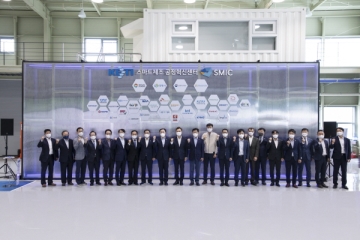
A smart manufacturing demo factory in Changwon, designed to support improved productivity and high-value-added manufacturing for enterprises, has opened and is drawing expectations that it will promote digital innovation in industrial complexes.
2021.07.28by 배종인 기자
Schneider Aims for Building Energy Savings and Operational Stability with Next-Generation HVAC Drives
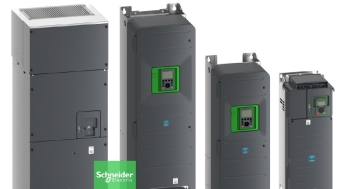
Schneider Electric has unveiled its next-generation HVAC drive product line 'Altivar HVAC'. The new product line's key features center on enhanced energy savings, system operational stability, and building management system integration. The products are divided into 'ATH200' for OEM and small equipment applications, and 'ATH600' for environments requiring continuous operation and advanced control. The company plans to expand the application scope from commercial buildings to facilities where HVAC system stability is critical, such as hospitals, airports, and data centers. The announcement includes over 30% energy savings, operation from -10°C to +60°C, Modbus and BACnet support, and compatibility with low global warming potential refrigerants.
2026.03.26by 명세환 기자
Ecolab Expands AI Data Center Cooling Business Through Acquisition of CoolIT
Ecolab has agreed to acquire CoolIT Systems, a liquid cooling company for AI data centers, for approximately $4.75 billion. The transaction is expected to close by Q3 2026, subject to regulatory approvals. CoolIT has been supplying direct-to-chip cooling-based coolant distribution units, cold plates, and manifolds, serving hyperscale data centers and colocation operators as customers. This acquisition is a measure to address the high-heat and high-density server environments created by AI proliferation. Ecolab plans to combine its water management and digital monitoring capabilities with CoolIT's hardware technology to expand its data center cooling business.
2026.03.26by 명세환 기자











