


IBM Unveils 'Telum' Processor Based on On-Chip AI Acceleration Technology
 Published2021.08.24 09:10
Deep learning inference can be applied to large-scale financial transactions
Support for AI project implementation where the data is.
On the 24th, at the annual 'Hot Chips' meeting, IBM unveiled details of the 'IBM Telum' processor, which is designed to help respond to financial fraud in real time by applying deep learning inference technology to enterprise workloads.
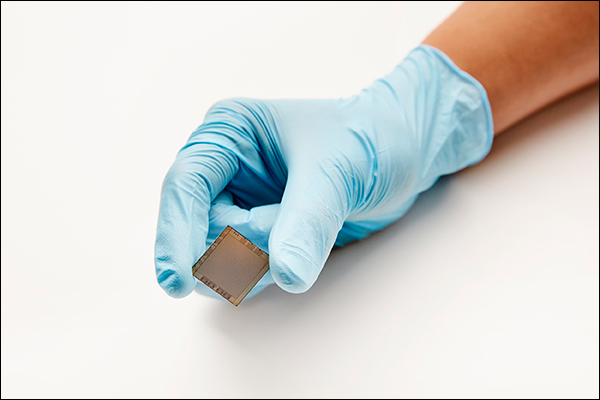
The Telum processor, developed on the 7nm EUV technology node, is IBM's first processor to include on-chip acceleration technology to enable the application of AI inference technology during transaction processing, and it is also a product in which Samsung Electronics participated as a technology development partner.
The Telum chip consists of eight processors with a deep super-scalar out-of-order instruction pipeline architecture. Each processor runs at a clock speed of over 5 GHz and is optimized for heterogeneous workloads.
The cache and chip interconnection infrastructure provides 32MB of cache per core and can be scaled to 32 Telum chips. The Dual-Chip Module (DCM) design includes 22 billion transistors and 19 miles of wire on 17 metal layers.
The Telum-based system will be released in the first half of next year.
◇ AI projects can be built and executed where the data is.
IBM Telum is designed to efficiently run applications where the data is. It helps overcome existing enterprise AI approaches that require significant memory and data movement capabilities to process inference.
With Telum, you can run large-scale inference on sensitive transactions in real time through accelerators located close to mission-critical data and applications, instead of calling separate platform AI solutions that can impact performance.
In addition, AI models can be built and trained outside the platform, and the AI models can be deployed to a Telum-based IBM system for analysis to perform inference.
◇ Suitable for all aspects of banking, finance, stock trading, and insurance business
Today, companies use detection technology to catch fraud when it occurs. Due to the limitations of existing technology, this process is time-consuming and requires large-scale computing operations.
This is especially true when fraud analysis and detection are performed on a platform isolated from transactions or data related to a company's core business. Due to latency, complex fraud detection often does not occur in real time. This means that criminals can purchase goods using stolen credit cards before retailers even realize that fraud has occurred.
Telum can help enterprise customers shift their mindset from a passive approach of detecting fraud to an active one of preventing fraud before a transaction is completed without impacting Service Level Agreements (SLAs). The new chip enables the full performance of the AI processor for AI-specific workloads.
Comments
Related news
IBM Unveils 2nm Chip, Expected to Applied to IBM Power Systems by the End of the Year
IBM has unveiled a chip developed with 2nm nanosheet technology. The new 2-nanometer chip features up to 50 billion transistors, delivering 45% higher performance than today's most advanced 7-nanometer node chips while consuming 75% less energy. IBM's first commercialized 2-nanometer chip, which includes an upgraded version of the 7-nanometer chip from IBM's Albany Research Laboratory, is expected to be integrated into IBM Power Systems based on IBM's 'Power10' by the end of this year.
2021.05.07by 이수민 기자
[Personnel] IBM Korea appoints Won Seong-sik as new CEO
IBM announced the appointment of Won Sung-sik as the new President and Representative Director of IBM Korea, with former President and Representative Director Song Ki-hong transitioning to oversee global business services for ASEAN and Korea. Prior to his appointment as the new President and Representative Director, President Won oversaw the Technology Group at IBM Korea, which encompasses systems hardware, cloud and cognitive software, and partner business.
2021.07.08by 강정규 기자
NIA Sets Out to Foster AI Talent and Disseminate Training Data
The Korea Intelligence Information Society Promotion Agency (NIA) and the Artificial Intelligence Graduate School Council (hereinafter referred to as "the Council") have concluded a business agreement to promote the cultivation of AI talent and the revitalization of the AI research and development ecosystem. The two organizations have agreed to make joint efforts to enable AI learning data to be utilized in AI graduate school curriculum development, AI academic research, and related areas.
2021.08.23by 강정규 기자
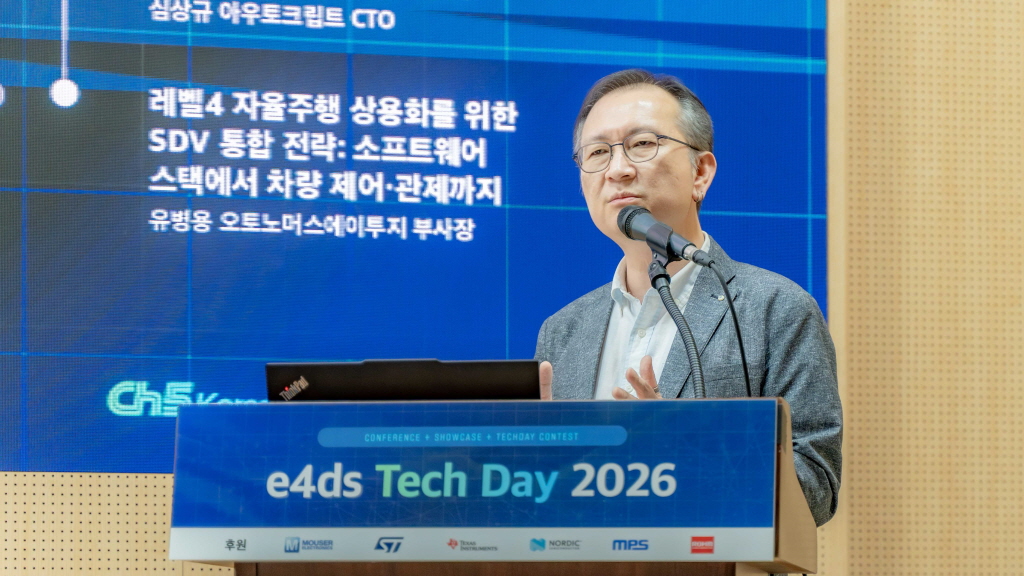
[e4ds Tech Day 2026 ⑨] Sim Sang-gyu, Autocrypt CTO: "In the Physical AI Era, Automotive Security Must Extend Beyond the Vehicle"
At e4ds Tech Day 2026, Sim Sang-gyu, CTO of Autocrypt, explained automotive cybersecurity strategies in the era of Physical AI and SDV (Software-Defined Vehicle). Automobiles are evolving as part of an ecosystem connected to AI, cloud, chargers, IoT, and robots, and he emphasized that the scope of security must expand beyond the vehicle interior to the entire connected environment. In particular, AI model tampering, adversarial attacks, OTA updates, and EV charger hacking were identified as major threats. He explained that response measures require zero trust, AI model integrity protection, intrusion detection, Security by Design and Default, and full lifecycle security management, and that proactive security system establishment beyond regulatory compliance is critical for securing future mobility competitiveness.
2026.10.12by 배종인 기자
NVIDIA to Invest $1 Billion in U.S. Science Over Next Five Years
NVIDIA has announced plans to invest $1 billion over the next five years to strengthen U.S. scientific and technological competitiveness. The company will enhance cutting-edge artificial intelligence research and development capabilities in key areas including quantum computing, healthcare, and energy security, while expanding support for higher education research institutions and cloud service providers. NVIDIA is participating as a major industry partner in the White House Office of Science and Technology Policy's Genesis Mission, and is promoting supercomputer construction in collaboration with national laboratories including Argonne and Los Alamos.
2026.10.12by 배종인 기자











