



First Half of '21 5G Quality Assessment Results: "Still Falls Short of Pre-Commercialization Expectations"
 Published2021.09.01 14:42
117.98Mbps higher than the second half of last year
Important multi-use facilities with 5G availability increased by 33%
The commercialization of 5G mobile communication has passed its second anniversary. While 5G coverage and quality are rapidly improving, it has been pointed out that in order for users' perceived quality of 5G to further improve, the three telecommunication companies need to expand network investment and spread suitable 5G application services.

It only rose slightly. [Image=Pixabay]
On the 1st, the Ministry of Science and ICT and the National Intelligence Society Agency (NIA) announced the interim results for the first half of the 2021 5G service coverage inspection and quality evaluation. The evaluation covered all administrative districts in 85 cities, and apartment complexes and the interiors of university buildings were included as new measurement types.
The first-half interim evaluation was divided into a coverage check and a quality evaluation.
For outdoor coverage, the average area of 5G coverage disclosed by telecommunication companies in 85 cities pursuant to Article 56-2 of the Telecommunications Business Act was 6,271.12㎢ as of May. It appears that 5G coverage has been established in most urban areas excluding forests in Seoul and the six major metropolitan cities, while in 78 small and medium-sized cities, it has been built mainly in major residential and activity areas such as densely populated areas and downtowns.
By carrier, it was LGU+ 6,805.25㎢, KT 6,333.33㎢, and SKT 5,674.79㎢. Sample inspection results showed that the 5G coverage maps released by telecommunication companies did not overrepresent it.
Regarding the interiors of major facilities, the number of facilities where 5G is available averages 3,707 across the three carriers as of April, out of approximately 4,500 multi-use facilities such as department stores, libraries, and airports. By carrier, this stands at 4,205 for KT, 3,923 for SKT, and 2,992 for LGU+. The coverage area for stable 5G services in major multi-use facilities is 96.00%, an improvement compared to the second half of last year (90.99%).
As of April, regarding transportation infrastructure, 5G has been installed in 835 out of a total of 1,028 subway stations. For high-speed rail, 5G has been installed in an average of 53 out of a total of 54 stations across the three companies, and in an average of 51 out of a total of 55 sections across the three companies. For expressways, it was found that 5G has been installed in an average of 94 out of 141 sections of major expressways with high traffic volume across the three companies.
◇ 5G Service Quality Evaluation Results
The average 5G download speed for the three carriers was 808.45 Mbps, an improvement of 117.98 Mbps from 690.47 Mbps last year. The average 5G upload speed was 83.93 Mbps, an improvement of 20.61 Mbps from 63.32 Mbps last year. By carrier, SKT recorded 923.20 Mbps (up 127.63 Mbps), KT 782.21 Mbps (up 114.73 Mbps), and LGU+ 719.94 Mbps (up 111.45 Mbps).
According to the results of continuous user evaluations, download speeds on all models capable of 5G service are 872.99Mbps for SKT, 703.49Mbps for KT, and 651.46Mbps for LGU+. In particular, when reflecting only the measurement results of the 'Galaxy S20+' smartphone as in the government evaluation, the download speeds were close to 920.07Mbps for SKT, 761.60Mbps for KT, and 710.52Mbps for LGU+ by carrier.
The 5G → LTE conversion rate, an indicator of 5G network stability, improved from 5.29% in the previous year to an average of 1.22% for downloads (5.49% in the previous year) and 1.25% for uploads for downloads. By carrier, based on downloads, SKT stood at 1.17%, LGU+ at 1.22%, and KT at 1.26%.
◇ 5G Service Quality by Specific Type
The average download speeds by type were 779.98 Mbps for outdoor areas (administrative districts), 833.21 Mbps for multi-use facilities and transportation infrastructure, and 829.10 Mbps for residential areas. Among multi-use facilities, speeds were high in places such as amusement parks (1,028.09 Mbps), while the newly added interiors of major university buildings reached 816.75 Mbps. Within transportation infrastructure, subway stations recorded 1,158.95 Mbps, subway cars 916.42 Mbps, and high-speed trains 448.79 Mbps.
For residential areas newly included in the 2021 evaluation, a sample was selected from large-scale apartment complexes with 2,000 or more households for evaluation. The results were 877.74 Mbps in apartments where 5G base stations were installed, and 440.05 Mbps in apartments where 5G installation was difficult.
Due to the COVID-19 pandemic, in-home visit measurements were not conducted. The Ministry of Science and ICT is also scheduled to announce the comprehensive results of the second half of the 2021 5G service coverage inspection and quality evaluation.
Comments
Related news

Samsung Electronics Secures Two Additional 3GPP Chairperson Seats
Samsung Electronics secures two additional 3GPP leadership positions, taking the lead in telecommunications standards to expand the 5G ecosystem.
2021.08.30by 배종인 기자
DNP Develops Reflector Array to Expand 5G Communication Transmission and Reception Areas
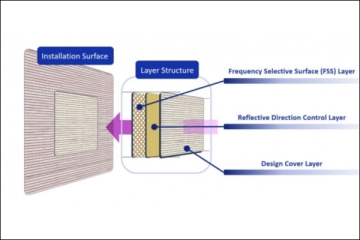
Dainippon Printing has developed a reflect array that flexibly reflects millimeter waves in 5G communication systems to expand the communicable area. It reflects millimeter waves in a more targeted manner compared to conventional metal reflectors, thereby reducing installation constraints. This improves communication environment in areas where radio waves are difficult to reach, such as locations blocked by buildings.
2021.09.01by 이수민 기자

[China Briefing] China's 5G Base Stations Near 1 Million
Notable China ICT News Summary - September 1, 2021 [China Briefing]: ◇China has already constructed 994,000 5G base stations, covering prefecture-level cities ◇TSMC builds extensive water recycling facilities to prevent water shortage situations ◇Taiwan SEMI "8-inch wafer-based chip shortage to persist into next year" ◇Xiaomi acquires autonomous driving company 'DeepMotion' for $77.37 million, etc.
2021.09.01by 이춘영 외신
European Patent Applications Surpass 200,000 for the First Time… South Korea Maintains 5th Place, Led by Batteries and Telecommunications
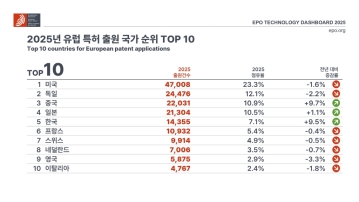
According to the European Patent Office (EPO)'s 'Technology Dashboard 2025', European patent applications last year reached 201,974, surpassing 200,000 for the first time. Korean companies and inventors filed 14,355 applications, representing a 9.5% increase from the previous year and maintaining 5th place by country. Battery, digital communication, and semiconductor technologies led the growth, with Samsung ranking as the top EPO applicant for the second consecutive year and LG reaching 3rd place. The presence of major domestic cities such as Seoul, Suwon, and Yongin was also confirmed. It was also revealed that Korea's European patent strategy is expanding beyond individual technologies to span the entire industry.
2026.03.24by 명세환 기자
SK Telecom First Applies AI-Based Network Operations at Gwanghwamun K-Pop Concert
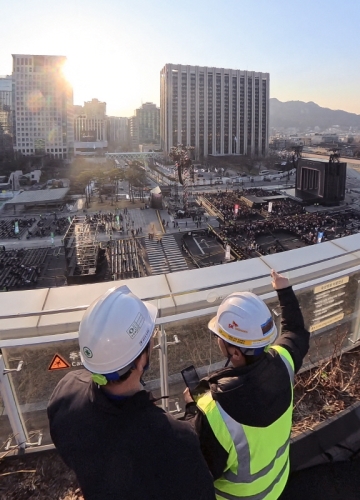
SK Telecom announced that it applied an AI-based network operation system for the first time at a large-scale K-pop concert held in the Gwanghwamun area of Seoul on March 21st, managing communication quality throughout the event. Mobile data usage during the three hours before and after the concert reached 12.15TB, approximately doubling compared to the same time slot the previous weekend. SK Telecom monitored traffic using the AI system 'A-One' in five-minute and 50-meter units to respond to potential overload situations, while also operating temporary communication facilities and on-site personnel in parallel. This case is interpreted as confirmation of the practical applicability of AI-based autonomous network operation in an environment where demand from dense events and foreign users increases simultaneously.
2026.03.23by 명세환 기자











