



KT expands its IDC backbone network in the Seoul metropolitan area by 10 times.
 Published2021.09.03 08:32
Expanding switch bandwidth to protect against DDoS attacks
KT announced on the 2nd that it has expanded its "One IDC" internet backbone, which connects six IDCs in the Seoul metropolitan area (Yongsan, Mokdong 1 & 2, Gangnam, Bundang, and Yeouido), with a terabit network. This represents a tenfold increase in capacity compared to the existing IDC backbone. With the terabit network, companies using KT's IDCs in the Seoul metropolitan area can now expand their internet access by 100 gigabits per second.
.jpg)
KT employees supervising [Photo = KT]
"One IDC" is a technology that connects KT IDCs located in the metropolitan area to form a single, massive IDC. KT One IDC is the first in Korea to combine multiple IDCs into a single IDC. Even if a single IDC suddenly experiences a large volume of traffic, it can still provide data services by connecting to the backbone network via an adjacent IDC.
Furthermore, even if IT resources are distributed across multiple IDCs, they can be integrated and managed as a single virtual network without the need for expensive physical circuit configurations. Switch bandwidth has also been increased tenfold to minimize the impact of distributed denial-of-service (DDoS) attacks. A comprehensive network solution that flexibly controls traffic flow is also being implemented for the first time in Korea in an IDC. When a DDoS attack occurs, traffic temporarily increases, and this is quickly diverted.
The total network solution incorporates various new network technologies, including Segment Routing and EVPN (Ethernet VPN). Segment Routing automatically adjusts traffic paths for each service. EVPN is optimized for logically interconnecting physically separate data centers.
Meanwhile, KT IDC offers a variety of value-added services. Companies using KT IDC can easily connect to various public clouds like AWS and Azure without additional dedicated lines, regardless of which IDC they are located in within the metropolitan area. Even non-KT IDC customers can enjoy low-cost short-distance dedicated line connections to IDCs near the metropolitan area.
“The traffic levels that corporate customers want have increased from ‘gigabit’ to ‘terabyte’, so we have completed network expansion and application of new technologies,” said Lee Mi-hee, executive director of KT’s Cloud/DX business division. “As the largest IDC operator in Korea, we will meet the changing expectations of our customers.”
Comments
Related news
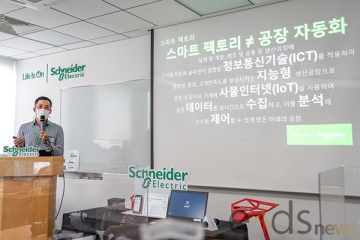
SE Unveils Cloud-Based Remote Equipment Monitoring Solution
A growing number of factories are adopting solutions that enable remote maintenance and monitoring of equipment. Digitalization of factory equipment supports OT administrators in collecting and analyzing equipment-related information, while providing the visibility necessary for equipment downtime prevention and remote management. To accelerate this trend, Schneider Electric has unveiled EcoStruxure Machine, an integrated architecture platform for industrial sites and equipment manufacturers, and EcoStruxure Machine Advisor, a cloud-based management solution.
2021.07.08by 이수민 기자
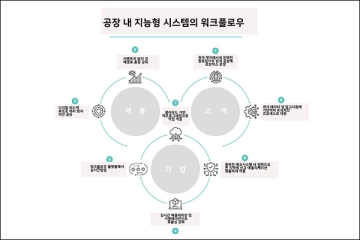
New Wind River Studio Supports Intelligent System Automation
The proliferation of 5G, AI applications, and autonomous and intelligent systems are realizing the potential of IoT. AI, robotics, and automation are projected to drive 70% of global GDP growth through 2030. In response, Wind River has released the latest version of its cloud-native platform, 'Wind River Studio'. This release is integrated with cutting-edge technologies including remote edge computing, data analytics, security, 5G, and AI/ML.
2021.07.22by 강정규 기자
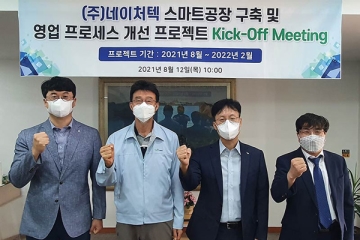
SKT Strengthens Smart Factory and Cloud Services for Enterprises
SK Telecom announced on the 16th that it will establish a specialized team with ValueCompanion and Bosch Rexroth Korea to provide one-stop support for smart factory construction. NatureTech, a health functional food company, will be the first enterprise to receive one-stop support from the specialized team. Through the specialized team, NatureTech will implement an automated control system for production equipment by constructing the second phase of smart factory advancement. Additionally, SKT launched Cloud Radar, an AI-based next-generation cloud management platform.
2021.08.17by 이수민 기자
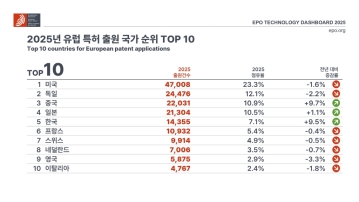
European Patent Applications Surpass 200,000 for the First Time… South Korea Maintains 5th Place, Led by Batteries and Telecommunications
According to the European Patent Office (EPO)'s 'Technology Dashboard 2025', European patent applications last year reached 201,974, surpassing 200,000 for the first time. Korean companies and inventors filed 14,355 applications, representing a 9.5% increase from the previous year and maintaining 5th place by country. Battery, digital communication, and semiconductor technologies led the growth, with Samsung ranking as the top EPO applicant for the second consecutive year and LG reaching 3rd place. The presence of major domestic cities such as Seoul, Suwon, and Yongin was also confirmed. It was also revealed that Korea's European patent strategy is expanding beyond individual technologies to span the entire industry.
2026.03.24by 명세환 기자

SK Telecom First Applies AI-Based Network Operations at Gwanghwamun K-Pop Concert
SK Telecom announced that it applied an AI-based network operation system for the first time at a large-scale K-pop concert held in the Gwanghwamun area of Seoul on March 21st, managing communication quality throughout the event. Mobile data usage during the three hours before and after the concert reached 12.15TB, approximately doubling compared to the same time slot the previous weekend. SK Telecom monitored traffic using the AI system 'A-One' in five-minute and 50-meter units to respond to potential overload situations, while also operating temporary communication facilities and on-site personnel in parallel. This case is interpreted as confirmation of the practical applicability of AI-based autonomous network operation in an environment where demand from dense events and foreign users increases simultaneously.
2026.03.23by 명세환 기자











