


Semiconductor-grade ammonia (NH3) faces a double whammy of rising raw material costs and falling demand
 Published2021.09.06 14:23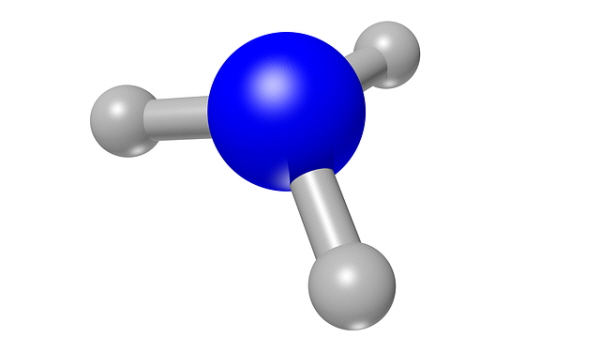
LED company with a large share of sales relocates overseas
Positive demand outlook for GaN semiconductors
Suppliers of ammonia (NH3) for semiconductors are facing a double whammy of rising raw material costs and declining demand due to the relocation of LED manufacturers, which accounted for a large portion of their sales, overseas.
According to the semiconductor ammonia (NH3) industry, the supply price of raw material ammonia for manufacturing semiconductor ammonia was 500 to 700 won per kilogram three years ago, but recently the supply price has risen by 80% to 900 to 1,100 won.
On the other hand, it was reported that the supply price of 7N purity ammonia has fallen below 2,000 won per kg, and the profit margins of ammonia suppliers are decreasing.
This rise in the price of raw material ammonia is analyzed to be due to increased manufacturing costs and logistics expenses.
In addition, the decline in ammonia supply prices is analyzed to be due to a decrease in demand for semiconductor-grade ammonia.
7N ammonia supplied for semiconductors is mainly used for LEDs and semiconductors in a 1:1 ratio, but compared to the scale of semiconductors, the usage of LEDs is relatively high. This is because LED manufacturers have recently relocated to Malaysia, Vietnam, and other countries, and domestically, only two companies, Seoul Semiconductor and Samsung Electronics, manufacture LEDs.
In addition, for display applications, it is only one-tenth the size of semiconductors, and usage is also decreasing.
As a result, demand is not supporting it, and prices are not receiving their fair value. It is reported that there is.
Meanwhile, the country relies entirely on imports for raw ammonia. The ammonia imported into the country is produced using natural gas and is typically loaded onto 100,000-ton class oil tankers. Major importers include Hanwha Solutions, Lotte Chemical, and Namhae Chemical, and since they usually share the volume of a single oil tanker, the quality of the ammonia is consistent.
Ammonia is commonly used as a fertilizer and as a raw material for caprolactam, nitric acid, and the like.
In semiconductor, LCD, and crystalline solar cell processes, it is used in combination with monosilane (SiH4) to deposit silicon nitride (Si3N4) insulating films, and in LED manufacturing processes, it is used in combination with trimethylgallium (TMGa) in the MOCVD process to deposit gallium nitride (GaN) films.
With the recent growth of the compound semiconductor market, including GaN (gallium nitride) and SiC (silicon carbide), the demand for ammonia for semiconductors is expected to expand again in the future.
Suppliers of ammonia for semiconductors include Air Products Korea, PSG, DIG Airgas, Wonik Materials, and Coatec.

Comments
Related news
UNIST succeeds in ammonia hydrogen production technology
A research team led by Professor Kim Gun-tae from the Department of Energy and Chemical Engineering at UNIST (President Lee Yong-hun) has developed an efficient technology for converting liquid ammonia into hydrogen and presented a new analytical technique that can identify optimal process conditions. The technology is drawing attention as a key technology to accelerate the green hydrogen era.
2021.05.07by 배종인 기자
KIMM Develops Carbon-Free 'Green Ammonia' Process
The Korea Institute of Machinery and Materials (KIMM), under the Ministry of Science and ICT, with director Park Sang-jin, has developed an innovative process for producing ammonia at room temperature and atmospheric pressure using renewable energy. The institute has devised an ammonia production process that emits no carbon whatsoever, and is expected to be an innovative technology that will significantly contribute to achieving carbon neutrality in the future.
2021.08.20by 배종인 기자
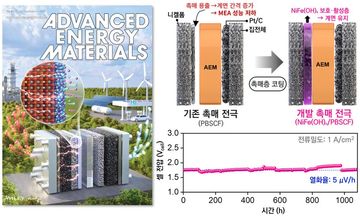
Materials Research Institute Develops Ultra-thin Coating Water Electrolysis Catalyst Technology
The Korea Institute of Materials Science has simultaneously resolved the performance and durability trade-off problem in water electrolysis catalysts by applying ultra-thin surface coating technology. Achieving 1.9 times higher performance compared to conventional catalysts while demonstrating 1,000-hour long-term stability, the institute has developed technology scalable to industrial water electrolysis systems through a simple process.
2026.10.07by 배종인 기자
Gigaphoton Develops Neon Gas Recycling System for ArF Excimer Lasers...Achieves 50% Recycling Rate
Gigaphoton announced that it has developed a gas recycling system for ArF excimer lasers and achieved a 50% neon gas recycling rate.
2026.10.02by 배종인 기자
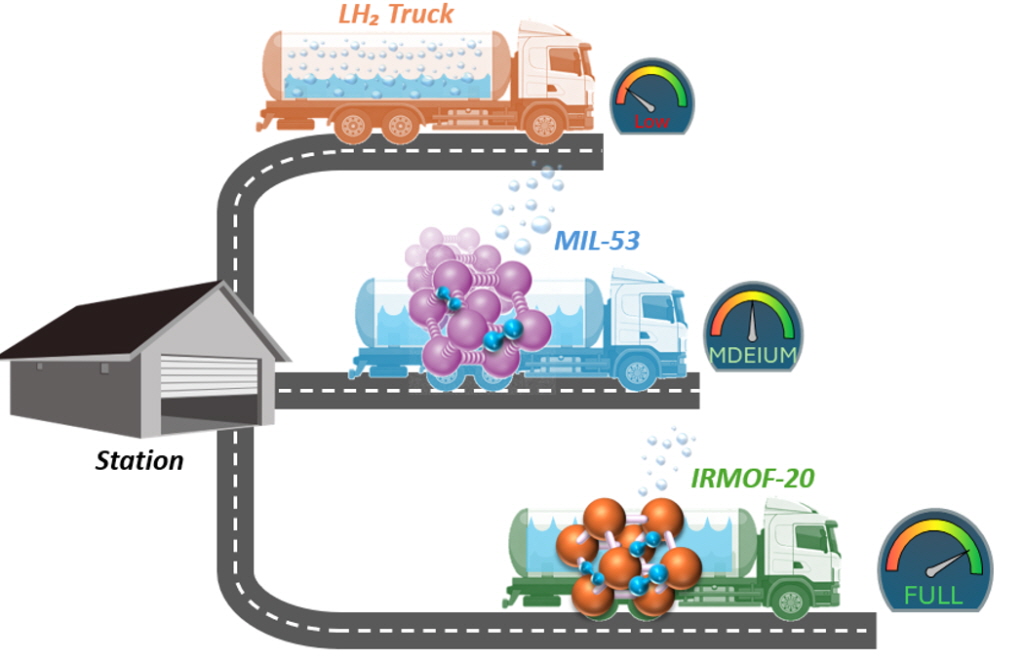
UNIST suppresses vaporization losses while maintaining 97% of liquefied hydrogen storage capacity
A research team led by Professor Oh Hyun-cheol from the Department of Chemistry at UNIST, in collaboration with Professor Moon Hoe-ri from Ewha Womans University and researchers from the Technical University of Munich in Germany, has verified technology that reduces boil-off loss occurring during liquefied hydrogen transportation and storage by utilizing metal-organic frameworks (MOF).
2026.09.30by 배종인 기자











