



Ministry of Land, Infrastructure and Transport supports the advancement of ITS in Gwangju, Gyeonggi, Hwaseong, and Jeju.
 Published2021.09.09 16:24
Gwangju Metropolitan City, Gyeonggi Province, Hwaseong City, Gyeonggi Province, and Jeju Island decided
In January next year, 40-60% of the project cost will be subsidized by the national government.
On the 9th, the Ministry of Land, Infrastructure and Transport selected local governments to implement the "2022 Local Government Intelligent Transport System (ITS) National Subsidy Project." This project, which has been underway since 2009 with national funding, aims to improve traffic and safety on urban roads.
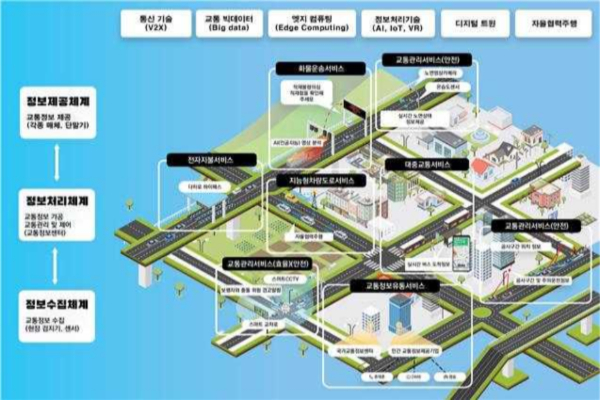
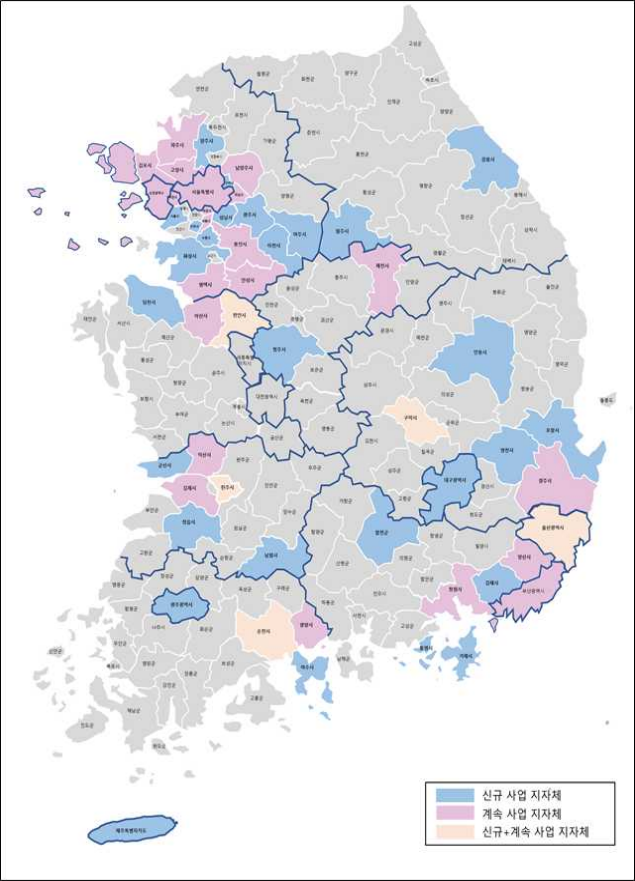
As a result of the public offering for target sites held from July 6 to August 19, a total of 48 metropolitan and basic local governments applied, and after deliberation by an evaluation committee composed of experts, 5 metropolitan local governments and 29 basic local governments with specific business plans and high expected effects were selected.
The new projects selected for 2022 will be utilized to improve local transportation issues, including urban communication management, improved signal operation, and improved emergency management to prevent secondary accidents. Local governments bear 40% to 60% of the total project cost, depending on the national budget matching ratio (40% to 60%).
The Ministry of Land, Infrastructure and Transport announced that it will continue to provide national funding to 27 local governments that were already selected last year and are currently carrying out two-year projects to ensure their successful implementation.
◇ Major Local Government ITS Projects in 2022 (Gwangju, Gyeonggi, Hwaseong, Jeju)
Gwangju Metropolitan City - AI-based Advanced Signal System Service / Gwangju City plans to improve urban congestion by installing AI cameras at 10 urban intersections in autonomous vehicle pilot zones to monitor traffic conditions in real time and introduce a smart intersection system that will distribute vehicle flow. Furthermore, the city plans to improve the functionality of 15 existing sensor signal systems.
Gyeonggi Province - Inter-regional Information Linkage Service / To address the gap in ITS services within the province, Gyeonggi Province plans to establish a data sharing and joint utilization system between provinces and cities and counties. This project will strengthen inter-regional signal integration by improving signal systems at city and county boundaries and establish a foundation for seamless emergency vehicle priority signaling.
Preliminary consultations with local governments were held through city and county briefing sessions held in May, and 25 cities and counties have agreed to jointly participate in this project, so rapid project progress is expected.
Hwaseong City - Ultra-precision location information-based traffic management service / Hwaseong City is pursuing a project to collect real-time vehicle operation information and emergency situations, and integrate it with ultra-precision location information to utilize for accident prevention and road management. We also plan to promote safety and convenience for citizens by implementing risk and warning systems in pedestrian accident-prone areas and information guidance services for public parking lots.
Jeju Special Self-Governing Province - Convenient Road Safety and Traffic Services for Citizens / Jeju Island plans to pilot a 3D traffic monitoring system using drones and other sensors to quickly respond to emergencies such as traffic accidents and localized weather events. Furthermore, the province plans to enhance the functions of its traffic center and build a metaverse platform that virtualizes the collected data and operating environment, laying the foundation for implementing Jeju-specific big data policies.
The Ministry of Land, Infrastructure and Transport plans to provide national funding in January of next year to enable the selected local governments to quickly begin their projects. The Ministry also plans to dedicate all its energies to project management, including regularly checking the progress of the project on a quarterly basis, to ensure that this support project progresses quickly.
Regarding this selection, Kim Jong-oh, head of the Digital Road Team at the Ministry of Land, Infrastructure and Transport, said, “We expect that the construction of ITS will help solve local traffic problems,” and added, “We plan to continue communicating with local governments after selection and actively support the smooth progress of the project.”
Comments
Related news
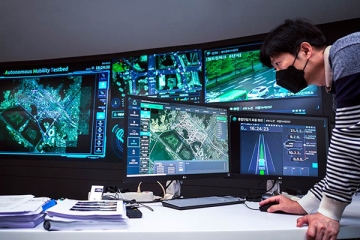
Seoul City completes 5G C-ITS demonstration project, aims for commercialization by the end of this month.
SK Telecom announced its plan to complete the demonstrative project for C-ITS (Cooperative Intelligent Transport System), a next-generation intelligent transportation system that connects all vehicles, pedestrians, and traffic infrastructure in Seoul via 5G, by the end of this month and move forward with commercialization. Seoul City and SKT are building a platform to provide information secured through C-ITS to private navigation service providers via 5G, enabling these providers to deliver the information in real-time to their service users. The platform is expected to be completed by 2022.
2021.06.09by 이수민 기자

Korea's C-ITS standard, "LTE-V2X vs. WAVE," is expected to be finalized in 2024.
The Ministry of Science and ICT and the Ministry of Land, Infrastructure and Transport have completed consultations on the nationwide C-ITS construction plan. Both ministries have established a C-ITS joint working group with participation from KETI, TTA, Korea Expressway Corporation, and ITSK. They plan to confirm a unified C-ITS standard in 2024 following demonstration and pilot projects.
2021.08.26by 이수민 기자
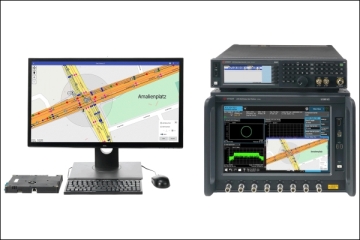
Keysight Unveils First OQTE Certified C-V2X Test Equipment
Keysight announced that it has acquired OQTE qualification from the OmniAir Consortium, an industry association that promotes interoperability and certification for Intelligent Transportation Systems (ITS), as the first in the industry. This enables Keysight to accelerate the certification speed of C-V2X devices.
2021.08.30by 이수민 기자
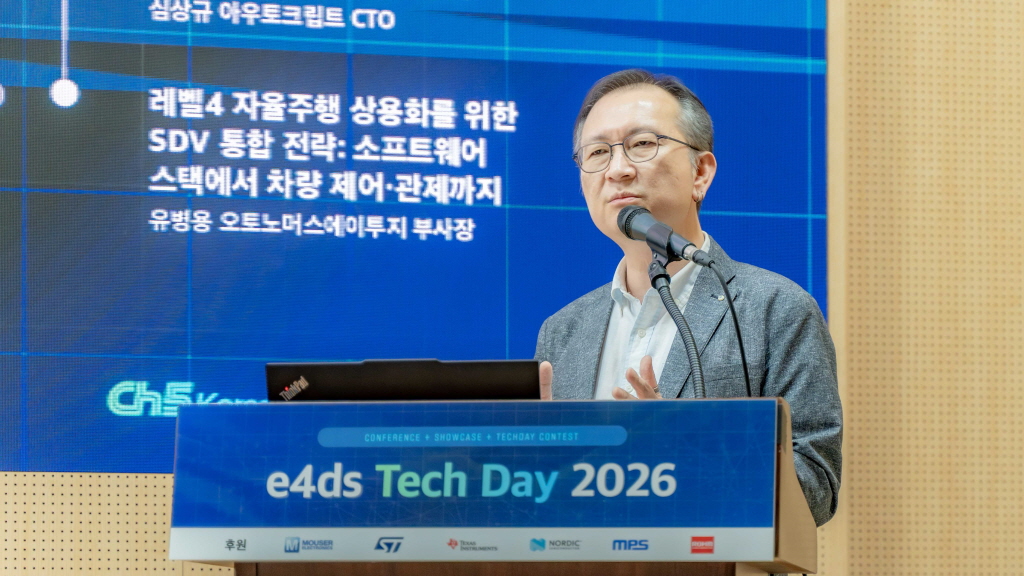
[e4ds Tech Day 2026 ⑨] Sim Sang-gyu, Autocrypt CTO: "In the Physical AI Era, Automotive Security Must Extend Beyond the Vehicle"
At e4ds Tech Day 2026, Sim Sang-gyu, CTO of Autocrypt, explained automotive cybersecurity strategies in the era of Physical AI and SDV (Software-Defined Vehicle). Automobiles are evolving as part of an ecosystem connected to AI, cloud, chargers, IoT, and robots, and he emphasized that the scope of security must expand beyond the vehicle interior to the entire connected environment. In particular, AI model tampering, adversarial attacks, OTA updates, and EV charger hacking were identified as major threats. He explained that response measures require zero trust, AI model integrity protection, intrusion detection, Security by Design and Default, and full lifecycle security management, and that proactive security system establishment beyond regulatory compliance is critical for securing future mobility competitiveness.
2026.10.12by 배종인 기자

Practical HIL Construction Strategy for Automotive and Off-Highway Controller Validation
As vehicle E/E architecture transitions to zonal structures and shifts to software-defined vehicles (SDV), the number of controllers (ECUs) requiring validation and software complexity are surging dramatically. Meanwhile, real vehicle testing cannot provide repeated verification under identical conditions and entails lead time and safety concerns. This white paper explains the principles of HIL (Hardware-in-the-Loop) validation and the structure of the NI platform composed of PXI, SLSC, and VeriStand, and through two actual implementation cases—Camera Record & Replay HIL for In-Cabin Monitoring Controller (ICMU) and Forklift Controller (VCU) HILS—describes how controller-level regression testing becomes possible. Additionally, it explicitly states application boundaries and limitations, such as lack of A2B support.
2026.10.12by 편집부











