


The world's largest liquid helium supply base begins test operations.
 Published2021.09.15 15:38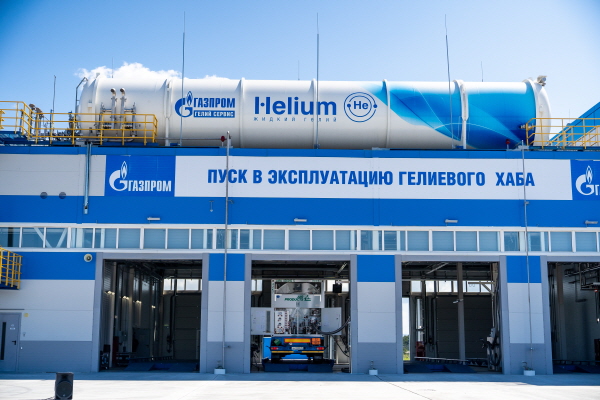
▲Amur Helium Hub (Photo: Gazprom)
Design capacity: 60 million ㎥ per year, 4,000 insulated containers
The world's largest liquid helium (He) supply base is entering commissioning, raising expectations that it will help alleviate the global helium shortage in the future.
The commissioning of a helium logistics center for helium services produced at the Amur Gas Processing Plant (GPP), owned and operated by Russia's Gazprom, took place on September 3.
The event was attended by Russian President Vladimir Putin and Gazprom Management Board Chairman Alexei Miller.
The helium hub, located at the Nadezhdinskaya PDA near the port in the Primorye Territory, is a key link in the commercial helium supply logistics chain for the Amur Gas Processing Plant (GPP).
The hub provides services for containers sent to GPP for filling, prepares logistics operations, and accepts, weighs and prepares insulated containers arriving from Amur GPP for further loading onto sea vessels.
The vessel is designed to maintain a temperature of minus 269 degrees Celsius to keep the helium in a liquid state. It was designed.
The logistics center consists of three helium separation, liquefaction, and charging units, each capable of processing 20 million cubic meters of helium annually. Only one unit is currently operational; once all three units are operational, the center will be able to process 30 million cubic meters of helium annually.
The helium production process uses spiral heat exchangers, which were first produced at a mechanical engineering plant in St. Petersburg, Russia.
“The helium hub will have the capacity to perform more than 4,000 operations per year with insulated containers,” said Alexei Miller, chairman of Gazprom’s Management Board. “This is an unprecedented figure, as there are currently only 2,000 insulated cryogenic vessels worldwide that collectively transport all the helium produced.”
Container transport services are handled by Gazprom Helium Service, the operator of the helium hub, using its own vehicles. The KAMAZ-5490 Neo cargo trucks, specially designed for Gazprom, feature air suspension for safe helium transport and run on liquefied natural gas (LNG), which is produced directly at the hub.
Meanwhile, demand for helium is strong in high-tech industries including semiconductors and MRI, and is currently growing, particularly in the Asia Pacific region.
In 2019, global helium supply and demand instability occurred due to the aging of major global helium supply facilities and declining production volumes, and prices rose four to fivefold.
In Korea, helium imports decreased significantly in 2020, and import prices also increased significantly.
Although the domestic helium supply and demand has recently been stable, domestic helium demand is steadily increasing in areas such as semiconductors and medical devices.

Comments
Related news
Materials Research Institute Develops Ultra-thin Coating Water Electrolysis Catalyst Technology
The Korea Institute of Materials Science has simultaneously resolved the performance and durability trade-off problem in water electrolysis catalysts by applying ultra-thin surface coating technology. Achieving 1.9 times higher performance compared to conventional catalysts while demonstrating 1,000-hour long-term stability, the institute has developed technology scalable to industrial water electrolysis systems through a simple process.
2026.10.07by 배종인 기자
Gigaphoton Develops Neon Gas Recycling System for ArF Excimer Lasers...Achieves 50% Recycling Rate
Gigaphoton announced that it has developed a gas recycling system for ArF excimer lasers and achieved a 50% neon gas recycling rate.
2026.10.02by 배종인 기자
UNIST suppresses vaporization losses while maintaining 97% of liquefied hydrogen storage capacity
A research team led by Professor Oh Hyun-cheol from the Department of Chemistry at UNIST, in collaboration with Professor Moon Hoe-ri from Ewha Womans University and researchers from the Technical University of Munich in Germany, has verified technology that reduces boil-off loss occurring during liquefied hydrogen transportation and storage by utilizing metal-organic frameworks (MOF).
2026.09.30by 배종인 기자
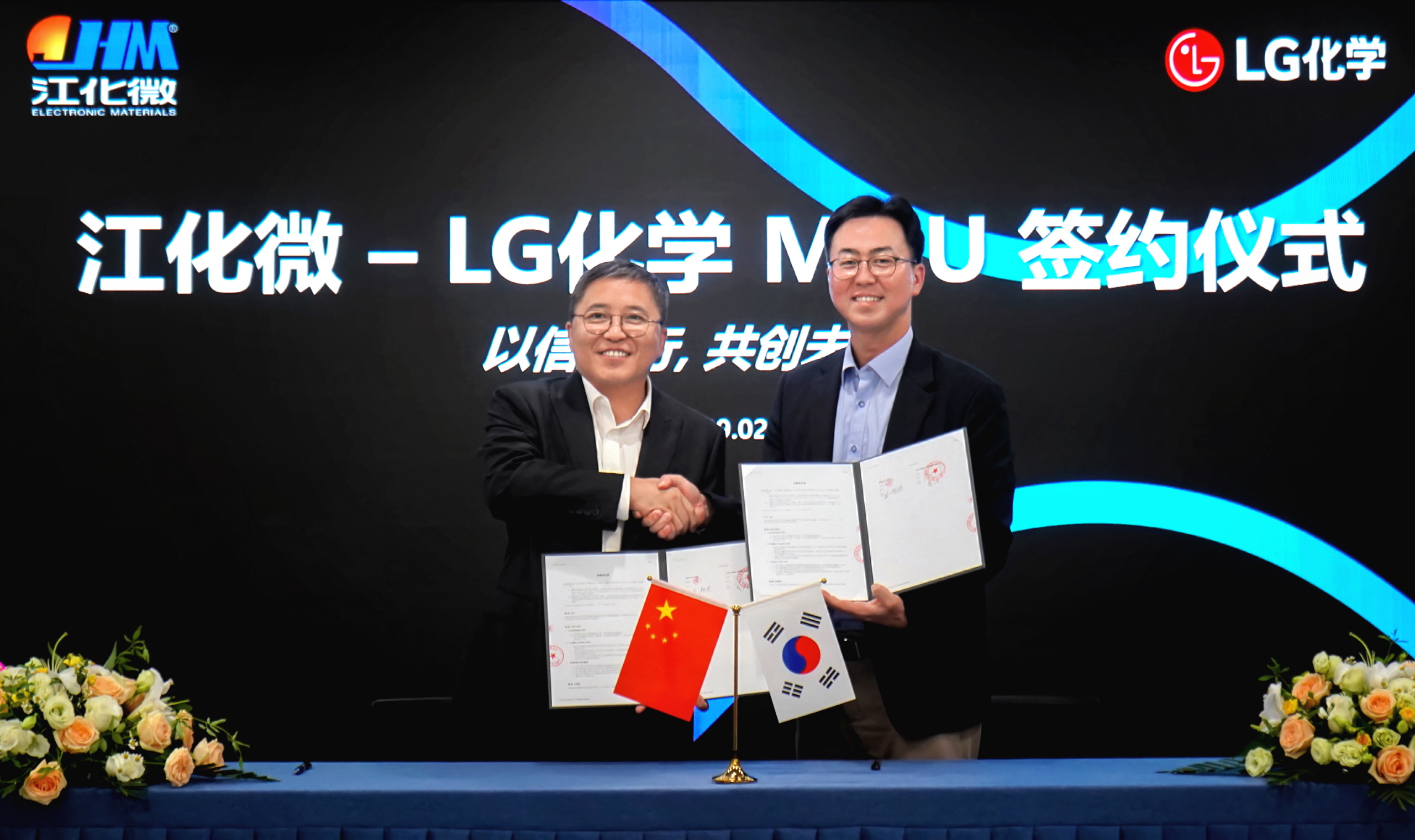
LG Chem Expands Semiconductor Cleaning Materials Business…Collaborates with China's Jianghua Wei on Ultra-high Purity IPA
LG Chem is moving to expand its ultra-high purity IPA (isopropyl alcohol) business, a core material for semiconductor processes. The company is building a local supply system in collaboration with a Chinese precision chemical company and strengthening its market strategy for AI semiconductors and advanced memory.
2026.09.14by 배종인 기자
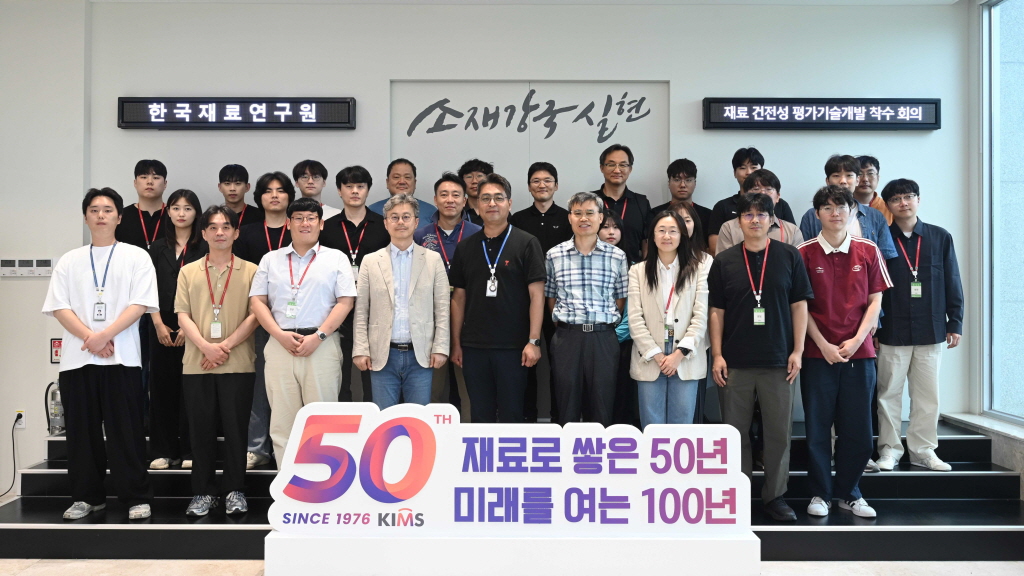
Korea Institute of Materials Science Begins Development of Anhydrous Ammonia SCC Integrated Evaluation Platform
The Korea Institute of Materials Science has begun developing an integrated evaluation platform for stress corrosion cracking (SCC) of high-strength steel for ammonia propulsion and transport vessels. By establishing a system to verify the safety of steel in anhydrous ammonia environments using domestic technology, the institute will strengthen the international competitiveness of the shipbuilding and steel industries and lay the foundation for reflecting domestic technology in regulatory and standard revisions by the International Maritime Organization (IMO) and other bodies.
2026.08.05by 배종인 기자











