


[Feature] Power & Sensors ③ - Advanced System Solutions for Transportation and Infrastructure
 Published2021.09.27 14:03
[편집자주]디지털 기술은 우리 인류의 삶에 편리함과 함께 생산성 향상이라는 큰 선물을 안겨줬다. 디지털 기술을 통해 디지털 세상에서 진행되는 모든 일들이 현실의 삶에서 이뤄지는 세상이 도래한 것이다. 이를 위해 인류는 더욱 안정적이고 고효율의 반도체 솔루션 기술을 필요로 하게 됐으며, 시스템 성능을 최적화하고, 현실의 모든 것을 측정 감지하기 위한 파워 및 센서 기술이 필요로 하게 됐다. 이 분야에서 인피니언(Infineon)은 40년의 노하우와 깊은 시스템 이해를 바탕으로 차세대 실리콘 및 광대역 갭 전력 포트폴리오 및 최첨단 센서 제품 개발에 적극 나서고 있으며, 최근 자사의 파워 및 센서 전제품을 다룬 백서를 발행해 개발자의 요구 사항에 가장 적합한 솔루션을 찾는데 도움을 주고 있다. 이에 본지는 인피니언의 ‘Power and sensing Selection guide 2021’을 바탕으로 파워 및 센서 반도체들의 응용분야와 적용사례에 대해 살펴보는 자리를 마련했다.
■ 전기차 인프라, 전력 송전 컨트롤러·전류 센터 솔루션 必
전 세계 대부분의 주요 도시에서 2050년까지 탄소 배출 제로를 달성하기 위한 전략은 부분적으로 더 많은 전기 자동차 사용과 더 나은 고속 충전 인프라를 필요로 하고 있다.
이는 확실히 거주자의 건강과 삶의 질에 해로운 도시의 높은 오염 지수를 낮추는 목표를 달성하게 하는 동기로 제로 또는 낮은 배출 이동성은 심혈관 질환 및 천식과 같은 대기 오염 관련 건강 문제의 확산을 막는 데 도움이 될 수 있다.
이와 관련해 2025년까지 100개 이상의 새로운 전기차 모델이 시장에 출시될 예정이다.
이를 위해 정부는 도로에서 추가로 전기차를 수용하는 데 필요한 충전 인프라를 개발하고 구현해야 하는 부담이 있다.
도시의 공간 제한으로 인해 향후 충전 수요는 민간 설치로 충족될 수 없으며, 공공 충전기는 도시 e모빌리티의 사용성을 높이기 위해 점점 더 중요해질 것으로 보인다.
또한 전기차 무선 충전에 대한 수요도 급증할 것으로 전망된다.
전기차 무선 충전은 무선 전력 전송으로 플러그와 케이블을 제거하는 무선 충전 시스템으로 이 유도 충전은 주차 공간의 지면에 있는 코일에서 차량에 통합된 코일로 전달된 에너지를 통해 차량을 충전할 수 있는 기술이다.
이러한 기술이 가능하게 하기 위해 관련 기기에는 전력 송전에 필요한 컨트롤러와 전류 센터 솔루션 등이 필요하다.
■ 고속 EV 충전, 에너지 효율적인 DC EV 충전기 설계 실현 必
e-모빌리티가 일상생활의 일부가 됨에 따라 보다 효율적인 충전 솔루션에 대한 요구가 증가하고 있다.
강력한 DC 충전기가 장착된 고속 전기차(EV) 충전소가 해답으로 DC EV 충전기는 많은 EV 소유자가 집에 가지고 있는 표준 AC EV보다 훨씬 빠르게 충전할 수 있기 때문에 매력적이다.
오늘날 150kW의 DC 충전기는 약 15분 만에 전기차가 200km를 운행할 정도의 에너지를 충전할 수 있다. 급속 충전 및 배터리 기술이 가까운 장래에 계속 발전하고 개선됨에 따라 전문가들은 충전 시간이 더욱 단축될 것으로 예상하고 있다.
이 분야에서 글로벌 선두주자인 인피니언(Infineon)은 고효율 구성 요소와 심층적인 기술 지원을 통해 에너지 효율적인 DC EV 충전기 설계를 실현할 수 있도록 지원한다.
인피니언 백서에 따르면 고품질 전력 반도체, 마이크로컨트롤러, 게이트 드라이버, 보안, 안전 및 인증 솔루션의 광범위한 포트폴리오에서 킬로와트에서 메가와트에 이르는 전력 범위를 다루는 것으로 알려졌다.
■ E 모빌리티, 주행 거리 확대 위한 반도체 솔루션 역할 중요
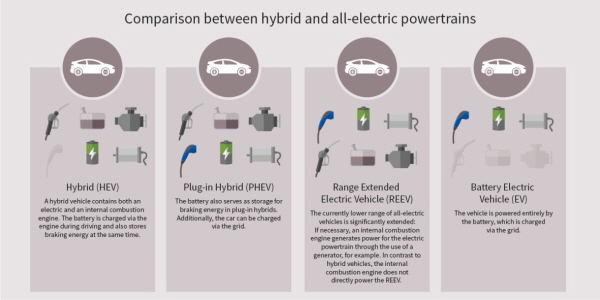
파워트레인의 전기화는 국부적으로 배출가스가 없는 이동성과 운전의 즐거움을 가능하게 한다. 필요한 에너지는 배터리에서 저장 및 전달된다.
이에 전동화의 핵심 기능을 활성화하고, 기존 12V를 사용해 고전압 시스템 간의 충전 시간 및 에너지 전달을 줄이고 주행 거리를 확대하기 위해서는 반도체 솔루션의 역할이 무엇보다 중요하다.
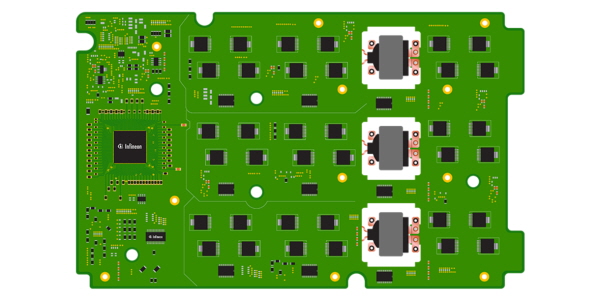
모든 플러그인 하이브리드 전기 자동차(PHEV)와 순수 전기 자동차에는 하나 이상의 온보드 충전기가 장착돼 있어 모든 표준 AC 전원 콘센트에서 배터리를 충전할 수 있다.
사용 가능한 전력은 지역 규정 및 설치 기반에 따라 다르며 일반적으로 PHEV의 경우 최대 7.4kW, 최대 전력은 최대 22kW다. 시스템 설계자는 전력 밀도를 높이는 동시에 다양한 전압 및 전류 레벨을 지원해야 하는 과제에 직면해 있다.
온보드 충전의 경우 핵심 성공 요인은 효율성과 소형 폼 팩터에 대한 높은 전력 밀도다.
장기적인 추세는 양방향 충전으로 이동하고 있으며, 충전기는 자동차에서 스마트 그리드로 전력을 공급하기도 한다.
전기 자동차의 아키텍처는 저전압 에너지 저장 장치와 다중 전기 부하가 있는 하나 이상의 저전압 하위 네트워크와 고전압 에너지 저장 장치가 있는 하나의 고전압 하위 네트워크로 구성된다.
■ 경전기차 및 지게차, 충분한 전력 생성을 위한 온 저항 낮아야
경전기차(LEV)는 일상적인 출퇴근용으로 점점 더 대중화되고 있다. 또한 아시아를 시작으로 현재는 유럽과 미주 지역으로 나아가고 있는 L-카테고리(경량) 차량(e-킥보드, e-자전거, e-스쿠터, e-모터싸이클, e-인력거 및 저속 전기차)의 동네 전기 자동차(NEV)라고도 하는 차량(LSEV)은 전 세계적으로 목격되고 있다.
최첨단 배터리 기술을 통해 LEV 제조업체는 최대 100km/h의 다양한 속도 등급에서 충전당 더 긴 거리를 가능하게 하는 기술이 필요한 프리미엄 차량을 출시하고 있다.
반면에 전동지게차(Class I, II, III) 기능은 2륜, 3륜차, LSEV와 달리 고하중 지게차 작업이다.
LEV가 더 빠르게 달리거나 지게차가 운반해야 하는 부하가 높을수록 모터와 모터 컨트롤러는 더 강력해야 한다.
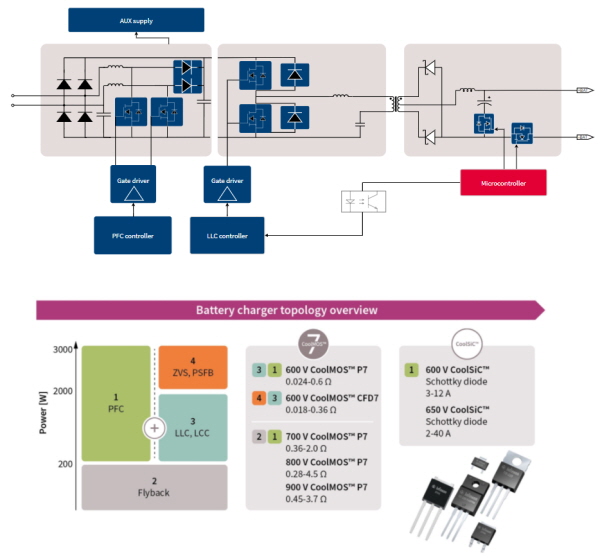
이를 위해서는 충분한 전력을 생성하기 위해 병렬로 모이는 온 저항이 가장 낮은 동급 최강의 여러 MOSFET이 필요하다.
경전기차 및 전동지게차에서 사용되는 MOSFET과 게이트 드라이버는 온 저항과 단락조건, 단단한 정류 견고성 및 순간 최대 전력 허용 초차에 대해 견고해야 한다.
또한 25V에서 300V에 이르는 광범위한 전압 등급과 함께 병렬 작업에서 최고의 성능을 발휘하도록 설계돼야 한다.

Comments
Related news
[Planning] Power & Sensors ① - Home Appliances: Solutions for Efficiency and Minimal Form Factors Are Essential
We have arranged a session to examine sensor and power solutions that realize digital technology in reality, based on Infineon's 'Power and sensing Selection guide 2021'.
2021.09.07by 명세환 기자
[Planning] Power & Sensors ② - Reliable Industrial Solutions for the Most Harsh Environments
Infineon is actively engaged in developing next-generation silicon and wide-bandgap power portfolios as well as cutting-edge sensor products, based on 40 years of expertise and deep system understanding. Recently, the company has published a white paper covering its entire power and sensor product lineup to help developers find solutions best suited to their requirements. This publication presents an overview of applications and implementation cases of power and sensor semiconductors based on Infineon's 'Power and Sensing Selection Guide 2021'.
2021.09.14by 명세환 기자
Infineon Unveils IGBT Modules Supporting Up to 900A Rated Current
Infineon announced that its EconoDUAL 3 portfolio adopting TRENCHSTOP IGBT7 chips offers current ratings in 300A to 900A configurations. These products, which enhance flexibility and deliver improved power density and performance, are suitable for photovoltaic, drive applications, commercial/construction/agricultural vehicle (CAV) inverters, and uninterruptible power supply (UPS) inverters.
2021.09.15by 이수민 기자

[e4ds Tech Day 2026 ⑨] Sim Sang-gyu, Autocrypt CTO: "In the Physical AI Era, Automotive Security Must Extend Beyond the Vehicle"
At e4ds Tech Day 2026, Sim Sang-gyu, CTO of Autocrypt, explained automotive cybersecurity strategies in the era of Physical AI and SDV (Software-Defined Vehicle). Automobiles are evolving as part of an ecosystem connected to AI, cloud, chargers, IoT, and robots, and he emphasized that the scope of security must expand beyond the vehicle interior to the entire connected environment. In particular, AI model tampering, adversarial attacks, OTA updates, and EV charger hacking were identified as major threats. He explained that response measures require zero trust, AI model integrity protection, intrusion detection, Security by Design and Default, and full lifecycle security management, and that proactive security system establishment beyond regulatory compliance is critical for securing future mobility competitiveness.
2026.10.12by 배종인 기자

Practical HIL Construction Strategy for Automotive and Off-Highway Controller Validation
As vehicle E/E architecture transitions to zonal structures and shifts to software-defined vehicles (SDV), the number of controllers (ECUs) requiring validation and software complexity are surging dramatically. Meanwhile, real vehicle testing cannot provide repeated verification under identical conditions and entails lead time and safety concerns. This white paper explains the principles of HIL (Hardware-in-the-Loop) validation and the structure of the NI platform composed of PXI, SLSC, and VeriStand, and through two actual implementation cases—Camera Record & Replay HIL for In-Cabin Monitoring Controller (ICMU) and Forklift Controller (VCU) HILS—describes how controller-level regression testing becomes possible. Additionally, it explicitly states application boundaries and limitations, such as lack of A2B support.
2026.10.12by 편집부











