


KIMM Establishes Nuclear Power Plant Equipment Safety Verification Facility
 Published2021.10.01 15:38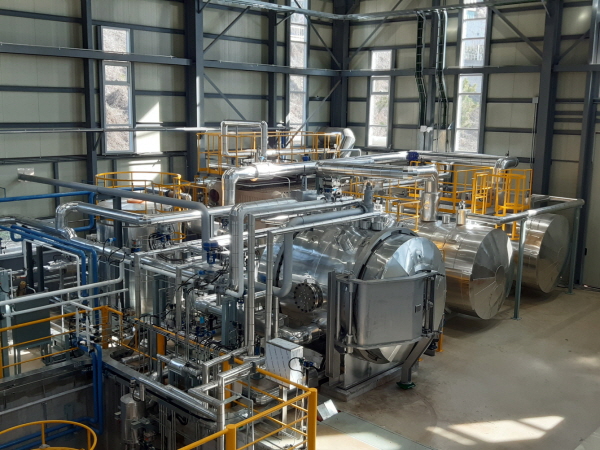
Nuclear power plant design basis accident environment simulation facility
The Korea Institute of Machinery and Materials (KIMM), under the Ministry of Science and ICT (President Park Sang-jin), is building a test facility of the highest specifications in the country capable of verifying the safety of nuclear equipment in accordance with various accident environments at nuclear power plants. This is expected to strengthen the competitiveness of related domestic companies and contribute to securing safe nuclear energy.
The research team led by Kim Dae-hwan, head of the Nuclear Power Plant Equipment Verification Research Group at the Busan Institute of Machinery and Materials (KIMM)’s Busan Institute of Machinery and Materials (BIMM), announced on the 30th that they have established the highest-specification nuclear power plant design basis accident environment simulation test facility in Korea and the country's first severe accident environment simulation test facility.
It is expected that this will not only enable domestic companies to actively utilize it to respond to future strengthening nuclear safety regulations, but also be of great help in enhancing the competitiveness of our nuclear power technology in the international market.
The nuclear power plant design basis accident environment simulation facility is a facility capable of testing the safety functions of nuclear power plant equipment when representative design basis accidents occur, such as LOCA (Loss of Coolant Accident), MSLB (Main Steam Line Break), and HELB (High Energy Line Break).
Also, major nuclear accidents A simulation test facility capable of evaluating the functionality of equipment in an environment has also been established. A severe nuclear accident is a general term for severe accidents that exceed design basis accidents, such as accidents involving hydrogen combustion.
Unlike general environmental test facilities, a nuclear accident environment simulation test facility must be able to significantly change environmental conditions such as temperature and pressure in order to evaluate nuclear equipment in environments such as 200°C and 600kPa or higher accompanied by chemical spraying, or high temperature/high pressure environments where the temperature rises to 630°C instantaneously.
Rapid control performance is also essential for this. Based on their experience leading the verification and localization of domestic nuclear power plant equipment, as well as their diverse research in the field of thermal fluids, the research team succeeded in developing a test facility incorporating a new design.
Senior Researcher Kim Dae-hwan stated, “Nuclear power equipment must be able to perform its given functions even in various accident environments, and accident environment simulation technology capable of demonstrating this is the core of nuclear equipment verification technology.” He added, “We will contribute to enhancing the competitiveness of Korean nuclear power in the international market by continuously developing verification technologies that satisfy domestic nuclear safety regulations, which are strict even by global standards, and by supporting domestic companies to utilize them.”
Meanwhile, this research was conducted with support from the Ministry of Trade, Industry and Energy's Power Standardization and Certification Support Project 'Technology Development for Improving Nuclear Power Plant Component and Equipment Verification System,' the Korea Institute of Machinery and Materials' Basic Project 'Development of Equipment Survivability Assessment Technology for Severe Nuclear Accident Response Facilities,' and the Nuclear Safety Division of Busan Metropolitan City.

Comments
Related news
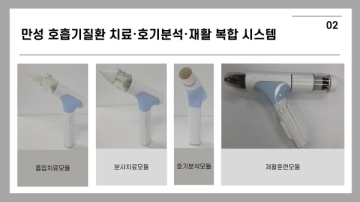
Korea Mechanical Engineering and Materials Research Institute (KMIR) has developed a single device to diagnose and rehabilitate chronic respiratory diseases.
As recent concerns grow regarding respiratory health management due to environmental pollution, smoking, and virus transmission, a health management system capable of efficiently managing chronic respiratory diseases—which are noted for their high treatment costs—has been developed for the first time domestically, drawing attention.
2021.08.26by 배종인 기자
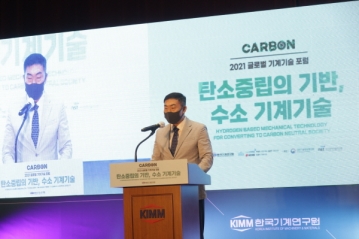
Korea Institute of Machinery and Materials: Future Outlook for Hydrogen Technology
The Korea Institute of Machinery and Materials (hereinafter referred to as KIMM, Director Park Sang-jin) invited global hydrogen experts to discuss the future of hydrogen technology and share insights.
2021.09.09by 배종인 기자
.jpg)
Machinery Research Institute, Green Light for Mass Production of Bio-Key 'Liposome'
The Korea Institute of Machinery and Materials (KIMM, Director Park Sang-jin) under the Ministry of Science and ICT has successfully developed mass production technology for microfluidic chips capable of uniformly manufacturing lipid nanoparticles such as liposomes in large quantities, which are key raw materials for vaccines, protein pharmaceuticals, functional foods, and cosmetics.
2021.09.16by 배종인 기자
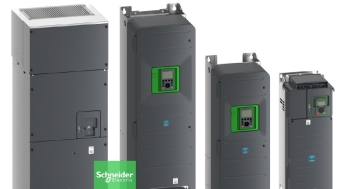
Schneider Aims for Building Energy Savings and Operational Stability with Next-Generation HVAC Drives
Schneider Electric has unveiled its next-generation HVAC drive product line 'Altivar HVAC'. The new product line's key features center on enhanced energy savings, system operational stability, and building management system integration. The products are divided into 'ATH200' for OEM and small equipment applications, and 'ATH600' for environments requiring continuous operation and advanced control. The company plans to expand the application scope from commercial buildings to facilities where HVAC system stability is critical, such as hospitals, airports, and data centers. The announcement includes over 30% energy savings, operation from -10°C to +60°C, Modbus and BACnet support, and compatibility with low global warming potential refrigerants.
2026.03.26by 명세환 기자
Ecolab Expands AI Data Center Cooling Business Through Acquisition of CoolIT
Ecolab has agreed to acquire CoolIT Systems, a liquid cooling company for AI data centers, for approximately $4.75 billion. The transaction is expected to close by Q3 2026, subject to regulatory approvals. CoolIT has been supplying direct-to-chip cooling-based coolant distribution units, cold plates, and manifolds, serving hyperscale data centers and colocation operators as customers. This acquisition is a measure to address the high-heat and high-density server environments created by AI proliferation. Ecolab plans to combine its water management and digital monitoring capabilities with CoolIT's hardware technology to expand its data center cooling business.
2026.03.26by 명세환 기자











