


[Q&A] Kim Ryong, Director of e4ds Electronics Technology Research Center: "Driving Safety is the Goal of AMR Development"
 Published2021.10.05 11:48
A driving algorithm utilizing small miniatures must be completed.
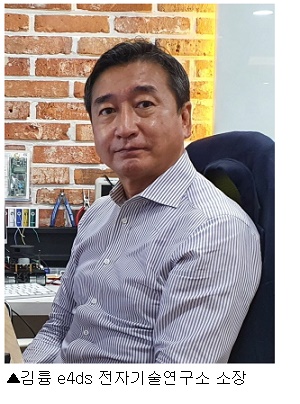 Kim Ryong, director of the e4ds Electronics Technology Research Institute, said that the primary goal of developing autonomous robots (AMRs) is to ensure driving safety.
On the second day of the '2021 Mouser Robotics Seminar - Intelligent Autonomous Mobile Robot Design Seminar' held on September 30th, Kim Ryong, Director of the E4DS Electronics Technology Research Institute, gave a special lecture on the topic of 'Things to consider when developing intelligent autonomous AMR devices' and answered questions from participants.
Here are some key questions and answers.
When it comes to how to effectively build and design an AMR when actually developing an intelligent robot, the primary goal is to ensure driving safety, such as autonomous driving platform driving, collision avoidance, and route driving. In addition, it is common to review and select, in that order, the mechanical structure, control processor, and development environment that are advantageous to use, depending on the targeted service items and driving environment. He also said that it is important to complete the driving algorithm of the robot structure by utilizing small miniatures.
Regarding the laws and standards for the mass adoption of autonomous vehicles, he responded that since road testing is not possible under current laws, it is necessary to utilize sandboxes prepared by local governments, and that regulations such as ANSI and ISO 26262, which are international standards for autonomous driving tests, are paid information that requires a considerable amount of money, so he would summarize the information necessary for developers and prepare an educational session in the near future.
When conducting simulation experiments with a 1/10 scale model, the most important thing to reduce errors with actual prototypes or manufactured products is the use of a configuration management organization. He mentioned that a configuration management organization is necessary for all parts of machinery/hardware/software, and that version control, process management, operation management, and security regulations must be documented and prepared to enable a quick response to problems that arise during actual service operation.
Regarding the battery capacity of autonomous vehicles, he said that it depends on the driving force and payload, and that LI-Fe batteries are sometimes used to transport heavy items used in logistics systems, but in Korea, there are issues with KC certification of battery packs, so there are some limitations on what can be used during the development process, and that there are various options such as lipo and lithium-ion depending on the motor and device used.
Regarding the number of people usually involved in the process from design to production for small AMRs, he advised that realistically, four people would be appropriate, and that the role of developers related to firmware and software such as ROS/SLAM has a higher contribution to development than that of devices or hardware, and that if unmanned driving and SLAM are not applied, it could be possible with one or two people.
Regarding the security of sensitive information collected in autonomous driving, I understand that related regulations are being established, and in the case of AMR, the transmission of raw data is restricted and after collection, analysis, and running, labels are used.He mentioned that since it is transmitted to the cloud through a ring, it is being discussed as having good security, and that in the case of video data, a solution to personal information security is being sought by uploading only vectorized videos.
Regarding situations where AI errors and human intervention are required, the current safety regulations, which are also the same for self-driving cars, basically require an unconditional stop, and even after stopping, AI judgment and operation are operated so that they are executed only with the operator's approval, and the reality is that the perfection of artificial intelligence is not yet dramatic.
Seungriho said that the goal of the development project in relation to the OS is to provide information to developers, so the first version will use ROS, the second version will use ROS 2, and the third version will use Micro-ROS based on RTOS, and that testing is currently underway with ROS Kinetic.
Regarding how to effectively apply and utilize artificial intelligence in implementing intelligent robots, he said that once the driving safety of the autonomous driving platform, such as driving, collision avoidance, and route driving, is secured, it is common to review and select AI solutions that are advantageous to use, control processors, and development environments in that order, depending on the targeted service items. He also said that it would be sufficient to define design concepts for the selection of sensors to be used, UI/UX methods, and natural language processing, depending on the service environment and method.

Comments
Related news
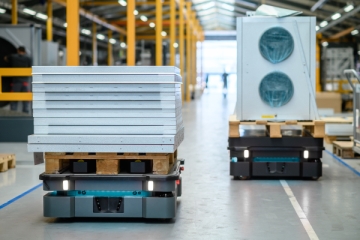
Mir signals strengthening of Korean business by unveiling two industrial AMRs
MiR held an online press briefing and unveiled two types of autonomous mobile robots (AMRs) for transporting heavy cargo in factories and warehouses. The company also presented its business strategy for the domestic market, which has a high robot adoption rate. MiR recorded growth rates in the high 40 percent range in the Asia-Pacific market in the first half of this year, driven by increased global AMR demand following the COVID-19 pandemic. In particular, the company achieved triple-digit growth in Korea and plans to establish a Korean subsidiary as early as the second half of this year.
2021.08.19by 이수민 기자
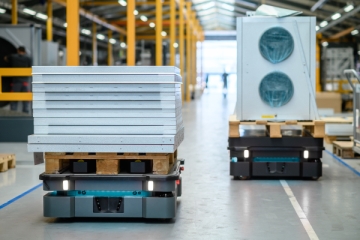
Where to Start with AMR Design? Mouser Robotics Seminar 2021
Authorized distributor Mouser Electronics, which supplies the latest semiconductors and electronic components to the world, announced on the 13th that it will hold the "Intelligent Autonomous Mobile Robot (AMR) Design Seminar 2021" for two days on September 29th (Wednesday) and 30th (Thursday).
2021.09.13by 명세환 기자
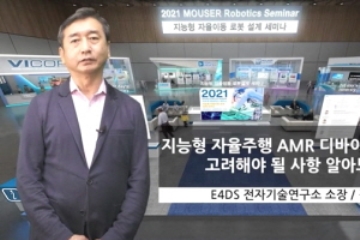
e4ds Victory, the foundation for AMR development
Kim Ryung, director of e4ds Electronic Technology Research Institute, announced that through the disclosure of technical documentation on the development process of 'e4ds Seungriho,' an AMR that will play a key role in data collection in the edge AI field, he will alleviate the burden on small and medium-sized enterprises and students facing difficulties in AMR development.
2021.09.30by 배종인 기자

[e4ds Tech Day 2026 ⑨] Sim Sang-gyu, Autocrypt CTO: "In the Physical AI Era, Automotive Security Must Extend Beyond the Vehicle"
At e4ds Tech Day 2026, Sim Sang-gyu, CTO of Autocrypt, explained automotive cybersecurity strategies in the era of Physical AI and SDV (Software-Defined Vehicle). Automobiles are evolving as part of an ecosystem connected to AI, cloud, chargers, IoT, and robots, and he emphasized that the scope of security must expand beyond the vehicle interior to the entire connected environment. In particular, AI model tampering, adversarial attacks, OTA updates, and EV charger hacking were identified as major threats. He explained that response measures require zero trust, AI model integrity protection, intrusion detection, Security by Design and Default, and full lifecycle security management, and that proactive security system establishment beyond regulatory compliance is critical for securing future mobility competitiveness.
2026.10.12by 배종인 기자
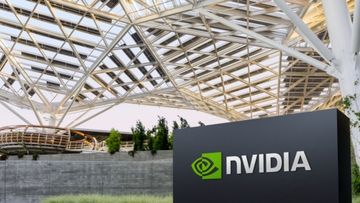
NVIDIA to Invest $1 Billion in U.S. Science Over Next Five Years
NVIDIA has announced plans to invest $1 billion over the next five years to strengthen U.S. scientific and technological competitiveness. The company will enhance cutting-edge artificial intelligence research and development capabilities in key areas including quantum computing, healthcare, and energy security, while expanding support for higher education research institutions and cloud service providers. NVIDIA is participating as a major industry partner in the White House Office of Science and Technology Policy's Genesis Mission, and is promoting supercomputer construction in collaboration with national laboratories including Argonne and Los Alamos.
2026.10.12by 배종인 기자











