


TSMC and Sony Join Hands for Japanese Semiconductor Plant with 800 Billion Yen Investment
 Published2021.10.22 11:28
Japanese Government Possible 50% Subsidy Support, Recreating Past Glory
TSMC and Sony have joined hands in semiconductor plant construction and pledged large-scale investment, while with full support from the Japanese government, Japan has demonstrated ambition to recreate its past semiconductor glory.
TSMC and Sony recently announced plans to invest 800 billion yen to build a new semiconductor plant in Kumamoto Prefecture in western Japan.
The plant is scheduled to begin operations in 2023 or 2024 and is reportedly located adjacent to an image sensor plant under Sony.
Production items are reported to include semiconductors used in cameras, automobiles, and other applications.
In particular, it is known that the Japanese government is likely to provide 50% subsidy support for this plant construction.
Both TSMC and Sony evaded answers on this matter, but TSMC stated in July that it reviewed Japanese government subsidy support for building a plant in Japan.
In connection with this semiconductor plant construction, it is analyzed that the Japanese government has an underlying ambition to recreate Japan's past semiconductor glory.
Japan reached its semiconductor peak in 1988 and produced 50% of the world's semiconductors.
Meanwhile, from the 2010s, Japanese chipmakers on the mainland withdrew from the chip development stage and outsourced advanced semiconductor production to overseas companies such as TSMC.
Japan has largely withdrawn from complete semiconductor product production, but is analyzed to remain a world-leading country in semiconductor equipment and materials.
Japanese companies such as Sumitomo and Shin-Etsu are monopolizing the photoresist market with over 85% of global share, and the market share of premium-grade EUV photoresist exceeds 95%.
In 2019, Japan triggered trade disputes with Korea by restricting semiconductor materials.
Accordingly, TSMC expects that by building a semiconductor plant in Japan, it will have greater freedom in procuring Japan's cutting-edge semiconductor equipment and advanced materials.
Japan is well aware of its strengths in the semiconductor industry, and it is analyzed that through TSMC's investment, Japan is also pursuing simultaneous development of the semiconductor materials and equipment industries.
Comments
Related news
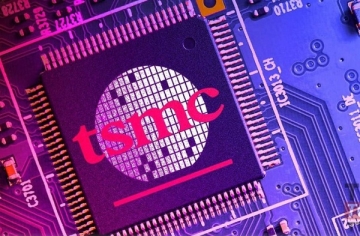
TSMC, further hike… 10% increase in Q1 2022
TSMC is projected to implement price increases of 10% or more next year, following several price hikes this year.
2021.09.02by 이춘영 외신

TSMC Adds Six 7nm Factories, Targeting Operations by 2023
TSMC is known to be planning to newly construct six 7nm process fabs and commence operations as early as 2023.
2021.09.17by 이춘영 외신
.jpg)
“TSMC, No. 1 in the world with three pillars: talent, technology, and government support”
The COVID-19 pandemic has increased semiconductor demand, leading to growth in foundry revenue. TSMC, established in 1987, pioneered the pure foundry model of manufacturing products on commission for customers. In the second quarter of this year, it held 55% of the global foundry market, and with 5-nanometer chip revenue accounting for nearly 18%, it maintains the top position in both revenue and technology. In August, it surpassed China's Tencent by market capitalization to become Asia's number one company by market cap.
2021.09.17by 이수민 기자

Intel Unveils Next-Generation 'Core Ultra Series 3' and vPro Platform for Enterprise PCs
Intel has officially unveiled the "Intel Core Ultra Series 3" for next-generation enterprise PCs and the latest vPro platform, addressing a wide range of demands from enterprise notebooks to high-performance workstations.
2026.03.26by 배종인 기자
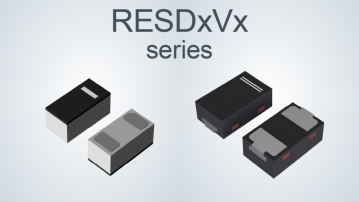
ROHM Launches ESD Protection Diode Compatible with High-Speed Interfaces of 10Gbps or Higher
Semiconductor specialist ROHM has developed the 'RESDxVx series' of ESD (electrostatic discharge) protection diodes capable of responding to next-generation high-speed data communication environments exceeding 10Gbps, simultaneously enhancing both signal quality maintenance required in high-speed interfaces and IC protection performance.
2026.03.26by 배종인 기자











