



Bluetooth LE, Key to Micro-mobility Connectivity
 Published2021.10.25 17:08
Provides stable interoperability with the latest smartphones
Low power consumption, maintains connection, check location while moving
 Repetitive travel from point A to point B is a common pattern of daily urban life. In cities around the world, efforts are underway to alleviate the inconvenience of private transportation in the "last mile"—the short-distance journey from public transportation hubs, such as train stations, bus stops, or ferry terminals, to work, home, or other final destinations.
Existing transportation infrastructure cannot take everyone to their doorsteps. Consequently, the transportation costs, congestion, parking problems, and health difficulties borne by millions of people traveling between the same locations every day continue.
In addition, eco-friendly options that can be driven by a person pedaling are becoming increasingly preferred over carbon-intensive, engine-powered modes of transportation (such as cars and buses).
For this reason, personal shared vehicles in the form of micromobility—such as bicycles, electric bicycles, and electric scooters—that are small, lightweight, and fully or partially powered by humans are leading a new trend in urban mobility.
The number of shared bicycles worldwide surged from 2.3 million in 2016 to 182 million in just two years, and it was found that approximately 1,600 sharing programs were operating globally in 2018.
According to Statista data from NACTO (National Association of City Transportation Officials), the number of uses of shared bicycles, electric bicycles, and electric scooters in the United States alone reached 136 million in 2019, a 60% increase from the previous year.
■ Post-COVID Micro-mobility Rebound
However, like many existing new industries, the multi-billion dollar micro-mobility market, which had previously been accelerating, took a major hit due to the aftermath of COVID-19, which began in 2020. As COVID-19 took over the globe, the number of users and revenue plummeted as various measures halting the role of advanced urban mobility—such as lockdowns, border closures, travel bans, strict social distancing, and the shift to remote work—combined in a complex manner.
According to a McKinsey study, shared and personal micro-mobility users have been directly affected by COVID-19, with travel distances decreasing by 50% to 60% globally.
On the other hand, the micro-mobility industry has already begun to rebound ahead of the 'new normal' leading into the post-COVID era since 2021. The health crisis that caused the economic downturn is now rapidly guiding the industry toward recovery. As interest in the use of lightweight personal vehicles increases due to the indirect impact of COVID-19, they are emerging as a new alternative to automobiles. According to McKinsey's modeling, as people begin to show increasing interest in short-distance travel that is beneficial for health and hygiene, low-risk, economical, eco-friendly, and allows them to avoid traffic congestion, the travel distance of these users is expected to increase by up to 10% compared to pre-COVID totals by 2025.
Bike sharing programs, which are operating successfully in Europe, Asia, and North America, will help solve the problem of last-mile (and first-mile) short-distance transportation in the future. Fixed docking stations, where bikes are parked in long rows, are operated by managers, accept coin payments, or are automated; they serve the functions of bike racks, digital locks, and registration systems. These bikes can be rented for short periods via mobile payment for a small fee or membership fee. Additionally, the system provides a smartphone map app that displays nearby available bikes and operating docking stations. Because these fixed docking stations have the inconvenience of requiring users to find the docking station closest to their desired starting or destination, smart bicycle systems that do not require docking stations have also emerged to resolve this issue.
■ Bluetooth LE Opens Up Wireless Possibilities Through eBike Kits
Wireless technology, which served as the foundation for the success of micro-mobility before the pandemic, is expected to continue playing a crucial role in the post-COVID era by providing stable connections between smartphones and easy-to-maintain bicycle networks. Currently, most shared bicycles utilize Bluetooth® Low-Energy for communication between the bicycle and related smartphone apps, and some systems employ Cellular IoT that uses Bluetooth LE as a backup. In particular, the low power consumption of this wireless technology enables bicycles to maintain a connection while their location can be tracked during and after movement.
A representative example is Hellobike, backed by e-commerce giant Alibaba. As one of the largest shared bicycle platforms in China, the company provides micro-mobility services to 230 million registered users across more than 200 cities. Users can find nearby smart bikes via a smartphone app and then instantly unlock them using integrated Nordic Semiconductor Bluetooth LE technology. Nordic's Bluetooth LE SoC provides stable interoperability with almost all modern smartphones, so system operation is smooth.
For those who do not want to pedal without assistance, electric bicycles and two-wheeled electric scooters equipped with lithium batteries and small brushless electric motors are coming to the forefront.
Electric bicycles not only expand micro-mobility to a wider range of users but also present the potential to transform 'last-mile' transportation into a mobility range applicable to all areas.
In addition, if shared electric bicycles are ultimately equipped with cellular IoT-based geofencing capabilities, it will be easier to manage the usage area of the bicycles and prevent accidents where users cross city boundaries with rented electric bicycles.
Unlimited, a developer of leisure electric vehicles based in Barcelona, Spain, has launched an eBike kit that can turn any bicycle into an electric bicycle in minutes by wirelessly activating an electric assist device using Bluetooth LE connectivity. While today's equipment is still controlled via wires, the potential of wireless technology can also be easily verified through eBike kits that allow not only the gears but also the motor to be controlled by wireless signals.
According to data from the National Household Travel Survey (NHTSA), 35% of all car trips in the United States are less than 3.5 km.
Therefore, if alternative means such as electric bicycles are more widely available, people will no longer rely on personal cars, taxis, or ride-hailing services for short-distance travel, which could contribute to alleviating traffic congestion, irregular urban sprawl, and climate change.
Wireless technology-based personal transportation is laying the foundation to enhance sustainable urban mobility and, following the first mile and last mile, will transform the form of short-distance urban movement across all travel ranges in the future.
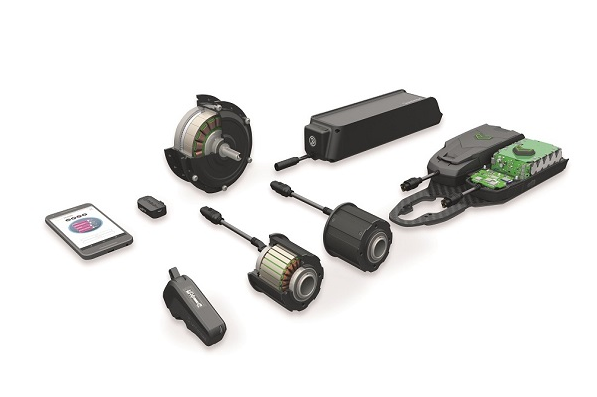
▲ eBike kit developed by UNLIMITED

Comments
Related news
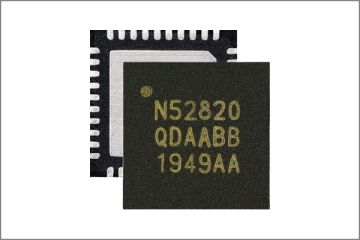
Nordic Launches nRF52820 SoC with Bluetooth 5.2
The Nordic nRF52820 is a low-end wireless connectivity solution supporting Bluetooth LE, Bluetooth Mesh, Thread, Zigbee, and proprietary 2.4GHz. It supports all features of Bluetooth 5, 5.1, and 5.2, including extended range, 2Mbps data rate, direction finding capability, LE power control, and LE synchronized channels, and includes a 12Mbps USB 2.0 interface.
2020.03.19by 이수민 기자
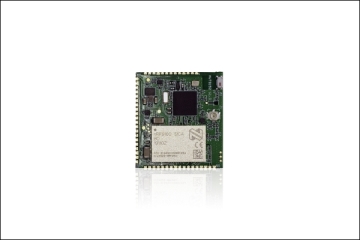
Two Nordic IoT devices adopted by Avnet IoT modules
Nordic Semiconductor's nRF9160 LTE-M, NB-IoT, and GPS integrated SiP and nRF52840 Bluetooth 5.2 and Bluetooth LE multiprotocol SoC have been adopted in Abnet Asia's AVT9152 cellular IoT and short-range wireless connectivity module. The AVT9152 module supports LTE-M/NB-IoT, GPS, and Bluetooth LE, and can be applied to various embedded applications including COVID-19 contact tracing beacons, logistics and asset tracking, vending machines, kiosk terminals, medical devices, and smart building automation.
2020.12.08by 이수민 기자

Nordic Unveils Cellular-Based Cloud Location Service
Nordic Semiconductor has launched nRF Cloud Location Services. This service enables customers to access detailed, fast, and accurate commercial location services for cellular IoT devices powered by Nordic's nRF9160 SiP through cloud-based products. To this end, it provides A-GPS and P-GPS-based positioning for indoor and outdoor applications, as well as positioning using single and multi-cell methods.
2021.08.12by 이수민 기자

Intel Unveils Next-Generation 'Core Ultra Series 3' and vPro Platform for Enterprise PCs
Intel has officially unveiled the "Intel Core Ultra Series 3" for next-generation enterprise PCs and the latest vPro platform, addressing a wide range of demands from enterprise notebooks to high-performance workstations.
2026.03.26by 배종인 기자

ROHM Launches ESD Protection Diode Compatible with High-Speed Interfaces of 10Gbps or Higher
Semiconductor specialist ROHM has developed the 'RESDxVx series' of ESD (electrostatic discharge) protection diodes capable of responding to next-generation high-speed data communication environments exceeding 10Gbps, simultaneously enhancing both signal quality maintenance required in high-speed interfaces and IC protection performance.
2026.03.26by 배종인 기자











