


Rising Xenon and Krypton Prices, Semiconductor Industry Struggles with Contract Renewals
 Published2021.11.03 17:01
With no supply of rare gas, the price is whatever the seller asks.
It has been reported that the semiconductor industry is facing difficulties in renewing contracts to secure supplies, as the prices of xenon and krypton—key materials used in semiconductor etching—have skyrocketed due to aerospace demand in the U.S. and Europe.
According to the semiconductor specialty gas industry, the prices of xenon and krypton have recently risen more than threefold compared to the beginning of this year.
This is analyzed to be due to the war to secure rare gases breaking out as demand increased explosively despite limited production.
Due to the high stacking of semiconductor NAND, rare gases are used for hole etching, and demand has surged. Recently, with the expansion of NAND and double stacking, usage has increased rapidly, leading to an explosive increase in demand for semiconductors. With Samsung Electronics, the largest user of rare gases, expected to apply double stacking, demand is projected to increase by at least double compared to current usage.
Due to these circumstances, the prices of rare gases, including xenon and krypton, have risen sharply, and a shortage has recently occurred in the U.S. and Europe due to massive demand for space applications.
According to an official, Europe has already secured the volume needed for next year's space use at more than three times the price of semiconductors.
Furthermore, in the case of the United States, space-related volumes are prioritized nationally over semiconductor volumes, making it relatively difficult to supply semiconductors in comparison to space-related volumes.
It is rumored that domestic semiconductor companies are quite perplexed by the rising prices of xenon and krypton while negotiating prices for future supply contracts amidst a situation where supply has significantly decreased.
Despite this situation, specialty gas suppliers providing xenon and krypton are reportedly taking the stance that they would rather abandon contracts than supply at low prices, as securing supplies is difficult.
This means that since xenon and krypton are entirely dependent on overseas imports, domestic specialty gas companies also import them at high prices, making it difficult to supply them to the domestic semiconductor industry at existing prices.
Consequently, it is reported that the semiconductor industry is grappling significantly with securing krypton and xenon, key materials for semiconductor etching.
Furthermore, the industry's position is that securing it is a priority despite the high price, as global supply is limited and it is a core material for NAND ultra-fine technology.
Meanwhile, krypton makes up only about 0.0001% of the atmosphere, and xenon accounts for only about 0.000009%, with major producing regions being Russia, the United States, and South Africa. It is limited to republics, etc.
It is reported that although China has recently been constructing many large-scale ASUs for krypton production, the production of xenon and krypton is decreasing as oxygen production plummets due to reduced steel production resulting from emission regulations in the Chinese steel industry.

Comments
Related news
.png)
Crypton's price hits all-time high, increasing the burden of NAND costs.
Krypton import prices have broken all-time highs. Since krypton is used in the majority of global NAND flash production, it is expected to put pressure on NAND manufacturing costs.
2021.05.18by 배종인 기자
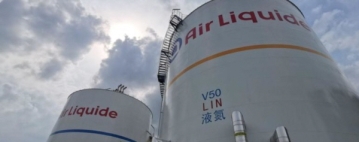
Air Liquide to Establish Key Production Site for Krypton and Xenon in China
Air Liquide is expanding its largest oxygen production base in China to support the steel industry in China, and is establishing a key production hub in China for krypton and xenon, which have been experiencing increasing demand in the electronics industry recently.
2021.07.27by 배종인 기자
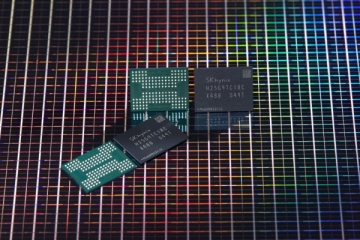
SK Hynix mobilizes all resources to secure Krypton
Krypton (Kr), a rare gas with limited global production but essential for semiconductor NAND flash manufacturing, is expected to see explosive growth in demand. SK Hynix, a major consumer of krypton, is reportedly making multifaceted efforts to secure krypton supply.
2021.07.29by 배종인 기자
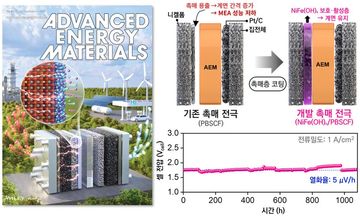
Materials Research Institute Develops Ultra-thin Coating Water Electrolysis Catalyst Technology
The Korea Institute of Materials Science has simultaneously resolved the performance and durability trade-off problem in water electrolysis catalysts by applying ultra-thin surface coating technology. Achieving 1.9 times higher performance compared to conventional catalysts while demonstrating 1,000-hour long-term stability, the institute has developed technology scalable to industrial water electrolysis systems through a simple process.
2026.10.07by 배종인 기자
Gigaphoton Develops Neon Gas Recycling System for ArF Excimer Lasers...Achieves 50% Recycling Rate
Gigaphoton announced that it has developed a gas recycling system for ArF excimer lasers and achieved a 50% neon gas recycling rate.
2026.10.02by 배종인 기자











