


KERI Solves Challenges in All-Solid State Battery Commercialization
 Published2021.11.08 09:50
Solving lithium loss, interfacial side reactions, internal short circuits, etc.
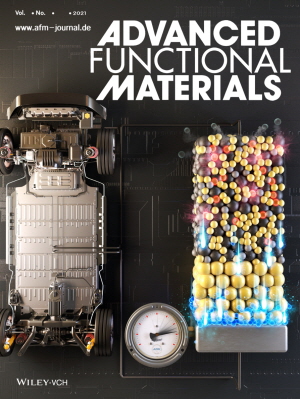 The Korea Electrotechnology Research Institute (KERI, President Myung-ho Myeong) has developed a technology capable of solving various problems, such as lithium loss, interfacial side reactions, and internal short circuits—challenges to the commercialization of all-solid-state batteries—thereby further increasing the potential for future commercialization.
KERI announced on the 8th that a team led by Dr. Kim Byung-gon at the Next Generation Battery Research Center recently succeeded in developing a sulfide-based next-generation all-solid-state battery with significantly improved stability and lifespan characteristics by introducing a 'sacrificial cathode' and an 'indium anode'.
Dr. Kim Byung-gon's team at KERI compensated for lithium loss caused by interfacial instability through a 'sacrificial anode' and an 'indium cathode', providing additional lithium to the battery as lithium nitride (Li3N) decomposed during charging. In addition, the added lithium reacts with the indium anode to further expand its volume, increasing the internal pressure of the cell, which improves contact between particles and upgrades the performance of the battery.
In addition, the indium anode, which suppresses the so-called 'dendrite growth'—the branching of lithium as it undergoes repeated charging and discharging—significantly enhances the battery's long-term lifespan by forming a stable chemical interface with the solid electrolyte.
To verify the effectiveness of the development results, the research team utilized analytical techniques such as real-time measurement of generated gas and cell pressure changes, as well as X-ray tomography, and through this, revealed that internal cell pressure and cathode interface stability have a positive impact on battery performance.
It was confirmed that if the sacrificial cathode and indium anode technologies developed by KERI are introduced into all-solid-state batteries based on this principle, stable charge-discharge life characteristics of more than 260 cycles can be secured.
Considering that currently commercialized lithium-ion batteries typically have a lifespan of 300 to 500 cycles, KERI's technology is a significant achievement that can accelerate the commercialization of all-solid-state batteries.
All-solid-state batteries face many challenges that must be overcome before commercialization, such as low ion conductivity, difficulties in manufacturing processes and mass production, and high unit costs. In particular, the most significant problems are interfacial instability between the solid electrolyte, the anode/cathode, and the conductive material (high resistance at inter-particle boundaries), resulting in active lithium loss and internal short circuits.
Regarding the sacrificial cathode in this study, Dr. Kim Byung-gon of KERI stated, “It is a technology that can improve performance while minimizing processes and costs during the cell fabrication stage because it eliminates the need to use an additional metallic lithium anode.” He added, “Although further research is required due to the low cell voltage of indium, it is highly significant in that it has laid the foundation for the long-term stability of the battery in the anode field, which determines the lifespan of all-solid-state batteries.”
Meanwhile, the research results were recognized for their high level of technology and published as a front cover article in 'Advanced Functional Materials (IF=18.808),' a world-renowned journal in the field of materials science ranked in the top 4.5% of the Journal Citation Index (JCR). The research team aims to develop a high-performance all-solid-state battery by increasing battery efficiency through continuous research and developing a cathode with stability superior to indium and voltage levels comparable to lithium.

Comments
Related news
KERI Globally Recognized for Solving EV-Charger Compatibility Issues
The Korea Electrotechnology Research Institute (herein KERI, Acting Director Yoo Dong-wook), a government-funded research institute under the National Research Council of Science and Technology within the Ministry of Science and ICT, has been designated as the world's first electric vehicle global interoperability conformity assessment body. This is expected to resolve user inconveniences through compatibility error verification between electric vehicles and chargers.
2021.07.29by 배종인 기자
KERI develops high-efficiency lithium storage technology for lithium metal batteries
Dr. Kim Byung-gon (Senior Researcher) of the Next-Generation Battery Research Center at the Korea Electrotechnology Research Institute (KERI, President Myung Sung-ho) has successfully improved safety and performance by effectively storing lithium metal for anode applications.
2021.09.09by 배종인 기자
KERI Successfully Transfers Core Solid-State Battery Technology
The Korea Electrotechnology Research Institute (KERI, Director Myung Sung-ho) has successfully transferred its core solid-state battery technology, which has garnered significant attention as a world-first achievement, with full-scale mass production now anticipated.
2021.10.26by 배종인 기자
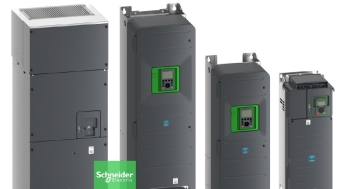
Schneider Aims for Building Energy Savings and Operational Stability with Next-Generation HVAC Drives
Schneider Electric has unveiled its next-generation HVAC drive product line 'Altivar HVAC'. The new product line's key features center on enhanced energy savings, system operational stability, and building management system integration. The products are divided into 'ATH200' for OEM and small equipment applications, and 'ATH600' for environments requiring continuous operation and advanced control. The company plans to expand the application scope from commercial buildings to facilities where HVAC system stability is critical, such as hospitals, airports, and data centers. The announcement includes over 30% energy savings, operation from -10°C to +60°C, Modbus and BACnet support, and compatibility with low global warming potential refrigerants.
2026.03.26by 명세환 기자
Ecolab Expands AI Data Center Cooling Business Through Acquisition of CoolIT
Ecolab has agreed to acquire CoolIT Systems, a liquid cooling company for AI data centers, for approximately $4.75 billion. The transaction is expected to close by Q3 2026, subject to regulatory approvals. CoolIT has been supplying direct-to-chip cooling-based coolant distribution units, cold plates, and manifolds, serving hyperscale data centers and colocation operators as customers. This acquisition is a measure to address the high-heat and high-density server environments created by AI proliferation. Ecolab plans to combine its water management and digital monitoring capabilities with CoolIT's hardware technology to expand its data center cooling business.
2026.03.26by 명세환 기자











