



ETRI Achieves Record Selection in National R&D Excellence Awards 100 for Third Consecutive Year
 Published2021.11.10 16:40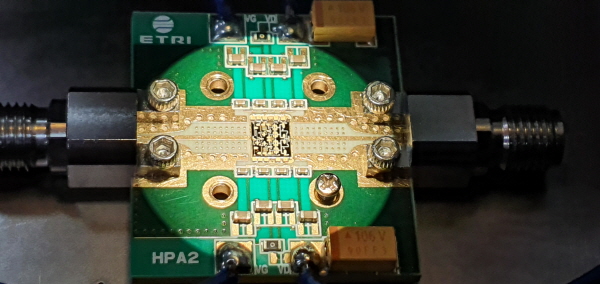
▲Application of X-band gallium nitride power amplifier MMIC chip developed by the DMC Convergence Research Group to a measurement fixture
The Electronics and Telecommunications Research Institute (ETRI) has achieved the maximum number of excellent national R&D outcomes for three consecutive years, building a cumulative monument of 134 selected technologies.
ETRI announced on the 10th that 10 ETRI technologies were selected in the "2021 National R&D Excellence Awards 100" announced recently by the Ministry of Science and ICT.
ETRI has been recognized for its superior research competitiveness by producing the largest number of technologies among single institutions for three consecutive years.
This year, 8 technologies in the information and electronics field and 2 technologies in the convergence technology field were selected.
The selected technologies were derived from various ICT research fields that ETRI is conducting, including artificial intelligence, communications, media, digital twin, and convergence research.
First, large-capacity memory computing technology (Principal Researcher Kim Kang-ho) that enables large-scale scientific computation and data analysis without using supercomputers has been recognized.
The research team conducted international research cooperation (MOU) with U.S. Silicon Valley software-defined server company TidalScale and achieved results including registration of 2 international patents, filing of 3 domestic patents, and publication of 9 papers in top-tier international conferences and SCI-grade journals.
In particular, this technology is scheduled to be sold as a commercial product through Intel distribution channels in the Asia-Pacific and Indian markets in early next year.
3D city model renewal and support technology (Principal Researcher Jang In-sung), which is essential for implementing virtual training, digital twin, and metaverse, was also selected.
This technology can create, renew, and provide immersive high-precision 3D spatial information to meet various demands requiring immersive spatial information content, and author and provide immersive 3D city models.
This research is a multi-ministry collaborative project where demand sources and supply sources cooperate closely from planning to implementation, and demonstration was conducted together with the Ministry of Industry and the Ministry of the Interior and Safety last year.
As a result, it is expected to provide significant support in enhancing competitiveness in new industries such as smart cities and related convergence industries through improving 3D city model quality, preventing duplicate investments through common data construction, and enhancing application industry competitiveness.
Several artificial intelligence technologies, which are key to the fourth industrial revolution, have also been selected.
△On-device computing software technology enabling AI operation inside smart devices (Principal Researcher Kim Jeong-si) △Voice recognition fundamental technology for multi-party conference recording and information services (Principal Researcher Park Jeon-gyu) △Visual intelligence fundamental technology for precise understanding of human behavior (Principal Researcher Bae Yoo-seok) and others have drawn attention as selected excellence achievements.
Additionally, △intelligent multi-network optimization technology (Principal Researcher Park Hye-sook) △ultra-low latency/loss-free guarantee network core technology (Principal Researcher Jung Tae-sik) △world's first 5G millimeter-wave based bus Wi-Fi technology (Principal Researcher Jung Hee-sang) and others have received the honor of selection as excellence achievements in core communications and media technologies.
There have also been results achieved through convergence research among research institutes.
△Gallium nitride (GaN) switch and chipset integrated circuit for radar transceiver (Principal Researcher Lim Jong-won) △self-learning domain knowledge fusion artificial intelligence technology (Principal Researcher Pyo Chul-sik) and others are recognized as practical industrial technologies that will provide significant capability in solving national livelihood issues.
Since the system was implemented in 2006, ETRI has had 134 technologies recognized in national R&D excellence awards in information, electronics, and other fields.
These technologies have not only undergone advancement through follow-up research but have also been evaluated as playing significant roles in revitalizing the industrial ecosystem through technology transfer and technology-based ventures.

Comments
Related news
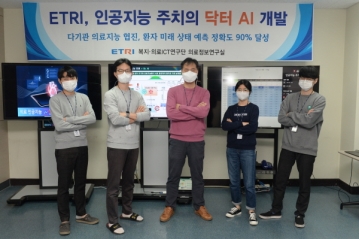
ETRI Achieves 90% Accuracy in AI Telemedicine
The Electronics and Telecommunications Research Institute (ETRI) has developed a non-face-to-face medical consultation technology that aggregates medical intelligence from different institutions using artificial intelligence (AI) to predict patient health status with 90% accuracy, and it is expected that this will facilitate the establishment of a non-face-to-face collaborative medical consultation system utilizing medical AI in the era of living with COVID-19.
2021.10.27by 배종인 기자
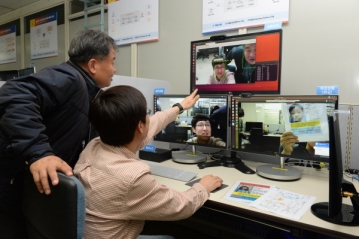
ETRI develops AI and network convergence platform
Domestic researchers have developed a next-generation networking platform that integrates artificial intelligence (AI) and network technology. The platform-based application service demonstration has also been successful, suggesting that the realization of a human-centered hyper-connected society, which has become the new normal following COVID-19, is within reach.
2021.11.03by 강정규 기자
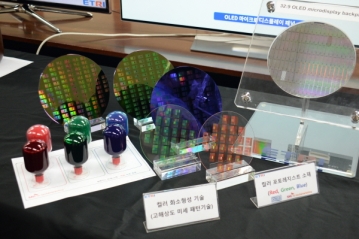
ETRI Commercializes World's First Low-Temperature OLED Photoresist
The Electronics and Telecommunications Research Institute (ETRI) has successfully developed and commercialized material technology that can deliver high resolution without requiring high temperatures in the process, and applied it to displays, earning recognition for contributing to Korea's self-sufficiency in materials.
2021.11.09by 배종인 기자
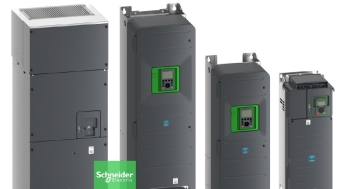
Schneider Aims for Building Energy Savings and Operational Stability with Next-Generation HVAC Drives
Schneider Electric has unveiled its next-generation HVAC drive product line 'Altivar HVAC'. The new product line's key features center on enhanced energy savings, system operational stability, and building management system integration. The products are divided into 'ATH200' for OEM and small equipment applications, and 'ATH600' for environments requiring continuous operation and advanced control. The company plans to expand the application scope from commercial buildings to facilities where HVAC system stability is critical, such as hospitals, airports, and data centers. The announcement includes over 30% energy savings, operation from -10°C to +60°C, Modbus and BACnet support, and compatibility with low global warming potential refrigerants.
2026.03.26by 명세환 기자
Ecolab Expands AI Data Center Cooling Business Through Acquisition of CoolIT
Ecolab has agreed to acquire CoolIT Systems, a liquid cooling company for AI data centers, for approximately $4.75 billion. The transaction is expected to close by Q3 2026, subject to regulatory approvals. CoolIT has been supplying direct-to-chip cooling-based coolant distribution units, cold plates, and manifolds, serving hyperscale data centers and colocation operators as customers. This acquisition is a measure to address the high-heat and high-density server environments created by AI proliferation. Ecolab plans to combine its water management and digital monitoring capabilities with CoolIT's hardware technology to expand its data center cooling business.
2026.03.26by 명세환 기자











