


[Interview] Choi Young-jae, Principal Researcher at the Korea Institute of Industrial Technology – “Cutting Process Monitoring Contributes to Productivity Improvement”
 Published2021.11.22 10:56
No worker judgment required, DB-based algorithm and training data judgment
Development of monitoring technology immediately applicable to the mid-term, aiming for commercialization
[Editor's Note] On November 18, the Technology Innovation Center of the Korea Institute of Technology Information Promotion (KIIT) held the 4th Joint Technology Exchange Meeting. Various presentations were given at this meeting under the themes of 'Big Data, AI, and Smart Manufacturing.' Among them, the Korea Institute of Industrial Technology (KITECH) presented a technology titled 'Cutting Process Monitoring and Machinability Evaluation,' which enables monitoring of operational phenomena during machining on machine tools and allows for the judgment and control of machining processes based on monitoring data. Accordingly, this publication arranged an interview with Choi Young-jae, a senior researcher at the Korea Institute of Industrial Technology who announced this technology, to learn more about the related technology.
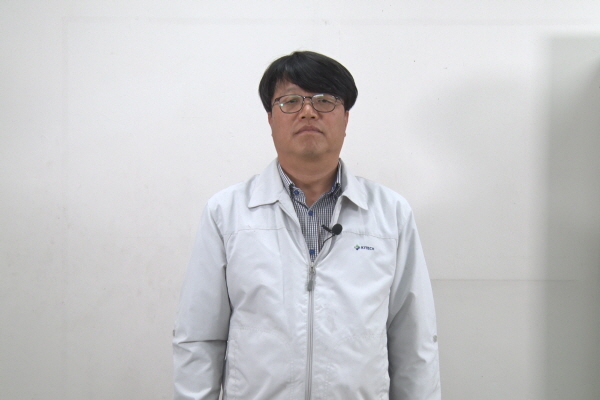
Choi Young-jae, Principal Researcher at the Korea Institute of Industrial Technology
■ Please introduce the Digital Transformation Research Division at the Korea Institute of Industrial Technology.
The Digital Transformation Research Division of the Korea Institute of Industrial Technology conducts research on DNA (Digital, Network, AI) specialized in the manufacturing industry, particularly in the equipment sector which can be considered a production system, and supports related technologies for small and medium-sized manufacturing enterprises.
My research focuses on the field of manufacturing equipment, specifically on real-time monitoring of the process mechanisms of machining equipment (lathes, milling machines, etc.), enabling operators and managers to recognize and control abnormal machining conditions or information regarding the machining process.
■ Please introduce 'Cutting Monitoring and Machinability Evaluation'.
The cutting process monitoring involves monitoring the machining status in real time through various types of CNC signals and sensors, diagnosing and controlling abnormal machining conditions (chatter, wear, etc.) from digital signals, and developing a system applicable to small and medium-sized enterprises so that companies can utilize it.
I am curious about what processing phenomena are and how they can be judged and controlled through monitoring.
During cutting, the tool wears out, abnormal vibrations occur during processing, and overloads occur depending on the age of the system.
This phenomenon can be considered an abnormal situation, and judgment is made by observing the signals from sensors and CNCs. However, in this study, the judgment is not made by the operator but is made through an algorithm based on a DB or training data.
However, so far, the control is only at the level of adjusting the RPM or the speed of the feed.
In the future, more intelligent control will be possible.
■ I would like to hear about the background of this research and how it differs from other similar studies.
The distinguishing feature of this study is that it aims for commercialization by developing monitoring technology that can be immediately applied to manufacturing SMEs, rather than intelligence research used by machine tool manufacturers to produce high-level processing equipment.
I would like to hear about the outlook on what economic effects and results are expected in the future using this technology.
Although a large workforce is still employed in manufacturing sites in Korea, unmanned and automated operations will eventually become essential in this field due to the perception of it as a 3D industry and a shortage of experts.
By providing support to help small and medium-sized enterprises prepare for this, we can contribute to preventing industrial hollowing out and improving productivity.
■ Finally, please say a few words to the readers.
If many companies take an interest and apply this, it can be utilized in a wider range of fields, so I hope you will join in the practical efforts of small and medium-sized enterprises.

Comments
Related news
TIPA, a venue for introducing promising touchless technologies
The Small and Medium Business Technology Information Promotion Agency (TIPA) has organized an event to introduce promising technologies and explore technology transfer opportunities under the theme of "Touchless Technology - Non-contact Sensing and Control."
2021.10.06by 배종인 기자
Schneider Aims for Building Energy Savings and Operational Stability with Next-Generation HVAC Drives
Schneider Electric has unveiled its next-generation HVAC drive product line 'Altivar HVAC'. The new product line's key features center on enhanced energy savings, system operational stability, and building management system integration. The products are divided into 'ATH200' for OEM and small equipment applications, and 'ATH600' for environments requiring continuous operation and advanced control. The company plans to expand the application scope from commercial buildings to facilities where HVAC system stability is critical, such as hospitals, airports, and data centers. The announcement includes over 30% energy savings, operation from -10°C to +60°C, Modbus and BACnet support, and compatibility with low global warming potential refrigerants.
2026.03.26by 명세환 기자

Ecolab Expands AI Data Center Cooling Business Through Acquisition of CoolIT
Ecolab has agreed to acquire CoolIT Systems, a liquid cooling company for AI data centers, for approximately $4.75 billion. The transaction is expected to close by Q3 2026, subject to regulatory approvals. CoolIT has been supplying direct-to-chip cooling-based coolant distribution units, cold plates, and manifolds, serving hyperscale data centers and colocation operators as customers. This acquisition is a measure to address the high-heat and high-density server environments created by AI proliferation. Ecolab plans to combine its water management and digital monitoring capabilities with CoolIT's hardware technology to expand its data center cooling business.
2026.03.26by 명세환 기자

AI Semiconductor Era, Key is 'Materials Technology'… KIEC Holds Seminar on High-Performance Semiconductor Materials
With rapid growth in the global semiconductor market driven by expanded AI data center investments and increased demand for high-bandwidth memory (HBM), a specialized seminar examining next-generation semiconductor materials and packaging technologies will be held. The Korea Chemical Industry Institute will host a "High-Performance Semiconductor Materials Technology Seminar" on April 24 at the FKI Tower of the Korea Economic Association in Yeouido, Seoul. Applications to participate in the seminar are being accepted on a first-come, first-served basis through the Korea Chemical Industry Institute's official website, with early bird discounts available until March 27 and advance registration open until April 22.
2026.03.25by 배종인 기자
.jpg)
KIMS Shares Techniques for Industrial Application of Casting Technology
The Korea Institute of Materials Science held a casting technology seminar at its headquarters in Changwon, South Gyeongsang Province, and introduced core process technologies utilized in industrial applications. The seminar covered fundamental principles of casting processes and defect control methods, lightweight-oriented die-casting technology, and trends in aluminum casting alloys for mobility applications. At the conclusion of the event, consultations on industrial technical challenges were also conducted, providing an opportunity to expand the interface between research institutions and industry.
2026.03.25by 명세환 기자











