


Promoting a Balance Between Future and Core Industries in Materials, Parts, and Equipment R&D
 Published2021.11.22 14:01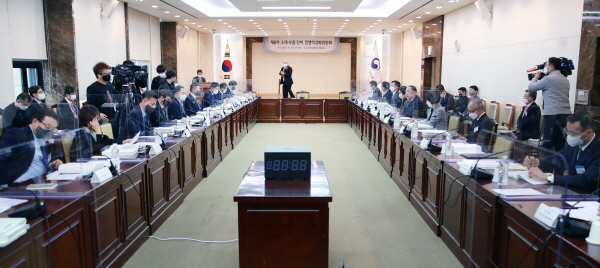
Continuous expansion of new projects subject to preliminary feasibility studies related to extreme materials and technology commercialization
The government is taking steps to provide balanced support between future fields and key sectors, such as strengthening support for securing future basic and source technologies centered on materials, including selecting 100 future technology research laboratories and 100 national core materials research groups by 2025.
The Ministry of Science and ICT (Minister Lim Hye-sook) announced that it finalized the 'Plan for Promoting Future-Leading R&D in Materials, Parts, and Equipment' at the 8th Materials, Parts, and Equipment Competitiveness Enhancement Committee held on the 17th.
Looking at the key points, first, it sets out to overcome technological challenges by focusing on 65 future-leading items.
We will select approximately 20 new future materials technology research laboratories each year that are dedicated to technology development with the goal of securing next-generation source technologies for materials, parts, and equipment centered on future leading items, and expand the number to 100 by 2025.
In addition, it supports future-oriented technological independence for 100+85 key R&D items.
To achieve technological independence and supply chain replacement for key items, 10 to 15 new National Core Materials Research Groups will be selected annually, expanding the total to 100 by 2025.
In addition, it is highly related to major policy areas such as carbon neutrality, GVC (Global Value Chain), and DX (Digital Transformation).It strengthens support for technology development.
The digital transformation of materials, parts, and equipment research is also accelerating.
Starting in 2022, we will launch a new 'Intelligent Smart Materials Research Laboratory Utilizing AI Robots' to drastically reduce the duration and cost of R&D by more than 50% compared to existing methods with minimal research personnel by utilizing intelligent robots in the new materials development process.
In addition, a new 'Nanofab Process Data Smartization Service' will be established to provide advanced process services at public nanofabs, such as the National Nanotechnology Center. This service transforms process data, previously managed at the individual equipment level, into big data and supports the application and utilization of AI.
We will continuously expand the R&D foundation for materials, parts, and equipment, including preparing to promote new projects subject to preliminary feasibility studies related to extreme materials and technology commercialization.
Since it is important to connect various government R&D results to practical corporate utilization in order to achieve technological self-reliance and leadership in materials, parts, and equipment, the Ministry of Science and ICT and the Ministry of Trade, Industry and Energy are jointly promoting the 'Nano Convergence 2030' project, which provides customized support for the technology commercialization process of original research results in materials, parts, and equipment, with the goal of launching in 2023.
To support the sustainable development of the ecosystem centered on future sectors of materials, parts, and equipment, we plan to consistently support the revitalization of the materials, parts, and equipment R&D community.
Minister Lim Hye-sook stated, “As the global competition for technological hegemony among major nations intensifies, the importance of materials, parts, and equipment technology is growing,” adding, “We plan to fully implement balanced support measures between future and core sectors starting in 2022, centered on the Ministry of Science and ICT, to secure core basic and source technologies for materials, parts, and equipment, based on related R&D projects and the inter-ministerial R&D coordination authority of the Science and Technology Innovation Headquarters.”

Comments
Related news
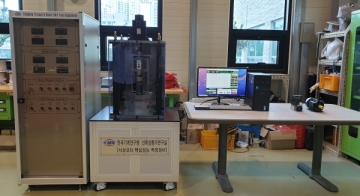
Korea Mechanical Engineering and Materials Institute strengthens the credibility of small business owners through online and offline infrastructure.
The Korea Institute of Machinery and Materials (KIMM, Director Park Sang-jin) under the Ministry of Science and ICT is establishing online and offline infrastructure to strengthen the reliability of Korea's materials, components, and equipment industries, and is moving forward with initiatives to achieve synergies.
2021.07.29by 배종인 기자
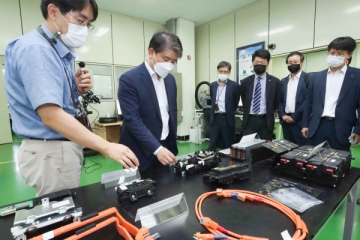
Ministry of Trade, Industry and Energy: "To Establish 403 Types of Materials, Parts, and Equipment Testbeds by Next Year"
Jo Young-joon, Director of the Industrial Policy Division at the Ministry of Trade, Industry and Energy, visited the testbed site of the Korea Automotive Research Institute's 100 core strategic products in materials, parts, and equipment, inspected the construction status, and chaired a meeting with major public research institutions participating in the construction. The meeting was held to discuss strengthened support measures for small and medium-sized parts and materials companies by public research institutes and to share outcomes of enterprise support utilizing materials, parts, and equipment testbeds at five major public research institutes, including the Korea Automotive Research Institute.
2021.09.14by 이수민 기자
.jpg)
KETI to invest KRW 43 billion in electronics, IT, and small and medium-sized businesses
The Korea Electronics Technology Institute (KETI, Director Kim Young-sam) is investing 43 billion won in electronics, IT, and materials/parts/equipment companies, diversifying its corporate nurturing approach beyond existing R&D and problem-solving for challenging technologies.
2021.11.12by 배종인 기자
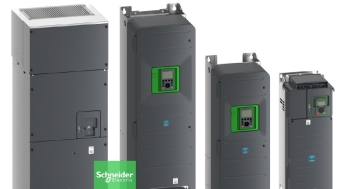
Schneider Aims for Building Energy Savings and Operational Stability with Next-Generation HVAC Drives
Schneider Electric has unveiled its next-generation HVAC drive product line 'Altivar HVAC'. The new product line's key features center on enhanced energy savings, system operational stability, and building management system integration. The products are divided into 'ATH200' for OEM and small equipment applications, and 'ATH600' for environments requiring continuous operation and advanced control. The company plans to expand the application scope from commercial buildings to facilities where HVAC system stability is critical, such as hospitals, airports, and data centers. The announcement includes over 30% energy savings, operation from -10°C to +60°C, Modbus and BACnet support, and compatibility with low global warming potential refrigerants.
2026.03.26by 명세환 기자
Ecolab Expands AI Data Center Cooling Business Through Acquisition of CoolIT
Ecolab has agreed to acquire CoolIT Systems, a liquid cooling company for AI data centers, for approximately $4.75 billion. The transaction is expected to close by Q3 2026, subject to regulatory approvals. CoolIT has been supplying direct-to-chip cooling-based coolant distribution units, cold plates, and manifolds, serving hyperscale data centers and colocation operators as customers. This acquisition is a measure to address the high-heat and high-density server environments created by AI proliferation. Ecolab plans to combine its water management and digital monitoring capabilities with CoolIT's hardware technology to expand its data center cooling business.
2026.03.26by 명세환 기자











