


IBS produces hydrogen four times cheaper and for more than twice as long.
 Published2021.11.23 11:54
.jpg)
▲(From left) Kumar Ashwani (first co-author), Lee Hyo-young, associate research director (corresponding author), and Viet (first co-author) who led this study
A new catalyst has been developed that produces hydrogen from any water at a cost four times cheaper than existing methods and for twice as long, raising expectations that it will contribute to eco-friendly hydrogen production.
The research team led by Vice Research Director Hyoyoung Lee of the Nanostructure Physics Research Group (Director Younghee Lee) at the Institute for Basic Science (IBS, President Doyoung Noh) announced on the 22nd that they had developed a single metal atom dimer catalyst that is four times cheaper than existing ones by synthesizing two single atoms.
It is characterized by the ability to produce hydrogen from any type of water and the ability to operate for a longer period of time than before.
This is expected to provide a new direction for hydrogen production methods, as it can produce commercially available, high-purity hydrogen inexpensively in an environmentally friendly manner.
The research team implemented a dimer using inexpensive transition metals, cobalt and nickel, and stably synthesized a single-atom nickel-cobalt dimer structure on a nitrogen-doped carbon support that is available in all water.
The research team found that nickel and cobalt had a lower hydrogen generation effect than when they existed as single atoms, but when the two single atoms were combined in a dimer structure, they had a synergistic effect and produced hydrogen.We found that the mountain effect was maximized.
Other dimers, such as cobalt-manganese and cobalt-iron, were also synthesized using the same method.
The research team confirmed that the single-atom nickel-cobalt dimer electrocatalyst can produce hydrogen at a voltage similar to that of a platinum catalyst.
Furthermore, it was discovered that the single-atom nickel-cobalt dimer can be used for 50 hours without any structural change, compared to conventional platinum catalysts that are only stable for 24 hours.
This study is significant in that it successfully achieved the synthesis of single-atom dimer structures, a long-standing challenge in the field of single atoms.
A new catalyst has been developed, realizing a structure previously only theoretical, while maintaining the advantages of existing precious metal platinum catalysts at a low cost. This catalyst is expected to replace expensive platinum catalysts and contribute to environmentally friendly hydrogen production.
The research team leader said, “Through this research, we have developed an inexpensive, high-efficiency hydrogen production electrolysis catalyst, bringing us one step closer to an eco-friendly, small-scale production economy that does not emit carbon dioxide.”
This study was published online on November 19 in the international academic journal 'Nature Communications (IF 14.919).
.jpg)
▲Schematic diagram of the hydrogen generation process using NiCo-SAD stabilized on nitrogen-doped carbon.

Comments
Related news
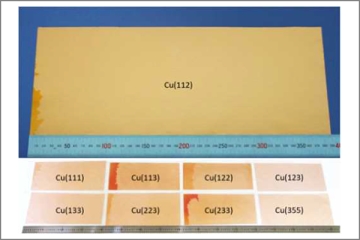
"Electronic device form factors are becoming more diverse." IBS succeeds in synthesizing large-area single-crystal metal thin films.
The Institute for Basic Science has succeeded in diversifying the surface patterns of metal substrates for synthesizing high-performance two-dimensional materials such as graphene. Two-dimensional single-crystalline materials are materials with regular atomic arrangements and orientations, and are used as materials for high-performance electronic devices due to their excellent thermal and electrical conductivity. Until now, there had been a limitation in the variety of single-crystalline metal thin film patterns required for synthesizing two-dimensional single-crystalline materials, and this research has found a clue to resolving this issue.
2020.05.28by 이수민 기자
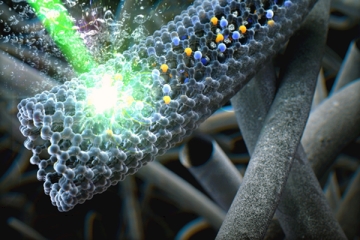
Saenggiwon and Konkuk University reduce hydrogen production catalyst production costs by 50%.
KIST and Konkuk University have developed foundational technology for manufacturing hydrogen generation catalysts through an eco-friendly physical process utilizing pulsed lasers. The method involves irradiating the surface of carbon nanotubes with pulsed lasers without harmful chemical processes, and adding heterogeneous elements in single-atom form other than carbon to create catalysts.
2021.05.07by 이수민 기자
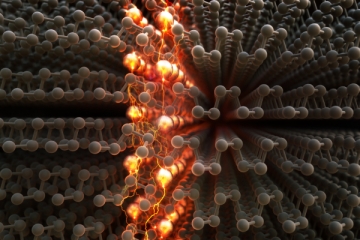
Black phosphorus, could it become the main material for angstrom semiconductors smaller than nanometers?
The IBS Multidimensional Carbon Materials Research Group has realized a conductive channel with a linewidth of 0.43nm using two-dimensional black phosphorus. Two-dimensional black phosphorus is considered a leading semiconductor device for the post-graphene era. With a thickness of approximately one atomic layer, it can be applied to flexible and transparent devices that are difficult to implement with silicon-based semiconductors. Additionally, it exhibits the highest electron mobility among two-dimensional semiconductor devices.
2021.07.30by 이수민 기자
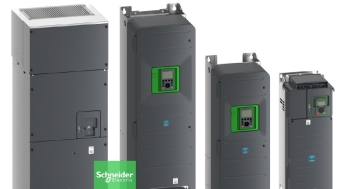
Schneider Aims for Building Energy Savings and Operational Stability with Next-Generation HVAC Drives
Schneider Electric has unveiled its next-generation HVAC drive product line 'Altivar HVAC'. The new product line's key features center on enhanced energy savings, system operational stability, and building management system integration. The products are divided into 'ATH200' for OEM and small equipment applications, and 'ATH600' for environments requiring continuous operation and advanced control. The company plans to expand the application scope from commercial buildings to facilities where HVAC system stability is critical, such as hospitals, airports, and data centers. The announcement includes over 30% energy savings, operation from -10°C to +60°C, Modbus and BACnet support, and compatibility with low global warming potential refrigerants.
2026.03.26by 명세환 기자
Ecolab Expands AI Data Center Cooling Business Through Acquisition of CoolIT
Ecolab has agreed to acquire CoolIT Systems, a liquid cooling company for AI data centers, for approximately $4.75 billion. The transaction is expected to close by Q3 2026, subject to regulatory approvals. CoolIT has been supplying direct-to-chip cooling-based coolant distribution units, cold plates, and manifolds, serving hyperscale data centers and colocation operators as customers. This acquisition is a measure to address the high-heat and high-density server environments created by AI proliferation. Ecolab plans to combine its water management and digital monitoring capabilities with CoolIT's hardware technology to expand its data center cooling business.
2026.03.26by 명세환 기자











