



Catalyst that converts CO2 into formic acid
 Published2021.12.01 13:56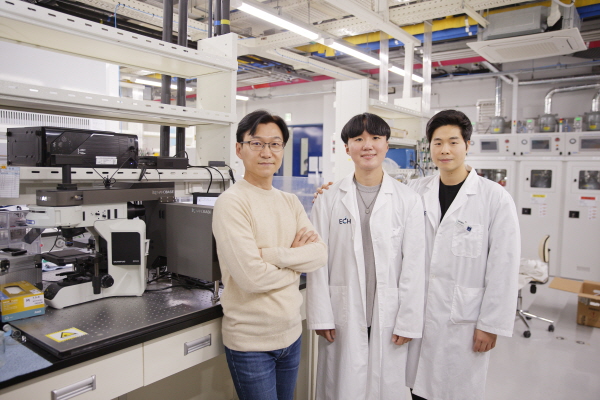
▲(From left) Research team including Professor Kwon Young-guk, Researcher Lee Ho-jeong (first author), and Researcher Choi Han-sam
Maximized formic acid production and dramatically reduced hydrogen byproducts.
A catalyst that converts carbon dioxide, a major culprit in global warming, into formic acid has been developed, and it is expected to become a key source technology for carbon dioxide resource utilization.
UNIST (President Yong-Hoon Lee) announced on the 1st that a research team led by Professor Kwon Young-Guk of the Department of Energy and Chemical Engineering, in collaboration with researchers from Sungkyunkwan University and DGIST, developed a high-performance tin oxide catalyst using a special technology that creates ultra-fine cracks in catalyst particles that are thinner than one-100,000th the thickness of a human hair.
As the reactants are trapped between these microscopic cracks, the energy required for the reaction is reduced and the production of reaction by-products is effectively suppressed.
Technologies that convert carbon dioxide into high-value compounds or fuels by applying electricity to it have recently been attracting attention. Using renewable energy to convert carbon dioxide into high-value substances could simultaneously address environmental and energy issues. However, for these technologies to be competitive, they require inexpensive, high-performance catalysts. A catalyst is a substance that reduces the electrical energy consumed in a reaction, and is mainly made of precious metals.
The research team transformed a catalyst based on the inexpensive, non-precious metal tin (Sn) into a high-performance catalyst for producing formic acid. Formic acid is widely used in the food, leather, and pharmaceutical industries, and has recently attracted attention as a fuel for fuel cells and as a hydrogen storage medium.
Compared to existing commercial tin oxide materials, the developed catalyst consumes less energy (overvoltage) and increases the production speed of formic acid by more than 19 times. The production of reaction byproducts (hydrogen) was also reduced by 70%. Existing tin catalysts, while inexpensive, suffer from slow reaction rates and high byproduct production. The more byproducts produced, the more electrical energy is wasted on unwanted reactions.
Cation implantation technology was used to create ultrafine cracks in tin catalyst particles. When lithium cations are injected into the tin oxide particles, the previously ordered atomic arrangement becomes dislocated. These dislocated atomic arrangements (grain boundary defects) then migrate, creating ultrafine cracks of approximately 1 nm (nanometer) or less within the particles. This was experimentally verified through cross-sectional imaging and three-dimensional structuring using a scanning transmission electron microscope (STEM).
The research team also discovered the optimal microcrack size. When the microcrack size was around 6 Å (angstroms, the size of 2-3 atoms), the rate and selectivity of formic acid production were enhanced, and byproduct production was effectively suppressed.
The precise theoretical principle was also elucidated. When a key intermediate product is adsorbed on one surface within the catalyst's ultrafine cracks, it interacts with the opposite catalyst surface, reducing the energy required for the reaction. This maximizes formic acid production and dramatically reduces the byproduct hydrogen production. Typically, chemical reactions go through several steps, and the reaction that creates this key intermediate is the slowest and most difficult step among the carbon dioxide conversion (reduction) chemical reactions.
Professor Kwon Young-guk explained, “We were able to dramatically increase the production speed and selectivity of high-value-added formic acid by controlling the atomic-level gaps within tin particles,” and “The technology proposed in this study is significant because it can be expanded into various fields of electrochemical catalyst research.”
This study was conducted jointly with UNIST researcher Ho-Jeong Lee as the first author, along with Professor Hyung-Mo Jeong's team at Sungkyunkwan University (President Dong-Ryeol Shin) and Professor Stefan Ringe's team at DGIST.
The research results were published online in Advanced Functional Materials, a world-renowned journal in the fields of materials engineering and electrochemistry, and are awaiting official publication as they were selected as the cover paper.
This research was conducted with support from the National Research Foundation of Korea's mid-level project and Carbon to X technology development project.
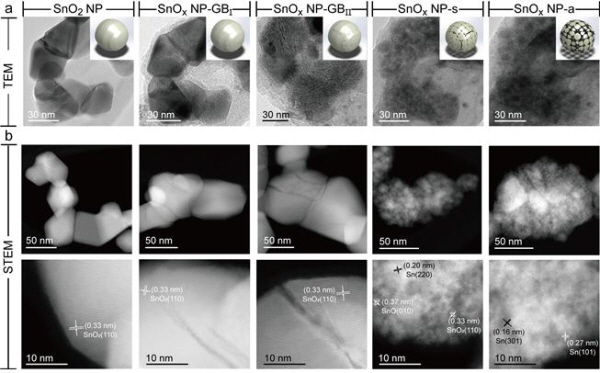
▲ Schematic diagram of the electrochemical cation implantation process. (a) The process by which the internal atomic arrangement of tin oxide changes during the cation implantation step. Mechanism of carbon dioxide reduction reaction in tin oxide with altered atomic arrangement. (b) Tin oxide without the process. (c) Tin oxide with defects. (d) Tin oxide with atomic-level spacing. (e) Phase transformation analysis of tin oxide according to stepwise electrochemical cation implantation process using PXRD analysis.

Comments
Related news
.jpg)
CO for semiconductors, domestic production in full swing due to surge in demand
Demand for carbon monoxide (CO) used in semiconductors is surging rapidly, and it is drawing attention that major domestic companies that had been supplying CO to leading semiconductor manufacturers and Japanese companies that had been supplying CO to Korea are now constructing their own plants domestically, which is expected to intensify competition in the domestic CO supply market.
2021.07.30by 배종인 기자
Materials Research Institute Develops Ultra-thin Coating Water Electrolysis Catalyst Technology
The Korea Institute of Materials Science has simultaneously resolved the performance and durability trade-off problem in water electrolysis catalysts by applying ultra-thin surface coating technology. Achieving 1.9 times higher performance compared to conventional catalysts while demonstrating 1,000-hour long-term stability, the institute has developed technology scalable to industrial water electrolysis systems through a simple process.
2026.10.07by 배종인 기자
Gigaphoton Develops Neon Gas Recycling System for ArF Excimer Lasers...Achieves 50% Recycling Rate
Gigaphoton announced that it has developed a gas recycling system for ArF excimer lasers and achieved a 50% neon gas recycling rate.
2026.10.02by 배종인 기자
UNIST suppresses vaporization losses while maintaining 97% of liquefied hydrogen storage capacity
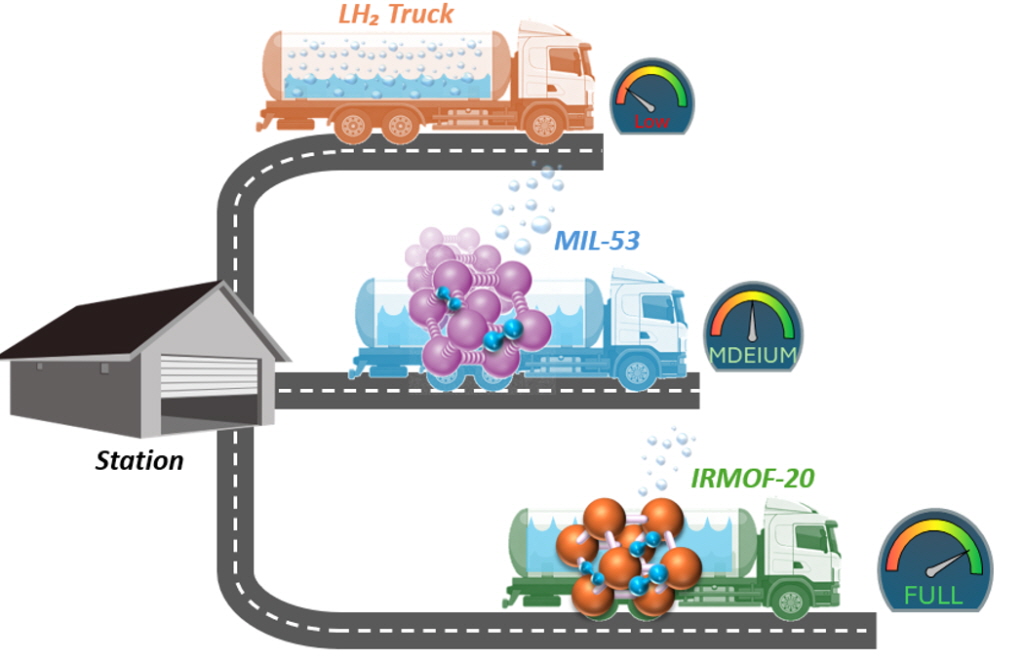
A research team led by Professor Oh Hyun-cheol from the Department of Chemistry at UNIST, in collaboration with Professor Moon Hoe-ri from Ewha Womans University and researchers from the Technical University of Munich in Germany, has verified technology that reduces boil-off loss occurring during liquefied hydrogen transportation and storage by utilizing metal-organic frameworks (MOF).
2026.09.30by 배종인 기자
LG Chem Expands Semiconductor Cleaning Materials Business…Collaborates with China's Jianghua Wei on Ultra-high Purity IPA
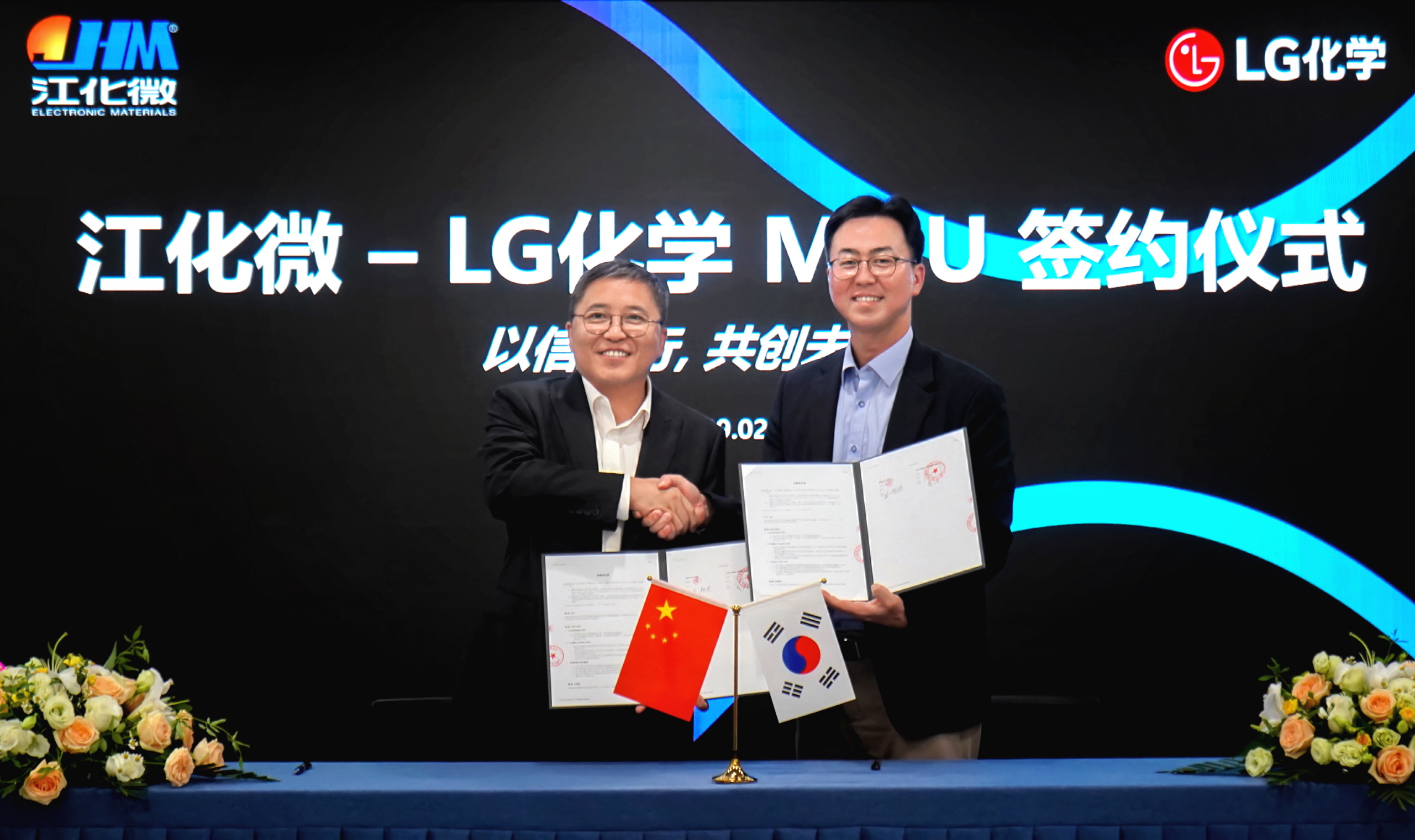
LG Chem is moving to expand its ultra-high purity IPA (isopropyl alcohol) business, a core material for semiconductor processes. The company is building a local supply system in collaboration with a Chinese precision chemical company and strengthening its market strategy for AI semiconductors and advanced memory.
2026.09.14by 배종인 기자











