



Intel and Nvidia Engage in Fierce Competition in Autonomous Driving Technology
 Published2022.01.06 10:01
엔비디아, 로보택시·자율주행 트럭 플랫폼 공급
인텔과 엔비디아가 SoC 등 최신 기술과 협력사 확장을 발표하며 자율주행 기술 왕좌를 차지하기 위한 치열한 경쟁을 예고했다.
5일 라스베이거스에서 개막한 CES 2022에서 인텔과 엔비디아가 각각 시스템 온 칩(SoC)과 최신 플랫폼을 공개했다.
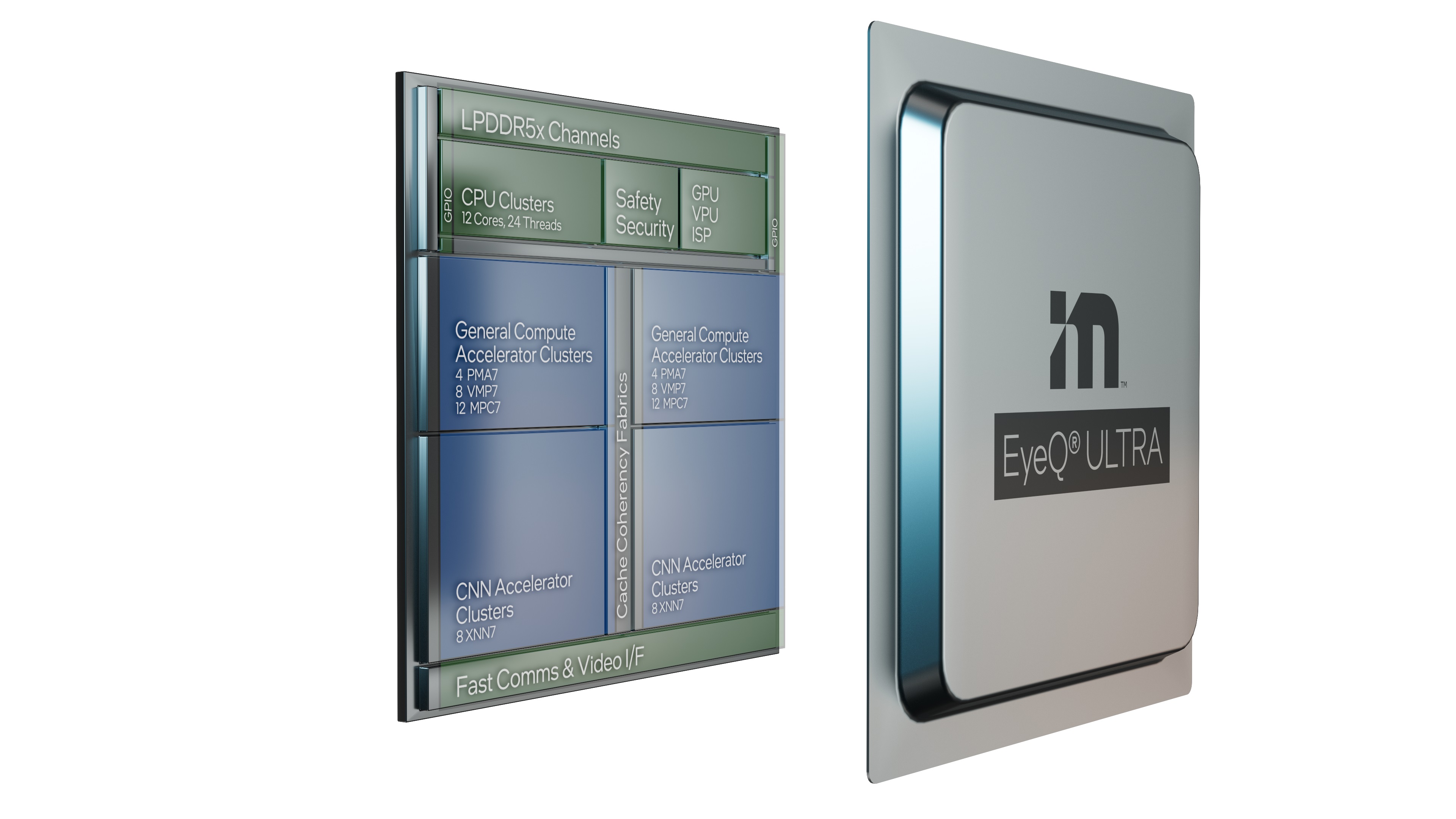
▲모빌아이의 최신 시스템 온 칩 아이큐® 울트라(EyeQ® Ultra).
아이큐® 울트라는 하나의 패키지로 10개의 아이큐5 시스템 온 칩과 동일한 정보를 처리하며 자율주행 차량의 최적의 성능을 제공하기 위해 설계됐다.
이날 기자회견에서 폭스바겐 그룹과 포드 CEO가 모빌아이와의 관계 확대를 발표했다.
하르베르트 디스 폭스바겐 그룹 CEO는 폭스바겐, 세아트, 스코다 브랜드 차량에 탑재될 운전자 지원 기능에 모빌아이의 매핑 기술을 적용했다고 언급했다.
짐 팔리 포드 CEO는 모빌아이가 포드 블루크루즈 플랫폼에 운전자 지원 솔루션을 제공한다고 밝혔다.
인텔은 중국 지리홀딩그룹(Geely)의 지커 브랜드와 관련한 내용도 발표했다.
모빌아이는 지커 브랜드 최초로 2024년 레벨 4 상용 자율주행차를 최초 생산할 예정이다.
또 업계 최초로 360도 탐지 시스템과 종, 횡방향 통제를 위한 주행 정책이 탑재된 레벨 2 이상 자율주행차를 출시 및 출하할 것이라고 밝혔다.
.jpg)
▲엔비디아의 드라이브 하이페리온 8을 채택한 기업. 사진 제공: 엔비디아
이는 드라이브 오린(DRIVE Orin) 시스템 온 칩, 12개의 최첨단 서라운드 카메라, 9개의 레이더, 12개의 초음파, 1개의 전면 라이다 및 3개의 내부 감지 카메라로 설계되었다.
기능적으로 안전하도록 설계되어 하나의 컴퓨터 또는 센서에 이상이 발생하면 자율주행 차량이 승객을 안전한 장소로 데려갈 수 있도록 백업을 사용할 수 있다.
이어 드라이브 하이페리온(DRIVE Hyperion) 플랫폼을 채택하는 더 많은 기업을 발표했다.
볼보(Volvo)가 지원하는 폴스타(Polestar)와 같은 전기 자동차 제조업체와 니오(NIO), 샤오펑(Xpeng), 리오토(Li Auto), 알오토(R Auto) 및 아이엠 모터스(IM Motors)를 포함한 중국의 전기차 기업은 모두 드라이브 하이페리온을 채택했다.
크루즈(Cruise), 죽스(Zoox) 및 디디(DiDi)와 같은 로보택시 서비스와 볼보, 나비스타(Navistar) 및 플러스(Plus)와 같은 트럭 운송 서비스도 드라이브 하이페리온을 선택했다.
또 자율주행 트럭 회사인 투심플(TuSimple)은 CES에서 엔비디아 드라이브 오린에 새로운 플랫폼을 구축할 것이라고 발표했다.
엔비디아의 오토모티브 부문 부사장 겸 총괄 매니저인 알리 카니(Ali Kani)는 “엔비디아는 소프트웨어 중심의 새로운 비즈니스 모델로 이익을 얻을 수 있다”며 “새로운 전기차는 무선 업데이트를 통해 점점 더 향상된 기능을 제공할 것”이라고 밝혔다.
Comments
Related news
NVIDIA Unveils 8th Generation Platform to Verified Autonomous Driving Capabilities
To develop autonomous vehicles, it is necessary to comprehensively test and validate hardware and software not only for real-time processing for autonomous driving but also to withstand the demanding conditions of everyday driving. In response, NVIDIA has unveiled its eighth-generation Drive Hyperion platform to support automakers in developing autonomous vehicles. It comes with all the hardware necessary to validate autonomous driving systems at the highest performance levels.
2021.04.26by 이수민 기자
Intel to launch Level 4 autonomous vehicle in 2024
Intel continues aggressive investments related to autonomous driving, with plans to launch Level 4 autonomous vehicles in 2024 and expand autonomous driving collaborations with major automotive manufacturers.
2022.01.05by 배종인 기자

[e4ds Tech Day 2026 ⑨] Sim Sang-gyu, Autocrypt CTO: "In the Physical AI Era, Automotive Security Must Extend Beyond the Vehicle"
At e4ds Tech Day 2026, Sim Sang-gyu, CTO of Autocrypt, explained automotive cybersecurity strategies in the era of Physical AI and SDV (Software-Defined Vehicle). Automobiles are evolving as part of an ecosystem connected to AI, cloud, chargers, IoT, and robots, and he emphasized that the scope of security must expand beyond the vehicle interior to the entire connected environment. In particular, AI model tampering, adversarial attacks, OTA updates, and EV charger hacking were identified as major threats. He explained that response measures require zero trust, AI model integrity protection, intrusion detection, Security by Design and Default, and full lifecycle security management, and that proactive security system establishment beyond regulatory compliance is critical for securing future mobility competitiveness.
2026.10.12by 배종인 기자
Practical HIL Construction Strategy for Automotive and Off-Highway Controller Validation
As vehicle E/E architecture transitions to zonal structures and shifts to software-defined vehicles (SDV), the number of controllers (ECUs) requiring validation and software complexity are surging dramatically. Meanwhile, real vehicle testing cannot provide repeated verification under identical conditions and entails lead time and safety concerns. This white paper explains the principles of HIL (Hardware-in-the-Loop) validation and the structure of the NI platform composed of PXI, SLSC, and VeriStand, and through two actual implementation cases—Camera Record & Replay HIL for In-Cabin Monitoring Controller (ICMU) and Forklift Controller (VCU) HILS—describes how controller-level regression testing becomes possible. Additionally, it explicitly states application boundaries and limitations, such as lack of A2B support.
2026.10.12by 편집부
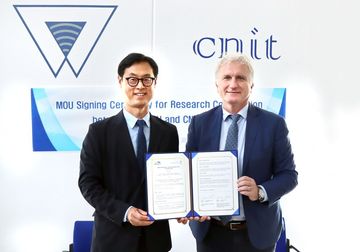
Korea Automotive Research Institute Signs MOU with Italy National Institute for Wireless Communications
The Korea Automotive Research Institute will sign an MOU with Italy's National Institute for Wireless Communications and launch joint research on next-generation mobility technologies based on 6G, V2X, and connected vehicles. The two organizations will conduct research to apply advanced wireless communication technologies to vehicles and discover international joint projects to advance next-generation connected vehicle technology development.
2026.10.12by 배종인 기자











