


KERI Develops World's First Magnetic-based Counter-rotating Propeller
 Published2022.02.07 14:20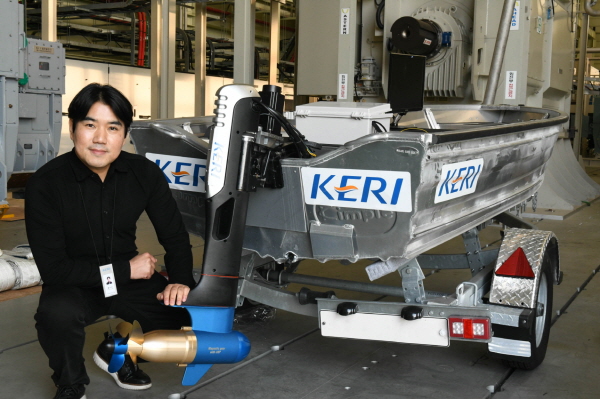
▲Dr. Hong Do-gwan, who developed the 'non-contact magnetic gear-based counter-rotating propeller,' is posing for a photo after actual installation of the product.
A counter-rotating propeller in which two propellers rotate in opposite directions using the power of magnets has been developed, and is expected to improve propulsion efficiency of ships and aircraft by more than 10% compared to conventional mechanical gear systems.
The Korea Electrotechnology Research Institute (KERI, Director Myung Sung-ho), Electric Power System Research Center, Dr. Hong Do-gwan's team announced on the 7th that it has developed for the first time in the world the 'non-contact magnetic gear-based counter-rotating propeller' technology that can improve propulsion efficiency of ships and aircraft by more than 10%.
The 'counter-rotating propeller' consists of two propellers rotating in opposite directions and arranged along the axial direction. It is a method in which the rear propeller rotates in the opposite direction to the rotational energy from the front propeller, recovering and recycling it. Therefore, it can achieve high propulsion efficiency and energy savings, and many studies are being conducted both domestically and internationally.
However, to rotate such a counter-rotating propeller, a so-called 'mechanical gear' is required in which teeth mesh to transmit power. Mechanical gears generate significant heat, noise, and vibration from friction, and require regular maintenance such as lubricant supply for wear and cooling.
In response, Dr. Hong Do-gwan's team at KERI proposed a 'non-contact magnetic gear' as an alternative, which utilizes the pushing and pulling forces between the N and S poles of magnets to transmit power without contact between gear components, thereby generating the thrust of a counter-rotating propeller. The key point is that magnetic gears are inherently capable of counter-rotation, and this has been applied to underwater and aerial propulsion systems.
Since this is a world-first research attempt, there were many trials and errors during the past three years or more. However, through steady efforts, the research team successfully overcame difficulties including component combination and design, electrical-mechanical performance analysis, prototype manufacturing and performance evaluation testing. Recently, the team also completed demonstration testing of an underwater thruster achieving maximum efficiency of 99% with the non-contact magnetic gear in a reservoir near KERI's Changwon headquarters.
The counter-rotating propeller utilizing non-contact magnetic gear offers numerous advantages. In addition to high propulsion efficiency and fuel cost reduction, there is virtually no noise and vibration since it utilizes the power of non-contact magnets. These advantages are expected to receive significant attention particularly in the defense sector. Furthermore, the semi-permanent lifespan requiring minimal maintenance is also a major strength.
The non-contact magnetic gear-based counter-rotating propeller currently developed by the research team has an output level of 3kW for unmanned mobility applications. Through continued research, the team aims to achieve 10kW class for unmanned mobility applications this year, and implement performance of 100kW or higher next year, sufficient for dozens of people to ride.
KERI, having completed patent applications related to the core technology and published domestic and international research papers, anticipates that this achievement will replace mechanical gears in diverse fields including defense (low-noise torpedo development, unmanned ground/sea/air mobility power sources), industry (automation such as machine tools), and mobility (ships, aviation, automobiles). The institute plans to commercialize the technology through technology transfer to related companies.
Dr. Hong Do-gwan of KERI stated, "Going beyond the existing 'electric motor + single propeller' method to 'electric motor + complex mechanical gear + counter-rotating propeller,' our achievement takes a step further by applying non-contact magnetic gear that replaces mechanical gears, which is a world-first attempt. We will dedicate ourselves to research and development so that our non-contact magnetic power transmission technology can be expanded and applied in diverse mobility fields beyond underwater and aviation applications," he said.

Comments
Related news

Myung-Ho Myung, President of the Korea Electric Power Corporation, said, "Leading the electrification of businesses and the public."
Myung Sung-ho, President of the Korea Electrotechnology Research Institute (KERI), a government-funded research institute under the National Research Council of Science and Technology (NST) affiliated with the Ministry of Science and ICT, pledged through his New Year's address to create tangible results based on building a solid organizational culture and establishing a safety management foundation.
2022.01.03by 배종인 기자
.jpg)
Electric power company confirms that electrical equipment is free of risk of electric shock
The Korea Electrotechnology Research Institute has developed a technology that can check the internal status of hazardous electrical equipment without opening the door, which is expected to reduce the risk of electric shock accidents.
2022.01.10by 배종인 기자
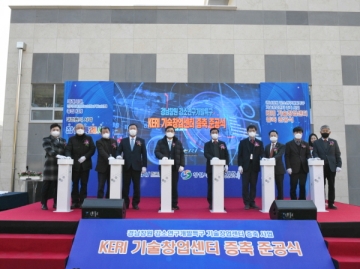
KERI, Technology Startup Center Expansion
The Korea Electrotechnology Research Institute (KERI, Director Myung Sung-ho) is launching a full-scale initiative to support early business establishment and corporate growth for companies residing in the Gangso Special Zone through the expansion of its Technology Startup Center.
2022.01.27by 배종인 기자
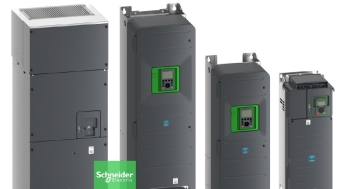
Schneider Aims for Building Energy Savings and Operational Stability with Next-Generation HVAC Drives
Schneider Electric has unveiled its next-generation HVAC drive product line 'Altivar HVAC'. The new product line's key features center on enhanced energy savings, system operational stability, and building management system integration. The products are divided into 'ATH200' for OEM and small equipment applications, and 'ATH600' for environments requiring continuous operation and advanced control. The company plans to expand the application scope from commercial buildings to facilities where HVAC system stability is critical, such as hospitals, airports, and data centers. The announcement includes over 30% energy savings, operation from -10°C to +60°C, Modbus and BACnet support, and compatibility with low global warming potential refrigerants.
2026.03.26by 명세환 기자
Ecolab Expands AI Data Center Cooling Business Through Acquisition of CoolIT
Ecolab has agreed to acquire CoolIT Systems, a liquid cooling company for AI data centers, for approximately $4.75 billion. The transaction is expected to close by Q3 2026, subject to regulatory approvals. CoolIT has been supplying direct-to-chip cooling-based coolant distribution units, cold plates, and manifolds, serving hyperscale data centers and colocation operators as customers. This acquisition is a measure to address the high-heat and high-density server environments created by AI proliferation. Ecolab plans to combine its water management and digital monitoring capabilities with CoolIT's hardware technology to expand its data center cooling business.
2026.03.26by 명세환 기자











