


Materials Research Institute Captures Coronavirus with Plasma Filter
 Published2022.02.07 14:47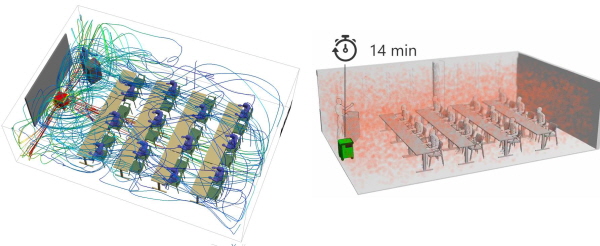
▲Example of calculating the time required to remove bioaerosols in a multi-use facility using digital twins.
A component capable of inactivating airborne aerosols through a plasma filter has been developed, raising expectations that it will help prevent the spread of COVID-19 and prevent the spread of the disease.
The research team led by Dr. Seunghoon Lee of the Nano-Bio Convergence Laboratory at the Korea Institute of Materials Science (KIMS, President Jeong-Hwan Lee), a government-funded research institute under the Ministry of Science and ICT, announced on the 7th that it had successfully developed a plasma air conditioning technology that can inactivate the COVID-19 (SARS-CoV-2) virus aerosol in real time.
This technology is significant in that it verified real-time quarantine performance in aerosol form, where the COVID-19 virus primarily spreads.
The plasma filter developed by the research team is a component that uses dielectric filter discharge technology to inactivate the COVID-19 virus aerosol with oxygen-active species and an electric field.
The research team confirmed that the COVID-19 virus was inactivated by more than 99.8% immediately after passing through the plasma filter.
Additionally, plasma filters can be applied to air purifiers and building air conditioning systems without emitting ozone (O3) by utilizing catalytic materials.
In addition, the research team By installing an ozone removal catalyst at the rear end of the plasma filter and maintaining the concentration of emitted ozone below the regulatory level, the problem of ozone emission, which was a weakness of plasma technology, was solved and various regulations related to ozone emission were satisfied.
Until now, experiments to inactivate the COVID-19 virus have been conducted in liquid form in culture dishes, not in aerosol form.
Due to the risks of experiments using aerosols of high-risk viruses, direct verification of the inactivation of the COVID-19 virus in aerosols is extremely rare. For this reason, verification of quarantine performance using aerosols has been continuously required, as actual situations and experimental conditions are different.
The research team, in collaboration with the Clinical Research Institute of Masan National Hospital (Director Seung-gyu Park), developed an experimental device that can directly evaluate the quarantine performance by spraying aerosols of COVID-19 virus culture solution, and is currently submitting the results of research related to the performance verification of the applied plasma filter to an international academic journal.
If this technology is applied to air purifiers and building air conditioning units installed in medical settings and multi-use facilities, it is expected to be of great help in preventing the spread of infectious diseases in the future.
Senior Researcher Seunghoon Lee, the principal investigator, said, “While the development of various quarantine material components is important, it is true that there is a lack of empirical research utilizing highly pathogenic pathogen aerosols.” He added, “Based on the inactivation data of the COVID-19 virus aerosol obtained in this study, we plan to conduct additional follow-up research to derive the initial time and optimal layout required for quarantine of multi-use facilities through a study predicting the removal performance of bioaerosols in a virtual space using a digital twin.”
This research was conducted as a major project of the Korea Institute of Materials Science under the Ministry of Science and ICT, and the research team completed two technology transfers related to plasma air purifiers and air conditioning components last year.
In particular, an air sterilizing purifier featuring film-type plasma filter technology is scheduled for release in February of this year after completing group certification and COVID-19 inactivation testing. The product was previously exhibited at the Korea Science and Technology Fair held at KINTEX in Ilsan in December of last year.

Comments
Related news
Materials Research Institute, Dr. Hyosun Jang, Receives 2021 Outstanding Paper Award from the International Magnesium Society
Dr. Jang Hyo-sun of the Computational Materials Research Division at the Korea Institute of Materials Science (KIMS, Director Lee Jung-hwan), a government-funded research institute under the Ministry of Science and ICT, has been recognized for his contributions to improving the room-temperature formability of magnesium alloys.
2022.01.05by 배종인 기자
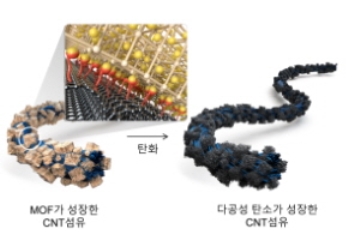
Materials Research Institute develops high-strength, high-energy CNTs
A multifunctional carbon nanotube fiber technology featuring high-strength characteristics combined with superior energy storage capability has been developed, drawing expectations that it will contribute to localization and import substitution while being applied across various industries including aerospace, aviation, and defense.
2022.01.10by 배종인 기자

Korea Institute of Materials Science Develops Materials with Antibacterial and Antiviral Additives
A material has been developed that imparts antimicrobial and antiviral functions through simple addition without requiring additional processing steps on existing products, raising expectations that it can directly address concerns about viral infections such as COVID-19.
2022.02.03by 배종인 기자
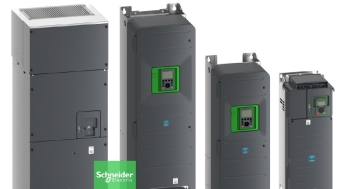
Schneider Aims for Building Energy Savings and Operational Stability with Next-Generation HVAC Drives
Schneider Electric has unveiled its next-generation HVAC drive product line 'Altivar HVAC'. The new product line's key features center on enhanced energy savings, system operational stability, and building management system integration. The products are divided into 'ATH200' for OEM and small equipment applications, and 'ATH600' for environments requiring continuous operation and advanced control. The company plans to expand the application scope from commercial buildings to facilities where HVAC system stability is critical, such as hospitals, airports, and data centers. The announcement includes over 30% energy savings, operation from -10°C to +60°C, Modbus and BACnet support, and compatibility with low global warming potential refrigerants.
2026.03.26by 명세환 기자
Ecolab Expands AI Data Center Cooling Business Through Acquisition of CoolIT
Ecolab has agreed to acquire CoolIT Systems, a liquid cooling company for AI data centers, for approximately $4.75 billion. The transaction is expected to close by Q3 2026, subject to regulatory approvals. CoolIT has been supplying direct-to-chip cooling-based coolant distribution units, cold plates, and manifolds, serving hyperscale data centers and colocation operators as customers. This acquisition is a measure to address the high-heat and high-density server environments created by AI proliferation. Ecolab plans to combine its water management and digital monitoring capabilities with CoolIT's hardware technology to expand its data center cooling business.
2026.03.26by 명세환 기자











