


Creating Dream Materials with Explainable AI
 Published2022.02.21 14:02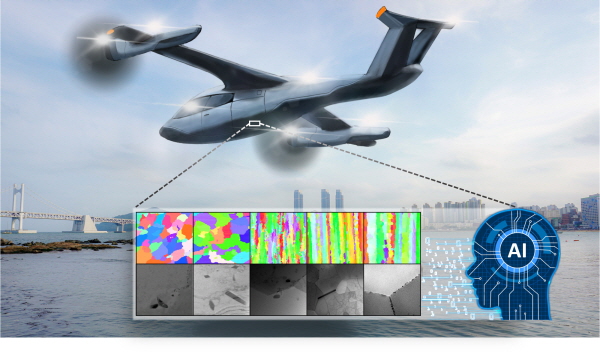
The technology to design element combinations and manufacturing processes for alloys used in personal air vehicles (PAVs) and high-speed trains using 'Explainable Artificial Intelligence (XAI)' technology, which explains why artificial intelligence (AI) recommended specific combinations and processes, is expected to be applied to the development of various alloy materials for future mobility.
UNIST (President Yong-Hoon Lee) announced on the 21st that a research team led by Professor Im-Doo Jeong of the Department of Mechanical Engineering has developed a new high-strength, lightweight aluminum alloy design technology using AI. This research was conducted jointly with Gyeongsang National University, the Korea Institute of Materials Science, and POSTECH.
The joint research team developed a deep learning AI model that quickly identifies combinations of additive elements and processing conditions that yield optimal strength and ductility. Using a recommendation algorithm, they also obtained processing conditions for alloys predicted to exhibit superior mechanical properties. The recommendation process takes less than five minutes, allowing designers to quickly obtain desired processing conditions without complex and lengthy experiments.
By manufacturing an actual 7,000 series aluminum alloy following the new chemical composition and process conditions recommended by AI, we were able to produce a high-strength alloy with a yield strength of over 710 MPa (megapascals) while maintaining 20% ductility. Commonly used commercial materials have yield strengths of around 590 MPa (megapascals) and ductility of around 8%.
A particular advantage of the developed technology is that it enables alloy design engineers to quantitatively determine the effects of chemical composition and process conditions on the mechanical properties of the alloy.
This is thanks to the application of explainable AI technology, which allows you to understand why the AI recommended a specific combination or process, thereby increasing the reliability of the AI model's results.
The research team analyzed the microstructure of the alloy actually manufactured based on AI recommendations and confirmed that the interpretation of the 'explainable algorithm' was well-matched with actual material engineering theory.
“This technology can be widely applied to the production of not only aluminum alloys but also other lightweight alloy materials, and we expect that it will be able to drastically reduce the material development period and cost,” said Park Seo-bin, the first author.
Professor Seong Hyo-kyung of Gyeongsang National University, a co-corresponding author, said, “This technology has increased its reliability and applicability in that it allows us to directly understand the key factors that enhance strength through explainable artificial intelligence,” and “It will be able to make a great contribution to the development of high-strength, ultra-light materials in the future.”
Professor Im-Doo Jeong, who led the research as the corresponding author, said, “We discovered a lightweight metal with high mechanical properties that was difficult to find through experimental methods alone through fusion research with explainable artificial intelligence. This is expected to be a key technology that can maximize stability while meeting the ever-increasing demand for lightweight vehicles in the carbon-neutral era of mobility production.”
The results of this study were published in the Journal of Alloys and Compounds, an international academic journal ranked within the top 7% of JCR in the metal field.The study was published in the Journal of Alloys and Compounds in January. This study was supported by the National Research Foundation of Korea, the Ministry of Trade, Industry and Energy, and the Korea Evaluation Institute of Industrial Technology (KEIT).

Comments
Related news
UNIST Develops Solar Cells Using AI
A technology that can develop organic solar cells using artificial intelligence (AI) has been demonstrated, and there are expectations that it can be applied in the development of electronic materials in the future.
2021.06.25by 배종인 기자
Materials Research Institute Uses AI to Identify Ultra-Fine Defects
The research team led by Dr. Kang Sung-hun at the Materials Artificial Intelligence and Big Data Research Center of the Korea Institute of Materials Science (KIMS, Director Lee Jung-hwan), a government-funded research institute under the Ministry of Science and ICT, has developed a technology that can accurately detect ultra-fine defects on product surfaces that are difficult for humans to distinguish using artificial intelligence (AI) technology.
2021.07.19by 배종인 기자
UNIST, AI World Stage ‘Top’ Recognition
A graduate student Yun Tae-hyun from UNIST's Graduate School of Artificial Intelligence (advisor: Prof. Lim Sung-bin) achieved the top position in the student category at a prestigious global artificial intelligence conference competition. The achievement was recognized for delivering the highest program performance in an emerging field that has recently attracted significant academic attention.
2021.12.06by 배종인 기자
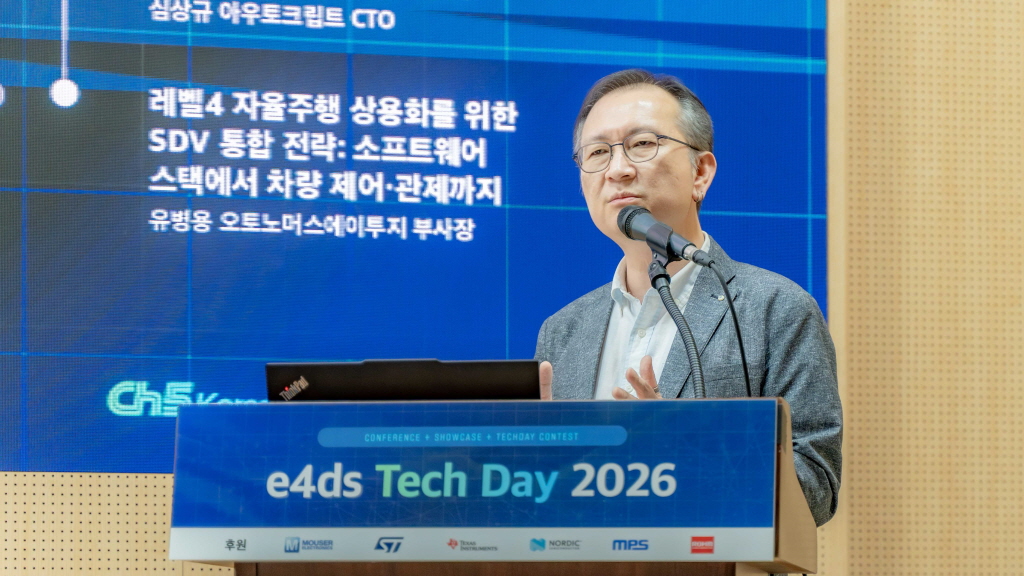
[e4ds Tech Day 2026 ⑨] Sim Sang-gyu, Autocrypt CTO: "In the Physical AI Era, Automotive Security Must Extend Beyond the Vehicle"
At e4ds Tech Day 2026, Sim Sang-gyu, CTO of Autocrypt, explained automotive cybersecurity strategies in the era of Physical AI and SDV (Software-Defined Vehicle). Automobiles are evolving as part of an ecosystem connected to AI, cloud, chargers, IoT, and robots, and he emphasized that the scope of security must expand beyond the vehicle interior to the entire connected environment. In particular, AI model tampering, adversarial attacks, OTA updates, and EV charger hacking were identified as major threats. He explained that response measures require zero trust, AI model integrity protection, intrusion detection, Security by Design and Default, and full lifecycle security management, and that proactive security system establishment beyond regulatory compliance is critical for securing future mobility competitiveness.
2026.10.12by 배종인 기자
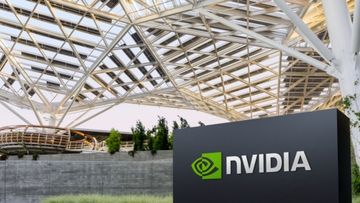
NVIDIA to Invest $1 Billion in U.S. Science Over Next Five Years
NVIDIA has announced plans to invest $1 billion over the next five years to strengthen U.S. scientific and technological competitiveness. The company will enhance cutting-edge artificial intelligence research and development capabilities in key areas including quantum computing, healthcare, and energy security, while expanding support for higher education research institutions and cloud service providers. NVIDIA is participating as a major industry partner in the White House Office of Science and Technology Policy's Genesis Mission, and is promoting supercomputer construction in collaboration with national laboratories including Argonne and Los Alamos.
2026.10.12by 배종인 기자











