


Machinery and Materials Research Institute Reduces Pollutants by 80% by Optimizing Port Loading Equipment
 Published2022.02.22 10:43
.jpg)
▲Demonstration of technology to reduce fine dust from port loading and unloading equipment
The Korea Institute of Machinery and Materials (President Sang-Jin Park, hereinafter referred to as KIMM) under the Ministry of Science and ICT has succeeded in reducing pollutant emissions by 80% through port handling equipment optimization technology, and is expected to domestically produce related products and develop markets in the future.
The Korea Institute of Machinery and Materials announced on the 22nd that it recently developed a simultaneous PM and NOx reduction device that can reduce fine dust from port handling equipment for the first time in Korea and successfully demonstrated it at the Port of Busan.
The director of the Busan Machinery Technology Research Center, Cho Gyu-baek, developed a simultaneous fine dust reduction device with separate DPF and SCR optimized for port loading and unloading equipment. In addition, SiC carriers, metal carriers, low-temperature SCR catalysts, urea water supply devices, and ammonia slip control technology were applied to increase removal efficiency.
The research team demonstrated this technology on the 'Reach Stacker', a container loading and unloading vehicle operated by Dongwon Logistics Co., Ltd., for three months from December 2021 to February 2022. As a result of the demonstration, it succeeded in reducing particulate matter emissions such as PM and NOx by more than 80%. In addition, we have developed an OBD function that can check the status of the reduction device and an integrated control device to improve usability and safety.
Most of the currently operating reach stackers were introduced before the Special Act on Port Fine Dust Management and are operated without separate emission reduction devices. Fine dust and NOx generated by reach stackers account for 4-5% of the total amount generated by Busan Port unloading equipment.
To solve these problems, the Korea Institute of Machinery and Materials, relevant ministries, Busan City, and port operators have been working together to support research on the application of port unloading equipment and take the lead in the development and verification of new technologies.
The research team plans to develop and demonstrate a DPF and SCR integrated system through follow-up research in the future. In addition, they plan to continue research to optimize the system so that it can be applied to other operating reachstackers.
Cho Gyu-baek, head of the Busan Machinery Technology Research Center, said, “We expect that by successfully developing and demonstrating a fine dust reduction device suitable for old port unloading equipment, we will accelerate the establishment and support of policies to improve air quality in port areas in the future,” adding, “We also hope to help strengthen the competitiveness of domestic companies by localizing related products in the future.”
This study was conducted with the support of the Ministry of Environment's fine dust blind spot resolution and reduction verification technology development project, 'SDPF development and verification project for simultaneous reduction of PM/NOx in small and medium-sized port unloading equipment.'
Prior to this, the research team signed a 'Standard Technology Development Agreement' with the Busan Port Authority in 2020 to carry out the Ministry of Environment's project, and was provided with a test bed necessary for the development and verification of a PM/NOx simultaneous reduction device for port loading and unloading equipment.

Comments
Related news
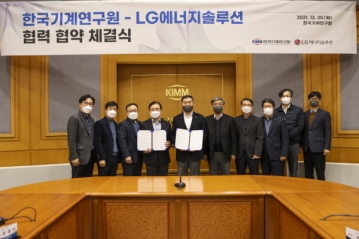
Korea Institute of Machinery & Materials and LG Energy Solution Join Hands for Future Energy
The Korea Institute of Machinery & Materials and LG Energy Solution have joined forces to secure differentiated technological competitiveness in the future energy sector.
2021.12.20by 배종인 기자
Korea Institute of Machinery and Materials (KIMM) 2021 Best Achievement Award: "Industrial Plasma Source Technology"
The industrial plasma foundational technology has been selected as the top research achievement of 2021 by the Korea Institute of Machinery and Materials (Director Park Sang-jin).
2021.12.22by 배종인 기자
.jpg)
Korea Institute of Machinery and Materials (KIMM) develops AI robot capable of disinfecting crowded indoor spaces.
Korea Institute of Machinery and Materials has developed an AI-based smart disinfection robot equipped with a real-time virus analysis algorithm to conduct autonomous disinfection operations.
2022.01.19by 김예지 기자
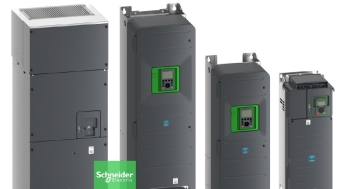
Schneider Aims for Building Energy Savings and Operational Stability with Next-Generation HVAC Drives
Schneider Electric has unveiled its next-generation HVAC drive product line 'Altivar HVAC'. The new product line's key features center on enhanced energy savings, system operational stability, and building management system integration. The products are divided into 'ATH200' for OEM and small equipment applications, and 'ATH600' for environments requiring continuous operation and advanced control. The company plans to expand the application scope from commercial buildings to facilities where HVAC system stability is critical, such as hospitals, airports, and data centers. The announcement includes over 30% energy savings, operation from -10°C to +60°C, Modbus and BACnet support, and compatibility with low global warming potential refrigerants.
2026.03.26by 명세환 기자
Ecolab Expands AI Data Center Cooling Business Through Acquisition of CoolIT
Ecolab has agreed to acquire CoolIT Systems, a liquid cooling company for AI data centers, for approximately $4.75 billion. The transaction is expected to close by Q3 2026, subject to regulatory approvals. CoolIT has been supplying direct-to-chip cooling-based coolant distribution units, cold plates, and manifolds, serving hyperscale data centers and colocation operators as customers. This acquisition is a measure to address the high-heat and high-density server environments created by AI proliferation. Ecolab plans to combine its water management and digital monitoring capabilities with CoolIT's hardware technology to expand its data center cooling business.
2026.03.26by 명세환 기자











