


244 Billion Won Investment in Service Robots, Full-Scale Deployment of 1,600 Units Begins
 Published2022.03.07 16:10
Revision of laws and regulations related to environmental creation to begin within the year
The government is investing 244 billion won to expand the supply of service robots and is set to supply over 1,600 service robots. In addition, it will embark on full-scale regulatory innovation for the robot industry through the overhaul of relevant laws and regulations.
The Ministry of Trade, Industry and Energy (Minister Moon Seung-wook) deliberated and approved the '2022 Intelligent Robot Implementation Plan' (hereinafter referred to as the 'Implementation Plan') to support the utilization of robots as a medium for industrial digital transformation through the Robot Industry Policy Deliberation Council (in writing).
According to this plan, the government plans to invest 244 billion won, a 10% increase from the previous year, to research and development and expand the distribution of manufacturing and service robots, and to demonstrate and distribute approximately 1,600 service robots to improve the quality of life for citizens and solve social problems.
In addition, we will begin revising relevant laws and regulations to improve regulations that have hindered the development of the robot industry, such as restrictions on autonomous robots traveling on sidewalks, and establish the 'Robot Industry Proactive Regulatory Innovation Roadmap 2.0' to monitor implementation status and identify additional tasks.
Looking at the key contents of the 2022 Intelligent Robot Implementation Plan, first of all, to accelerate the digital transformation of manufacturing sites, we plan to focus on developing additional standard process models for robot utilization and expanding the dissemination of existing models.
The development of standard models will be expanded to include not only the existing three major manufacturing industries (basic, textile, and food and beverage) but also aviation, shipbuilding, and bio-chemicals, which have significant forward and backward linkages.
In addition, to promote the spread of the already developed standard process model, field demonstrations of 220 manufacturing robots with the existing model are being conducted (Ministry of Trade, Industry and Energy), and the expansion and distribution to demand centers (Ministry of SMEs and Startups, 60 companies) are being promoted.
In addition, to promote the widespread adoption of self-sustaining manufacturing robots in the private sector, we plan to operate an 'integrated database management system' and establish a new robot refurb center.
We plan to promote the development and large-scale demonstration of service robots focused on resolving social issues such as an aging population and prolonged infectious disease situations, and strive to improve related regulations.
We will embark on the development of robots based on HRI (Human-Robot Interaction), such as companion robots and walking assistance robots for daily life, and promote the large-scale distribution of over 1,600 robots and convergence demonstrations centered on facilities closely related to people's daily lives.
Along with this, we plan to establish the 'Robot Industry Regulation Roadmap 2.0' and launch an amendment to the Intelligent Robot Act, which includes allowing autonomous robots to travel on sidewalks, in order to create a robot-friendly environment.
In addition, we plan to focus on supporting the development of core components and software to strengthen the robot industry ecosystem, as well as establishing demonstration infrastructure and fostering the workforce.
We plan to lead the digital transformation of all industries by supporting the development of core robot technologies, such as smart grippers for multi-product production and intelligent software for movement in unstructured environments, as well as the utilization and demonstration of domestic components, and by establishing a foundation for the demonstration, testing, and certification of advanced robots that integrate new technologies (artificial intelligence, big data, 5G, cloud, etc.).
In addition, we plan to strengthen the fundamental capabilities of the robot industry through measures such as fostering practical professional personnel that reflect on-site demand.
An official from the Ministry of Trade, Industry and Energy stated, “Robots are expected to play a key role in realizing the digitalization (advancement) of all industries and solving social problems,” adding, “We will proceed with the 2022 implementation plan without setbacks in cooperation with relevant agencies and the industry to meet diverse robot demands in the manufacturing and service sectors and to expand robot services that the public can experience.”
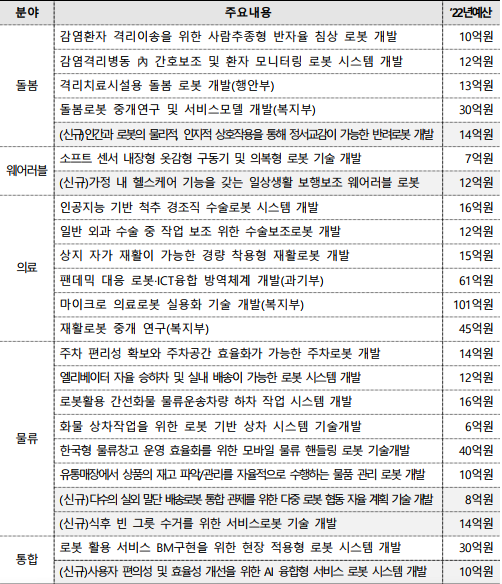
▲ Major Technology Development Projects for 2022

Comments
Related news
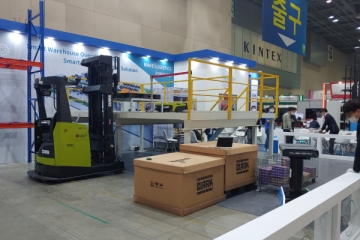
U+ to showcase 5G autonomous forklifts and logistics robots at RoboWorld
LG U+ will participate in the '2020 RoboWorld' exhibition held at Kintex in Ilsan from October 28 to 31, showcasing logistics robots and autonomous forklifts. Together with key partner companies including Clark, a global forklift specialist, K&N, a logistics automation company, and Mushiny, an AI-based logistics solution provider, LG U+ will introduce various industrial solutions for the first time, including 5G communication-based autonomous forklifts and logistics robots.
2020.10.28by 김동우 기자
Mir's autonomous mobile robot sales increase 42%.
Global robot manufacturer MiR continues to grow in the autonomous mobile robot market and is expanding the scope of robot applications.
2022.02.18by 김예지 기자
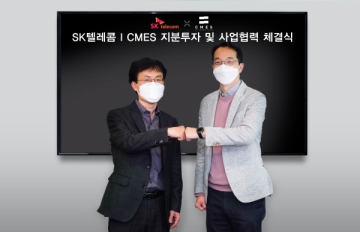
SKT Launches Full-Scale AI Robot Logistics Business
SK Telecom (CEO and President Yoo Young-sang) is launching a full-scale business in the AI robot logistics sector.
2022.03.03by 김예지 기자
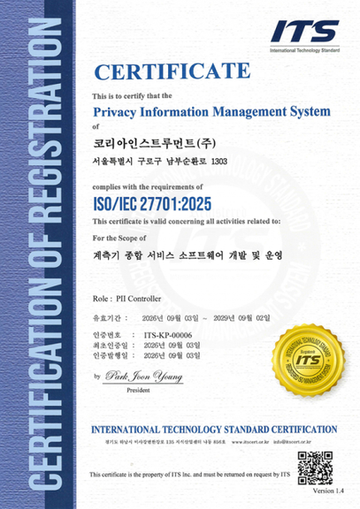
Korea Instrument, KOLAS Accredited Calibration Agency First to Simultaneously Acquire ISO/IEC 27,001·27,701
Korea Instrument has become the first among KOLAS accredited calibration agencies to simultaneously acquire ISO/IEC 27,001 and ISO/IEC 27,701 certifications. Through its proprietary platforms CWIZ Enterprise and CWIZ Partners, the company has embedded information security and personal data protection requirements across all business processes including customer information, equipment data, and calibration reports, with plans to continuously advance its management system through regular audits and security inspections.
2026.10.12by 배종인 기자

TeamViewer One, IT Incident Automation Workflow and Resolution Center Enhanced
TeamViewer has added IT incident automation capabilities and an advanced Resolution Center to its integrated digital workplace management platform 'TeamViewer ONE'. Recurrent service disruptions, configuration errors, and capacity shortages are automatically handled according to preset policies, and device status verification through script deployment can be managed in a unified interface, significantly reducing repetitive tasks for IT teams.
2026.10.12by 배종인 기자











