


The Korea Institute of Materials Science (KIMS) has developed a low-reflective, high-absorbency material for 5G electromagnetic waves.
 Published2022.03.08 15:40
▲Principal Researcher Lee Sang-bok (left) and Senior Researcher Park Byeong-jin (right) of the Korea Institute of Materials Science, who are the principal investigators
Only 2-3 countries worldwide, with import substitution and exports expected.
The Korea Institute of Materials Science (KIMS, President Lee Jeong-hwan), a government-funded research institute under the Ministry of Science and ICT, is expected to develop an absorbing and shielding material for the 5G band, which is difficult to develop globally, and thus lead to import substitution and overseas exports in smartphones, self-driving cars, and communication satellites.
The Korea Institute of Materials Science announced on the 8th that the research team led by Dr. Sangbok Lee and Dr. Byeongjin Park of the Functional Composite Materials Laboratory has successfully developed the world's first ultra-thin composite material film that does not reflect electromagnetic waves for 5G communication and absorbs more than 90% of them.
This technology is significant in that it can easily resolve secondary interference issues even in the high gigahertz (GHz) frequency environment of 5G communications.
Electromagnetic noise generated from electronic components causes interference with other electronic components, resulting in performance degradation, so shielding materials are used to block this.
Existing reflective shielding materials use highly conductive materials such as metal and carbon to shield by reflecting more than 90% of electromagnetic waves, so the actual absorption rate is less than 10%.
5G communication uses a frequency of about 26 gigahertz (GHz) or higher, which is more than 10 times higher than the frequency of existing 3G/4G, and to prevent secondary interference due to the increase in communication frequency, an absorbing device that can absorb and remove electromagnetic waves is required.Requires water shielding material.
Our research team manufactured an absorbent shielding material by sewing conductive fibers in a grid shape onto a composite film made of a mixture of magnetic materials and polymers that exhibit excellent absorption performance at 5G communication frequencies.
Through this, an electromagnetic wave absorbing shielding material with a reflectivity of less than 1% and an absorption rate of over 90% was developed.
Additionally, the developed material is thin and flexible, and the research team confirmed that there was no decrease in performance when it was crumpled or folded and unfolded more than 10 times.
Electromagnetic wave absorbing shielding material technology can be utilized in various fields such as smartphones, base stations (small cells), autonomous vehicle radars, and low-orbit communication satellite antennas that utilize 5G/6G communications.
In particular, absorption and shielding materials for the 5G/6G band are new materials that require advanced material design technology, and only two or three companies in the world, including the United States, Germany, and Japan, have succeeded in commercializing them.
It is expected that through this technology development, not only will there be an import substitution effect through domestic production in the future, but exports to overseas countries will also be possible.
Senior Researcher Lee Sang-bok, who led the research, said, “The material developed through this study is significant in that it presents a new concept of an ultra-thin material that absorbs most electromagnetic waves without reflecting them by utilizing a conductive grid.” He added, “If this technology is applied not only to wireless communication devices such as smartphones but also to autonomous vehicle radars, it is expected to greatly increase the reliability of autonomous driving in the future.”
This research was conducted with the support of the Ministry of Science and ICT, through the Korea Institute of Materials Science's major project, 'Development of Ultra-High Frequency Absorbing Pseudo-Metamaterial Technology Based on Magnetic Materials', and the National Core Materials Research Group (Specialized) project, 'Development of Original Technology for Composite Materials with Customized Millimeter-Wave Absorption/Shielding/Heat Dissipation Characteristics'. />
Additionally, the results of this study were published on February 28 in the Journal of Materials Chemistry A, a renowned academic journal in the field of materials science published by the Royal Society of Chemistry in the UK.
Meanwhile, the research team is discussing technology transfer for mass production of absorbent shielding materials with several companies and is conducting additional research on how to apply the developed material to autonomous vehicle radar.
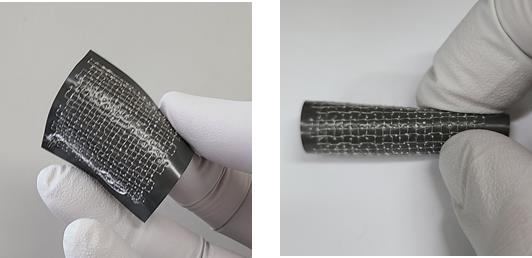
▲5G electromagnetic wave absorbing and shielding material film developed by the research team at the Korea Institute of Materials Science.

Comments
Related news
Materials Research Institute Captures Coronavirus with Plasma Filter
A component that can inactivate airborne aerosols through a plasma filter has been developed, and is drawing expectations that it will contribute to preventing the spread of COVID-19 and disease control measures.
2022.02.07by 배종인 기자
Materials Research Institute Opens Forum for Discussion on Future Materials Technology
The Korea Institute of Materials Science (KIMS, Director Lee Jung-hwan), a government-funded research institute under the Ministry of Science and ICT, has organized an event inviting renowned speakers from various materials-related fields to explore future technologies and industries.
2022.02.23by 배종인 기자
KIMS Establishes New Quarantine System Using Plasma Technology
The Korea Institute of Materials Science (KIMS, President Lee Jeong-hwan), a government-funded research institute under the Ministry of Science and ICT, has agreed with Korea Technology Co., Ltd., Daewoo Shipbuilding & Marine Engineering Construction Co., Ltd., and Pureun Light Co., Ltd. to establish a plasma technology-based disinfection and air conditioning system to effectively respond to the coronavirus pandemic situation.
2022.03.03by 배종인 기자
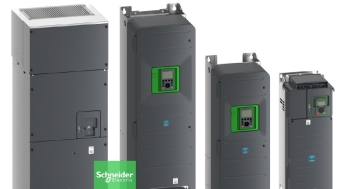
Schneider Aims for Building Energy Savings and Operational Stability with Next-Generation HVAC Drives
Schneider Electric has unveiled its next-generation HVAC drive product line 'Altivar HVAC'. The new product line's key features center on enhanced energy savings, system operational stability, and building management system integration. The products are divided into 'ATH200' for OEM and small equipment applications, and 'ATH600' for environments requiring continuous operation and advanced control. The company plans to expand the application scope from commercial buildings to facilities where HVAC system stability is critical, such as hospitals, airports, and data centers. The announcement includes over 30% energy savings, operation from -10°C to +60°C, Modbus and BACnet support, and compatibility with low global warming potential refrigerants.
2026.03.26by 명세환 기자
Ecolab Expands AI Data Center Cooling Business Through Acquisition of CoolIT
Ecolab has agreed to acquire CoolIT Systems, a liquid cooling company for AI data centers, for approximately $4.75 billion. The transaction is expected to close by Q3 2026, subject to regulatory approvals. CoolIT has been supplying direct-to-chip cooling-based coolant distribution units, cold plates, and manifolds, serving hyperscale data centers and colocation operators as customers. This acquisition is a measure to address the high-heat and high-density server environments created by AI proliferation. Ecolab plans to combine its water management and digital monitoring capabilities with CoolIT's hardware technology to expand its data center cooling business.
2026.03.26by 명세환 기자











