


[Interview] Lee Soon-yeol, CEO of iTu Co., Ltd.: "Industrial digital transformation must be implemented in stages with a long-term perspective."
 Published2022.03.10 08:48
Requires implementation strategies tailored to individual company conditions and levels
Collaboration with external companies and institutions is very important to address the shortcomings.
[Editor's Note] Amidst the digital transformation craze sparked by COVID-19, industries are now investing significant funds and resources in digital transformation. However, obtaining accurate information and understanding of what true digital transformation entails is challenging. This lack of information makes building a proper smart factory and utilizing it effectively even more challenging. Amidst this situation, a company is gaining attention by offering sound information and solutions based on decades of experience and expertise in smart factory construction and digital twins. This company is I2 Corporation, and its CEO, Lee Soon-yeol, has held executive positions at companies specializing in smart factories and factory automation, including Rockwell Automation, Samjung KPMG, and Hyundai Robotics, accumulating over 30 years of expertise in industrial digital transformation and factory automation. Accordingly, our magazine arranged a meeting with Lee Soon-yeol, CEO of iTu, to hear about the digital transformation of the industry.
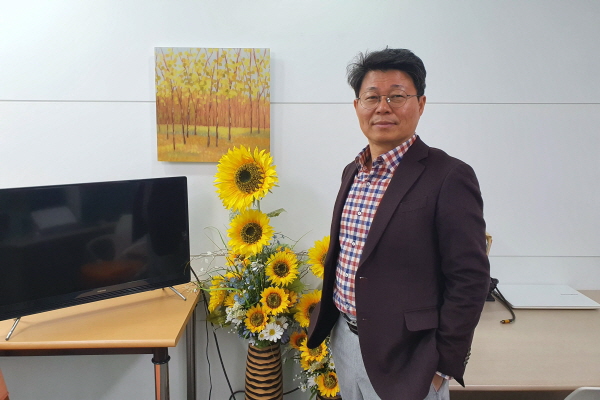
▲Lee Soon-yeol, CEO of iTu Co., Ltd.
■ Please introduce Aitu Corporation.
Aitu Corporation is a venture company specializing in industrial intelligence established in August 2021.
It was launched with a team of professionals with over 30 years of field experience in industrial automation, robotics systems, and industrial digitalization.
The company's core business areas include strategic consulting for industrial digital transformation, an industrial intelligence research center for educational services, and an intelligent robot-based automation solution division.
I'm curious about why digital transformation is necessary in industry. I'd also like to hear your opinions on the direction government support programs and policies should take.
The future strategy for our manufacturing industry to survive in the global market is to secure differentiated digital-based manufacturing technologies, product technologies, and operational processes. Our country has grown into a manufacturing-based country in a short period of time and entered the ranks of advanced countries.
I also believe that this is a golden opportunity to create a second manufacturing renaissance through the creative and effective integration of excellent digital infrastructure and human resources into manufacturing.
The government has also designated industrial digital transformation as a top national priority and is actively supporting private companies.
On the other hand, it is true that digital transformation does not fit well with the successful methods of the past, and although many companies start, only a few achieve successful results.
Simple technological convergence is unlikely to produce results. A comprehensive transformation is necessary, encompassing non-technical elements such as strategy, organization, implementation processes, human resources, and organizational culture.
The reality is that private companies require significant investment and time to achieve results. It's practically impossible for private companies to prepare everything.
Therefore, the government must effectively implement appropriate support policies for common issues that individual private companies find difficult to address independently, such as technology development, training of specialized personnel, creation of a collaborative ecosystem, construction of public infrastructure, and sharing of public data.
■ In production sites, demand for high-quality, high-speed equipment is increasing. This, coupled with the explosive growth in industrial data, has made processing speed increasingly crucial. I'd like to hear your perspective on industrial data processing.
The competitiveness of our manufacturing industry lies in differentiating ourselves through smart products, production facilities, operational methods, and business models. To achieve this, the key is how to effectively utilize industrial data.
Digitalization is the top priority, leveraging the experience gained in individual industries.
A large number of skilled workers are facing retirement. Digitizing these individuals' experiences will also require leadership from corporate executives, strategies, and incentive programs to encourage active participation.
Additionally, startup support programs will be needed to leverage domain knowledge in each field to create new business opportunities by integrating digital technologies.
From the demand side, it would be of great help if specialized startups could cost-effectively utilize the necessary services and personnel.
It is necessary to develop and support more practical, industry-specific data utilization models that take into account the characteristics of each industry, as well as training and education programs that can promote practical capacity development.
■ What technology is most necessary for building an intelligent factory, and I would like to know about examples of intelligent factories currently being built in the market.
Intelligent factories will take on a wide variety of forms, depending on the type of industry and application. They should begin with the development of intelligent machinery capable of predicting failures by collecting and analyzing data from existing automated machines based on edge computing, or by analyzing and predicting quality changes.
An implementation strategy tailored to each company's circumstances and level is necessary. Simply put, connecting data via the Internet of Things (IoT) would allow for decision-making support, allowing for analysis of the root cause of failures and easier resolution.
It is important for individual companies to define their mid- to long-term data-driven approach, establish step-by-step implementation strategies, and implement them consistently.
■ I would like to hear about the business that Aitu Corporation is contributing to industrial digital transformation and industrial intelligence. I'd also like to hear about your major projects and plans for this year.
The Industrial Intelligence Research Institute expects its industrial digital transformation training and consulting services business to more than double. Furthermore, the Automation Division anticipates growth in the automotive and electronics industries through government-funded robot construction projects.
■ Lastly, please say a word to our readers.
Industrial digital transformation is not a one-time project. Each company must establish a mid- to long-term growth strategy and continuously advance step by step toward achieving it through digital-based product innovation, operational process innovation, and business model innovation. This cannot be accomplished alone. Collaborating with external experts or organizations to address any shortcomings is crucial.
※ Meanwhile, e4ds News will host the ' 2022 IIoT Innovation Day ' on April 8th at COEX Hall D and e4ds.com, both online and offline, on the topic of building an industrial communication network for digital twins. At this seminar , Lee Soon-yeol, CEO of IIoT , will present on ' The Importance of Securing Industrial Trustworthiness and Preparation for Industrial Digital Transformation.' We look forward to your participation. You can register for the conference at https://www.e4ds.com/seminar_introduce.asp?idx=129 .

Comments
Related news
[Talking about Industrial IoT⑦] KPMG: "The Key to IIoT is Corporate Culture and Establishing a Common Organizational Direction"
KPMG, the keynote speaker group at IIoT Innovation Day 2018, presented six criteria for the commercialization of Industrial Internet of Things (IIoT): △technology, △organization, △organizational capability, △service network, △finance, and △security, and stated that balance among these is necessary. Industrial market and national policy directions are focused on the technological aspect. A representative example is the government's financial support for small and medium-sized enterprises (SMEs) that lack the capacity for IIoT transformation in terms of costs and human resources compared to large corporations. From a national perspective, IIoT is also being assessed as a factor that can enhance national competitiveness. However, Lee Soon-yeol, Executive Director of KPMG, stated, "I question whether the government's approach of providing only funding will be effective," and added, "IIoT-based support measures are likely to be one-time only if they are not designed with sustainability in mind, and a medium to long-term roadmap must be presented."
2018.02.23by 김학준 기자
e4ds, Presenting the Latest Industrial IoT Technology
e4ds news will host the "5th IIoT Innovation Day" event on September 10th from 10:00 AM to 12:30 PM at the COEX C and D Hall lecture halls and online.
2021.08.31by 배종인 기자
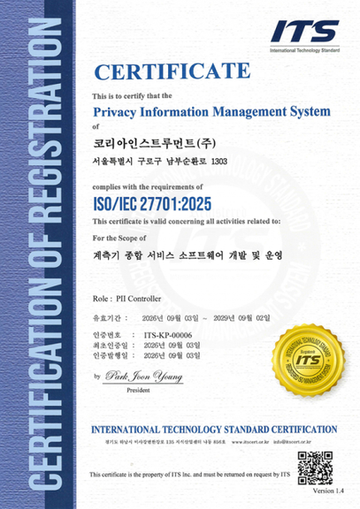
Korea Instrument, KOLAS Accredited Calibration Agency First to Simultaneously Acquire ISO/IEC 27,001·27,701
Korea Instrument has become the first among KOLAS accredited calibration agencies to simultaneously acquire ISO/IEC 27,001 and ISO/IEC 27,701 certifications. Through its proprietary platforms CWIZ Enterprise and CWIZ Partners, the company has embedded information security and personal data protection requirements across all business processes including customer information, equipment data, and calibration reports, with plans to continuously advance its management system through regular audits and security inspections.
2026.10.12by 배종인 기자
TeamViewer One, IT Incident Automation Workflow and Resolution Center Enhanced
TeamViewer has added IT incident automation capabilities and an advanced Resolution Center to its integrated digital workplace management platform 'TeamViewer ONE'. Recurrent service disruptions, configuration errors, and capacity shortages are automatically handled according to preset policies, and device status verification through script deployment can be managed in a unified interface, significantly reducing repetitive tasks for IT teams.
2026.10.12by 배종인 기자
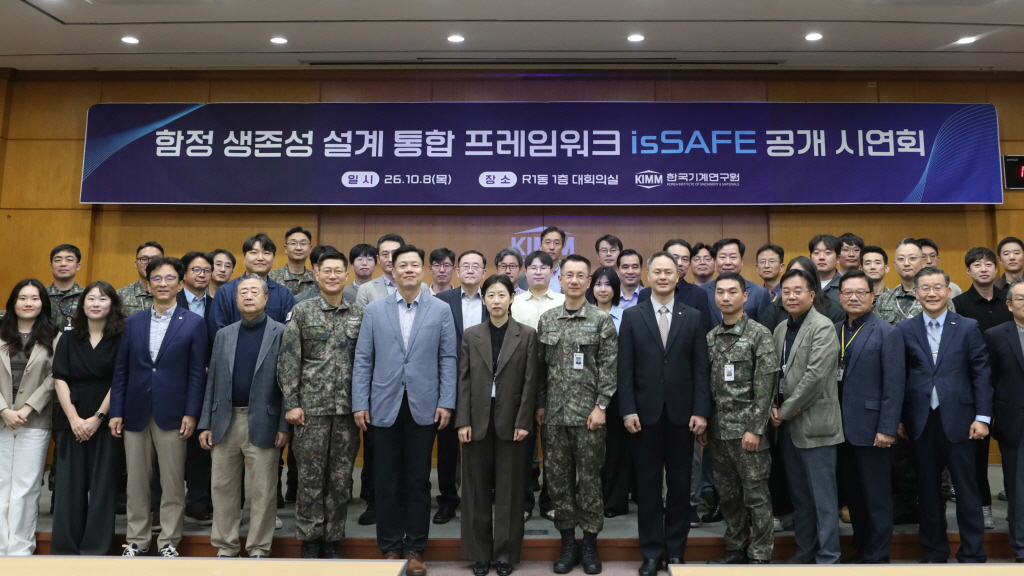
KAERI Develops Domestically-Produced SW 'isSAFE' for Integrated Warship Survivability Analysis
The Korea Institute of Machinery and Materials has developed domestically-produced software 'isSAFE' that comprehensively analyzes warship survivability. This design framework integrates the entire process—from warship modeling to hit scenario generation, vulnerability analysis, and results analysis—into a single platform, establishing an independent technology foundation in the defense technology sector that had previously relied on foreign software.
2026.10.08by 배종인 기자











